Smart glasses showdown: Apple, Meta, and Google battle for your face as AI eyewear goes mainstream
The gist
The race to rule your face is on, as Apple, Meta, and Google battle to make AI-powered smart glasses the next must-have tech—and rewrite the rules of daily life.
What to know
- Meta is outpacing rivals with its hit Ray-Ban smart glasses, while Apple pivots from Vision Pro to lighter, ambient AI eyewear amid delays and leadership shakeups.
- Breakthroughs in ultralight materials, prescription lenses, and neural input tech are making smart glasses more comfortable and discreet—paving the way for all-day wear.
- With global AI smart glasses revenue set to skyrocket from $1.2B in 2025 to $5.6B in 2026, fashion and tech giants are betting big on a stylish, hands-free future—privacy concerns and all.
Big Tech’s Glasses Gambit
Apple’s pivot to lightweight AI eyewear, Meta’s surge in innovation, and Google’s comeback bid are fueling an unpredictable, high-stakes battle for dominance in smart glasses.
Apple’s strategic pivot away from its bulky Vision Pro headset toward more practical, everyday smart glasses marks a direct challenge to Meta’s dominance in the space. By shelving further Vision Pro developments and focusing on a two-stage launch for lightweight, Ambient AI-integrated glasses, Apple is signaling a shift toward wearables that blend seamlessly into daily life. However, persistent delays and recent leadership changes in Apple’s AI division have created openings for rivals like Meta to advance, highlighting the high stakes and volatility in the race for smart glasses supremacy.
Meta has capitalized on Apple’s stumbles by doubling down on innovation and user-centric design, resulting in demand for its smart glasses that outpaces production capacity. The company’s long-term commitment is evident in its rapid-fire product launches—such as the Oakley Meta Housins, Meta Ray-Ban displays, and the NER neural band for handwriting input—which have positioned Meta as the market leader amid a CES 2026 landscape crowded with new entrants. Meta’s strategy of offering diverse brands and styles, while focusing on practical features like discreet messaging, underscores its confidence in its roadmap and its ability to set the pace for the industry.
Meanwhile, Google is attempting a comeback by learning from its past failures, prioritizing socially acceptable aesthetics and leveraging partnerships with popular brands for its upcoming 2026 smart glasses. By integrating its extensive ecosystem—especially services like Maps and Search—and exploring new frontiers such as health sensors and consumer neurotechnology, Google aims to differentiate itself and regain relevance in a market where product homogenization and price competition are driving consolidation. This renewed focus on ecosystem integration and innovation reflects a broader industry trend toward hybrid devices that blend lightweight hardware with advanced AI capabilities.
Other players, notably Goertek and Namibox, are carving out competitive positions through hardware innovation and ecosystem expansion. Goertek’s unveiling of ultra-light, AI-powered glasses with advanced optical solutions and neural wristbands at CES 2026 demonstrates China’s manufacturing maturity and a focus on user comfort and visual performance. Namibox’s pivot from content provider to integrated platform company—embedding AI learning into wearables—mirrors a wider industry move to create sticky ecosystems and new monetization opportunities, as the smart glasses market rapidly evolves and revenue is projected to quadruple by the end of 2026.
Strategic acquisitions and experimental form factors are also shaping the competitive landscape. Apple’s $2B acquisition of Q.ai, an Israeli AI startup specializing in silent speech recognition, signals a deepening investment in AI-driven, privacy-centric interaction for next-gen wearables. At the same time, speculation around new device formats—such as pins and pens, with companies like Humane and OpenAI joining the fray—suggests that the battle for AI-powered wearables will extend beyond glasses, as tech giants seek the perfect blend of context-rich sensors, seamless integration, and user-friendly design.





Design Revolution on Your Face
Breakthroughs in ultralight materials, modular frames, and neural input are transforming smart glasses from clunky gadgets into comfortable, all-day wearables with both display and no-display options.
The evolution of AI-powered smart glasses design has been marked by a relentless pursuit of comfort, wearability, and seamless interaction, with companies like Meta, Himax, XGIMI, Rokid, Meta-Bounds, Goertek, Cellid, and Vuzix pushing the boundaries of hardware innovation. By early 2026, breakthroughs such as ultralight materials, modular frames, prescription lens support, and advanced microdisplays (like Himax’s Front-lit LCoS and Vuzix’s 0.79g HX7319FL) have enabled glasses that feel more like regular eyewear than tech gadgets, with weights dropping as low as 25g for monocular models and 38g for full-color binocular AR glasses. This focus on user comfort is complemented by high-brightness waveguide displays, electrically tunable liquid crystal lenses for dynamic vision correction, and discreet, socially acceptable designs—addressing the critical usability challenge of making smart glasses truly wearable for all-day use.
A defining trend in form factor evolution is the strategic balance between display-equipped and no-display models, as manufacturers respond to diverse user preferences and real-world use cases. Companies like Meta, XGIMI, Rokid, and Google are offering both feature-rich visual experiences—such as floating subtitles, real-time translation, and contextual AI prompts—and minimalist, display-free designs that rely on advanced voice assistants and neural input for hands-free interaction. This shift is reflected in the rapid growth of no-display smart glasses, projected to reach 28 million shipments by 2030, as users increasingly favor lighter, more discreet eyewear that blends into daily life while still delivering robust AI capabilities.
The integration of neural input and always-on endpoint AI is redefining how users interact with smart glasses, moving beyond traditional touch or voice commands. Meta’s neural band, Goertek’s EMG wristband, and Cellid’s built-in eye tracking exemplify this trend, enabling gesture-based control and contextual AI assistance that feels intuitive and unobtrusive. However, hardware limitations—such as the need for cloud-based AI processing and connectivity bottlenecks—still present hurdles to truly seamless, real-time experiences, prompting ongoing investment in on-device AI, power efficiency, and supporting devices like neural bands and controllers.
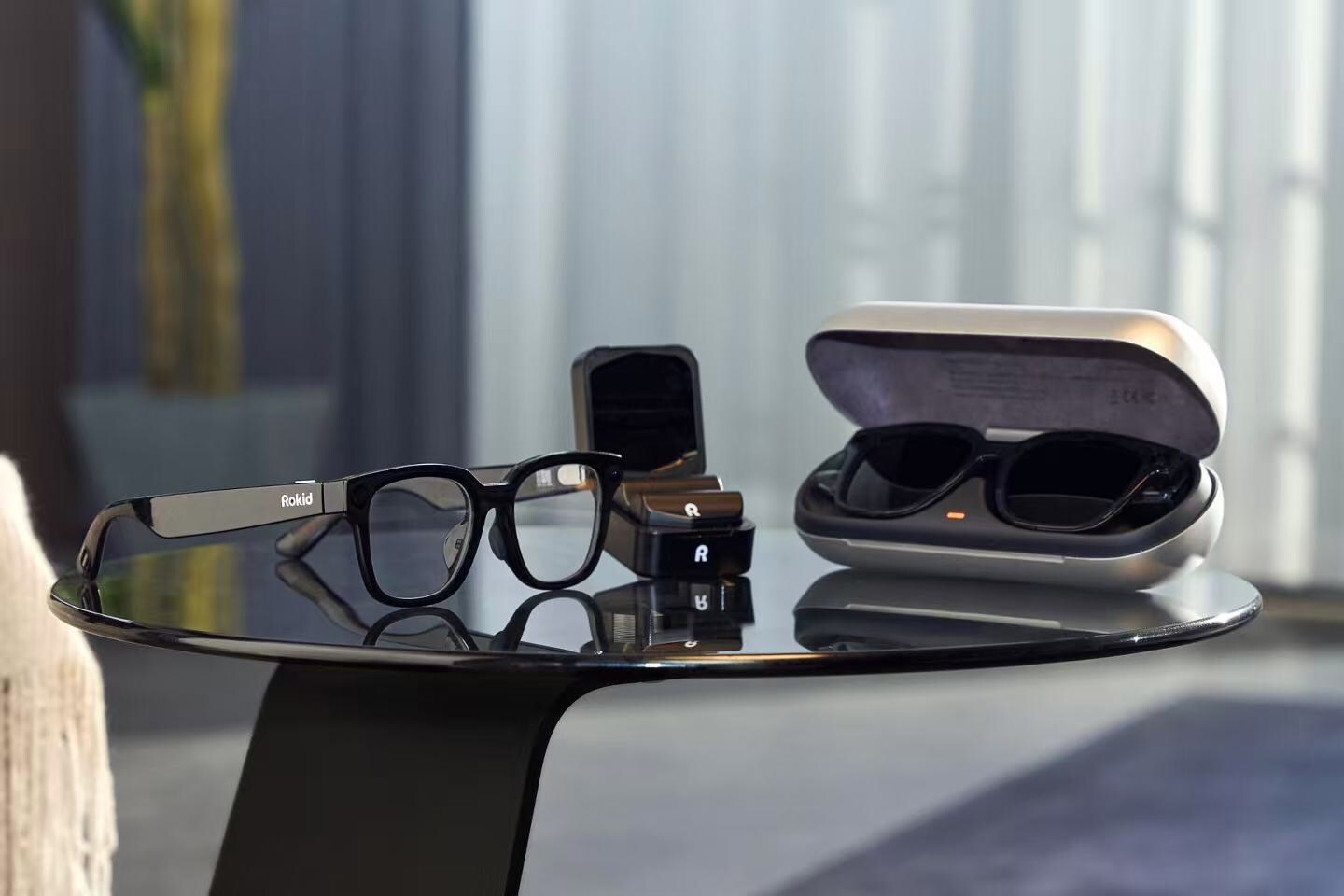
Prescription support and social acceptability have emerged as non-negotiable pillars in smart glasses design, with brands like Rokid, Vuzix, XGIMI, and Google ensuring that vision correction needs never limit access to AI eyewear. Innovations such as ultra-thin waveguides, high-index glass compatibility, and electrically tunable lenses are making it possible for smart glasses to accommodate a wide range of prescriptions without sacrificing aesthetics or comfort. As Zoro Shao of Rokid puts it, the goal is a 'pivotal moment' where 'prescription needs never limit access to AI technology,' signaling an industry-wide commitment to inclusivity and everyday usability.





Ambient AI Takes Center Stage
Smart glasses are shifting to voice-first, context-aware experiences powered by always-on AI, but seamless real-time assistance still faces major technical and user experience hurdles.
The race to mainstream AI-powered smart glasses is marked by a decisive shift from screen-centric interfaces to voice-first and ambient AI experiences, driven by advances in real-time, context-aware assistance. Companies like Meta and Apple are moving beyond bulky headsets such as the Vision Pro, instead focusing on lightweight glasses equipped with cameras and microphones that 'see what you see' and listen to your environment. As Meta’s latest AI glasses demonstrate, users can now ask contextual questions like 'Hey Meta, what am I looking at?' or receive live translations, all without the need to glance at a screen—ushering in a new era where ambient AI works quietly in the background, surfacing information only when it’s truly needed.
Despite this progress, the integration of real-time, context-aware AI into smart glasses faces significant technical and user experience hurdles. Apple’s repeated delays and Meta’s struggles with cloud-based AI processing underscore the challenges of delivering seamless, always-on assistance—especially given current limitations in on-device compute and the need for reliable Wi-Fi connectivity. As demos reveal, even minor lags in AI response can break the illusion of ambient intelligence, highlighting the importance of innovations like Himax’s ultralow power WiseEye AI platform and Goertek’s high-precision MEMS acoustic sensors, which aim to enable battery-efficient, always-listening devices that can process context locally and unobtrusively.
The evolution of voice and audio interfaces is not just about convenience—it’s fundamentally changing how users interact with technology and each other. With advanced microphone arrays, neural input technologies like Mudra Link, and even Apple’s acquisition of Q.ai for silent speech AI, smart glasses are becoming more intuitive, accessible, and privacy-focused. These innovations allow for hands-free, gesture-based, or even non-verbal communication with AI assistants, reducing device addiction and enabling users to remain present in their environment—a vision championed by figures like Jony Ive, who now seeks to 'right the wrongs' of past gadget design by making AI a subtle companion rather than a constant distraction.
As voice-first interfaces mature, they are poised to disrupt traditional user behaviors and business models. Meta’s Ray-Ban smart glasses, for example, have already shown that users can answer calls, respond to messages, and capture media without ever reaching for their phones, fostering greater presence and even shifting engagement patterns toward richer, voice-driven interactions. Meanwhile, the killer app for many AI wearables is emerging as automatic meeting summarization, leveraging continuous audio capture and context-aware processing—a use case that not only augments existing ecosystems like the iPhone but also signals a broader industry consensus that many everyday tasks are simply 'better for voice than they are for screen.'
2026: The Tipping Point Year
A perfect storm of hardware innovation, fashion partnerships, and surging investment is set to make 2026 the breakout year for mainstream smart glasses—despite persistent adoption barriers and privacy fears.
After years of groundwork by industry giants like Meta, Google, and Xreal, the smart glasses market is set for explosive growth, with 2026 widely anticipated as the breakout year. This surge is underpinned by foundational advances in 2025 and a 'cultural moment' sparked by Meta's Ray-Ban collaboration, which helped shift consumer perceptions and primed the market for more functional, comfortable, and stylish options. As Tom Merritt predicts, by the end of 2026, consumers will have access to a vibrant array of smart glasses with real visual displays, while fashion-forward brands like Gentle Monster and Warby Parker are poised to accelerate mainstream appeal alongside tech titans.
Despite the optimism, adoption barriers remain stubbornly persistent. User hesitation is fueled by satisfaction with existing devices like smartwatches, high costs—especially for those who already wear prescription glasses—and a lack of compelling use cases for non-glasses wearers. Privacy concerns and the potential for public backlash continue to loom large, as societal sensitivity to wearable tech remains high; as one analyst quips, 'Never bet against the Internet getting mad at something.' These factors, combined with technical hurdles like battery life, weight, and comfort, have kept widespread daily adoption just out of reach, though startups like Mentra are making headway by prioritizing practical enhancements and AI-driven features.
The market’s momentum is further bolstered by rapid hardware innovation and the entry of new players. Leading brands such as Meta Ray-Ban, Xiaomi, Apple, and Google are intensifying competition, while investments in lighter, no-display designs and supporting devices like neural bands are addressing critical pain points around comfort and usability. According to Smart Analytics Global, global AI smart glasses revenue is projected to quadruple from $1.2 billion in 2025 to $5.6 billion in 2026, with shipments expected to soar from 6 million to 20 million units—driven by both improved form factors and the anticipated arrival of Apple and Samsung.
Looking ahead, smart glasses are expected to coexist with smartphones rather than replace them, serving as hands-free AI copilots that discreetly enhance daily life through features like messaging, real-time translation, and contextual assistance. Market analysts predict that visual AI smart glasses with heads-up displays will surpass audio-only models by 2028, as hardware capabilities and use cases expand. However, market consolidation is likely, with Apple, Samsung, and Meta forecast to dominate by 2030 amid product homogenization and price competition, while ecosystem integration and fashion appeal remain critical for mainstream acceptance.


From Curiosity to Daily Tool
AI smart glasses are poised to disrupt smartphones by delivering real-time translation, accessibility, and productivity—yet skepticism among non-glasses wearers and privacy anxieties could slow their ascent.
AI-powered smart glasses are rapidly moving from tech curiosity to mainstream contender, with 2026 predicted as the pivotal year for widespread adoption. Companies like Meta, Google, and Xreal have laid the groundwork, each unveiling ambitious projects—Meta leading with its Ray-Ban collaboration and Google and Xreal making waves with Project Aura. This momentum signals a potential shift in personal technology, as smart glasses challenge the smartphone’s dominance and set the stage for a new era of hands-free, context-aware computing.
The most compelling use cases for AI smart glasses are emerging in accessibility and daily productivity, with features like real-time translation, mapping, and face tracking poised to transform how people interact with technology and the world. Devices such as Rokid's prescription-first AI glasses and Meta’s Ray-Bans are breaking down barriers for users with vision correction needs and the deaf or hard of hearing, while also enabling seamless communication and navigation across languages and regions. These advances not only enhance individual autonomy but also hint at a future where smart glasses are indispensable tools for both personal and professional life.
However, the path to mainstream adoption is not without hurdles. Non-glasses wearers remain skeptical, often unconvinced by current use cases, and public acceptance is still haunted by privacy concerns reminiscent of earlier smart glass controversies. As one analyst quipped, 'Never bet against the Internet getting mad at something,' underscoring the persistent tension between technological innovation and societal comfort with pervasive, camera-equipped wearables.
Smart glasses are also catalyzing a fundamental shift in human-device interaction, moving toward more intuitive, hands-free experiences powered by neural input and voice interfaces. Technologies like Wearable Devices Ltd.'s Mudra Link and Meta's EMG band enable users to control devices with gestures or neural signals, while AI copilots provide contextual suggestions and information without pulling users out of the moment. This evolution is not only making technology more accessible and less obtrusive, but also setting new industry standards that could upend existing power structures as platforms like Meta and OpenAI vie for dominance in the ambient AI ecosystem.
The societal impact of AI-powered smart glasses is already being felt, as evidenced by surging demand—Meta reportedly selling devices 'as fast as we make them'—and a proliferation of wearables at CES 2026. With features like discreet messaging, intelligent notification filtering, and context-aware suppression of interruptions, these devices are not only enhancing productivity but also reshaping norms around privacy, memory, and social interaction. As smart glasses and related wearables become more ubiquitous, society is entering an era where ambient AI assistance and constant information capture are the new normal, raising profound questions about how we manage attention and consent in public and private spaces.
