Solar resilience tested as FCC ban roils inverter market
The gist
America’s scramble for solar resilience is colliding with a sweeping FCC inverter ban—threatening backup reliability just as power outages hit historic highs.
What to know
- The FCC will ban new foreign-made connected solar inverters in August 2026, demanding over 65% U.S. content and domestic manufacturing—disrupting a market where 93% of inverters are currently imported.
- Relentless monthly power outages, fueled by an aging grid and extreme weather, have triggered a surge in home solar and battery installations as Americans seek energy independence.
- New smart inverter rules designed for grid safety risk sidelining off-grid and backup options, narrowing consumer choice and complicating emergency resilience unless policies adapt quickly.
Grid Failures Drive Solar Shift
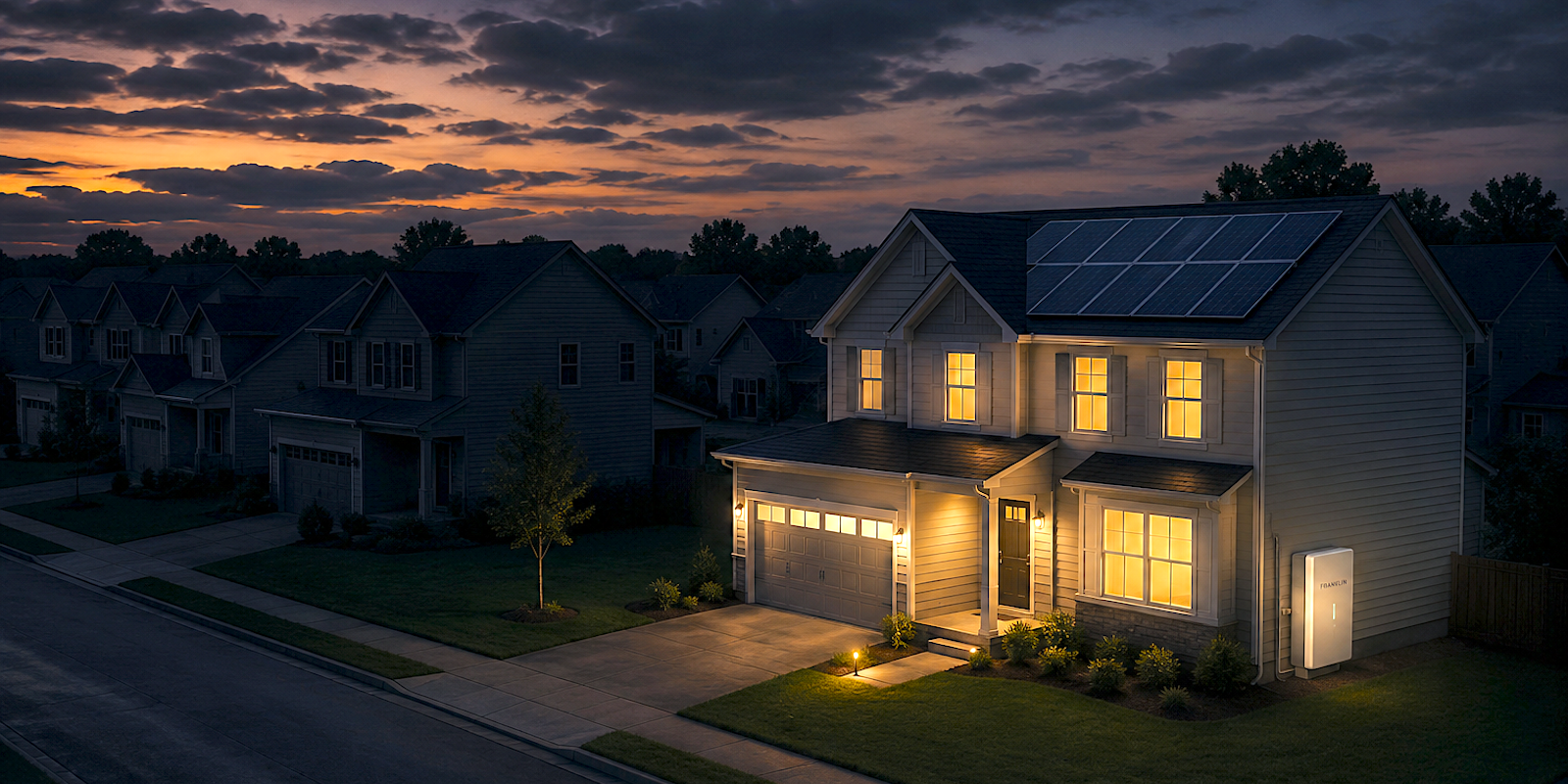
Relentless blackouts and a crumbling grid have made home solar and batteries a necessity, not a luxury, as Americans scramble for energy security.
By mid-2026, the United States has confronted an unprecedented surge in major power outages, with at least one significant blackout occurring every month. These outages, often triggered by extreme weather events such as winter storms, tornadoes, and heatwaves, have affected millions—most notably over 1 million customers in the Midwest and Mid-Atlantic regions during March alone. Underlying this crisis is the aging grid infrastructure, much of which dates back to the 1960s and 70s and has seen little meaningful modernization, leaving it vulnerable to both severe weather and equipment failures.
In response to this growing instability, consumers are increasingly turning to distributed energy resources like solar panels and battery storage to maintain power during outages. This shift toward grid independence is no longer a luxury but a necessity, as solar energy provides daytime resilience while batteries bridge the nighttime gap. As outages become a monthly reality rather than a rare occurrence, more homeowners are embracing these technologies to safeguard their energy needs and enhance overall resilience.
Off-Grid Data Centers: Hype vs. Reality
Despite the buzz, technical hurdles and grid dependence mean fully off-grid data centers remain more aspiration than achievable solution for now.
Building off-grid data centers is far from straightforward, with power electronics accounting for approximately 80% of the technical complexity, debunking the common misconception that such setups are simple. This intricate challenge underscores the critical debate between relying on batteries versus gas generation for behind-the-meter power, where industry voices like Tim Hade emphasize that batteries and load flexibility—not gas—will dominate data center energy strategies in the near term.
Despite early enthusiasm for off-grid data centers, a consensus is emerging that grid connection remains indispensable, making fully off-grid operations more fantasy than reality in the short term. SemiAnalysis projects over 40 gigawatts of behind-the-meter generation at U.S. data centers by 2028, predominantly fueled by gas turbines, reciprocating engines, and fuel cells, yet many companies pushing for off-grid solutions admit they plan to connect to the grid eventually, highlighting the complexity of scaling truly independent data center power.
The debate over data center energy strategies is further complicated by differing views on grid capacity headroom and the declining marginal value of batteries, known as effective load carrying capability (ELCC). These technical and operational uncertainties challenge decisions on optimal energy storage deployment, while frameworks like the Rhodium Group’s transition acceleration model provide a valuable tool to assess how choices between batteries and gas generation influence the broader energy transition and emissions trajectories.

Inverter Ban Upends Supply Chains
The FCC’s abrupt ban on foreign-made inverters threatens to stall clean energy projects and squeeze smaller vendors, exposing the fragility of U.S. solar supply chains.
The FCC's August 2026 ban on new foreign-made connected power inverters, primarily targeting Chinese imports due to national security concerns over remote firmware manipulation and hidden radios, has upended the U.S. solar and battery storage equipment market. Since approximately 93% of inverters used in the U.S. are foreign-made, with domestic manufacturers supplying only about 7%, this immediate prohibition on new certifications—without a transition period—has disrupted supply chains and threatens to delay clean energy project timelines significantly.
The ban’s reliance on a domestic-content threshold aligned with the Buy America Act, rather than solely country of origin, complicates market dynamics further by potentially excluding inverters assembled in the U.S. that lack sufficient American-made components. This stringent standard, requiring at least 65% U.S. content and manufacturing, forces manufacturers to navigate a complex Conditional Approval process involving homeland security reviews and plans for domestic production by 2028, creating uncertainty and bottlenecks for new product introductions.
While large utility-scale solar projects may weather the ban in the near term due to existing inventories of grandfathered inverter models certified before July 28, 2026, smaller vendors and off-grid solar initiatives face acute challenges. The lack of domestic equivalents for critical products like 3,000W 12V inverter/chargers from brands such as Bluetti, Victron, and Renogy threatens to stall innovation and deployment in these segments, highlighting a growing divide in clean energy accessibility and scalability.
The FCC’s focus on inverters with embedded wireless communication—Wi-Fi, cellular, or Bluetooth radios—has led manufacturers to consider shipping non-communicating 'dumb' inverters paired with separately approved radios to circumvent restrictions. This workaround underscores the regulatory complexity and the broader national security campaign against connected devices with undocumented communication capabilities, following earlier bans on drones and routers after investigations revealed hidden remote control features in some Chinese-made inverters.
Smart Inverter Rules Backfire
Uniform grid safety mandates are making it harder—and pricier—for homeowners to install backup and off-grid power, risking resilience in the name of regulation.
By mid-2026, emerging smart inverter and rapid-shutdown regulations, such as California's Rule 21 and IEEE 1547 standards, have been designed primarily to enhance grid safety and stability by stabilizing voltage and frequency and protecting line workers during outages. However, these rules, originally crafted for dense, interconnected urban grids, are increasingly complicating the design and permitting of residential backup power systems, especially for off-grid and remote homeowners who rely on these systems for emergency resilience. This one-size-fits-all approach narrows equipment choices and adds costly hardware and complexity, leading to concerns that uniform smart inverter mandates may inadvertently undermine energy self-sufficiency and discourage backup installations in low-risk areas.
The tension between grid-supportive smart inverter functions and individual homeowner goals has sparked calls from policy analysts to explicitly accommodate backup and off-grid use within interconnection rules and equipment standards. Without such accommodations, the market risks sidelining older, proven backup technologies in favor of inverters optimized solely for grid interaction, potentially reducing consumer choice and backup reliability during blackouts. Encouragingly, some newer inverter models capable of both grid-following and grid-forming modes offer a promising path forward by balancing grid stability with the ability to maintain power independently during outages, suggesting a technological bridge between regulatory intent and homeowner resilience needs.

Regulations Spur Security—and Workarounds
National security fears are reshaping the inverter market, but rigid rules are fueling creative loopholes and threatening innovation for small-scale and off-grid solar.
The FCC's 2026 ban on foreign-made connected solar inverters, mandating over 65% US content and domestic manufacturing, has reshaped the innovation landscape by privileging large American manufacturers while sidelining smaller vendors and off-grid projects reliant on foreign components. Companies like Bluetti and Victron, which dominate portable solar markets, face significant hurdles as no US-built equivalents exist, potentially stalling the adoption of autonomous and clean energy systems that depend on rapid product cycles and diverse supply chains.
National security concerns have been the linchpin of regulatory actions, with US experts uncovering hidden communication devices in Chinese-made inverters capable of remote shutdowns, prompting the FCC's decisive ban. This intersection of cybersecurity and grid modernization underscores the delicate balance policymakers must strike between safeguarding critical infrastructure and fostering technological innovation, as the threat of embedded 'kill switches' reveals vulnerabilities that transcend traditional market considerations.
The regulatory framework’s rigidity has inadvertently spurred inventive circumvention tactics, such as manufacturers shipping 'dumb boxes' devoid of radios and deferring the installation of approved communication modules to installers, as noted by Intertek CEA. This workaround not only complicates enforcement but also muddies market dynamics, highlighting the challenges regulators face in crafting policies that secure the grid without stifling flexibility or creating loopholes that undermine the intended security objectives.