SpaceX surges ahead as NASA rethinks moon base playbook
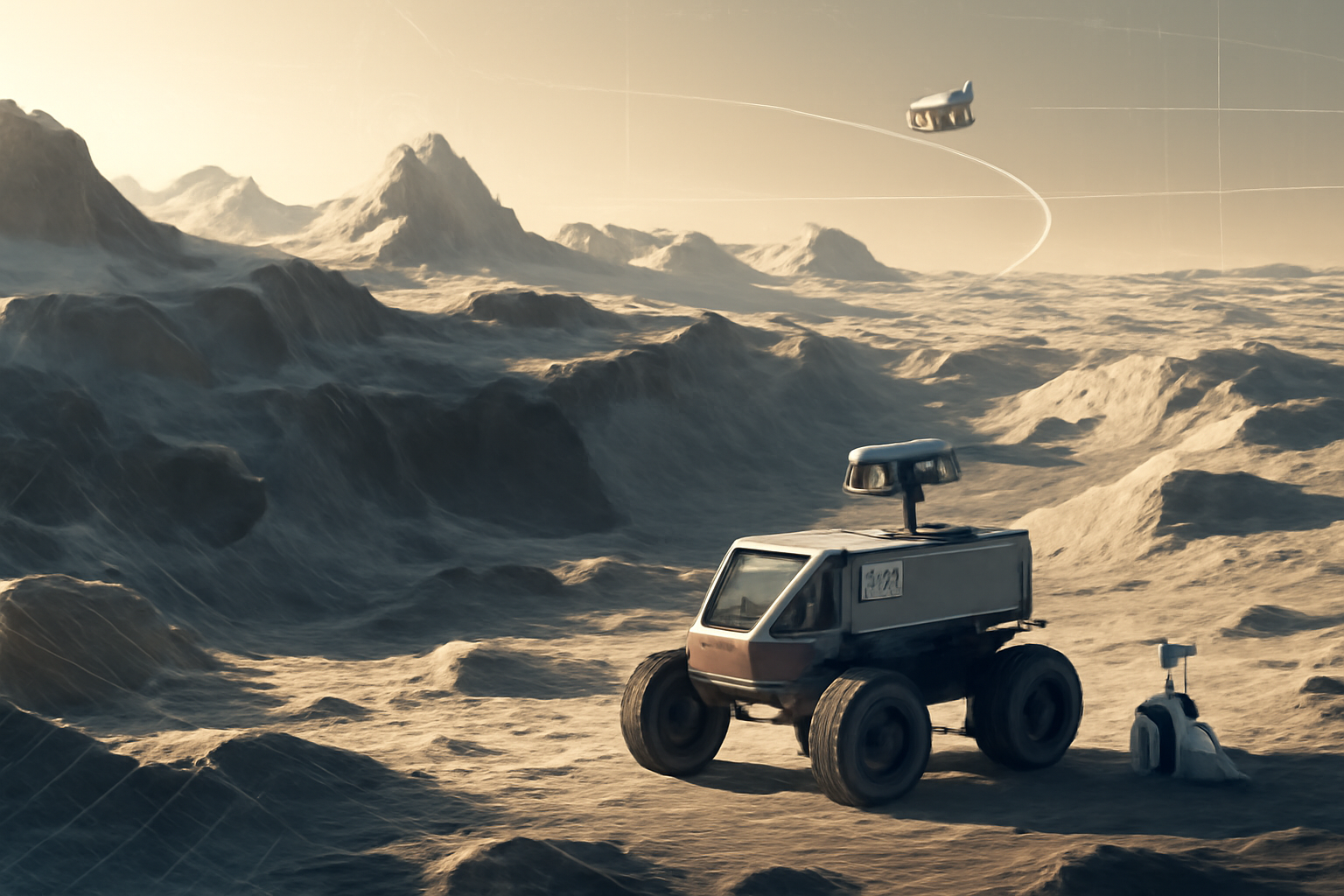
The gist
SpaceX is steamrolling the 2026 lunar race, forcing NASA to scrap the old playbook and go full startup-mode in a bid to claim the Moon—and the future of space.
What to know
- SpaceX’s Starship program is locking down lunar transport and infrastructure, leaving rivals like Blue Origin in the dust.
- NASA is betting big on extracting water from the Moon’s South Pole and 3D-printing habitats, aiming for a self-sustaining lunar presence by 2028.
- Under Jared Isaacman, NASA now runs like a startup—lean, fast, and laser-focused on building a permanent Moon base as a dress rehearsal for Mars.
Lunar Race Turns Geopolitical
SpaceX’s dominance is redefining space governance and infrastructure as lunar ambitions become a high-stakes contest of national security, commercial power, and global rivalry.
The lunar exploration race in 2026 is predominantly fueled by geopolitical rivalry rather than purely economic or scientific incentives, creating a fiercely competitive environment marked by a chaotic 'wild west' state of space governance. This intensifying competition is reshaping space policy frameworks as private companies like SpaceX surge ahead, leveraging their technological and commercial prowess to push the frontier of space governance into a new era, while Blue Origin’s lunar ambitions falter, signaling a significant shift in leadership within the commercial lunar sector.
SpaceX’s rapid advances extend beyond exploration to establishing a near-monopoly on lunar and space infrastructure, particularly through its Starship program, which acts as a critical transport backbone akin to a 'railway to space.' Despite facing stock volatility and high capital expenditures, SpaceX’s strategic partnerships, including talks with the Pentagon for terrestrial data center capacity, position it to dominate both extraterrestrial compute capabilities and heavy launch services, reinforcing its geopolitical and commercial influence amid rising competition from China and others.
The geopolitical stakes of space are underscored by the recognition of space as a critical defense domain, with leaders like General Saltzman emphasizing the reliance of modern warfare on space-based infrastructure. This strategic importance is driving large-scale investments in space energy generation and communication systems, further intensifying the lunar race and complicating governance amid rising orbital debris risks and commercial mining disputes, effectively transforming the lunar frontier into a contested arena of both national security and commercial interests.
Legal frameworks such as the Outer Space Treaty and Artemis Accords are evolving to accommodate the expanding role of private American corporations in lunar and Martian operations, effectively allowing them to control significant extraterrestrial territories. This regulatory environment not only legitimizes commercial ambitions but also fuels competition in heavy launch capabilities and resource extraction, highlighting how geopolitical rivalries and commercial interests are deeply intertwined in shaping the future of lunar exploration and governance.



Engineering Self-Sufficiency on the Moon
Breakthroughs in resource extraction, thermal management, and robust habitat design are enabling NASA to build a lunar base that can withstand extreme conditions and operate independently from Earth.
NASA's In Situ Resource Utilization (ISRU) program is pioneering the extraction of vital resources like water from the Moon's South Pole to enable sustainable human presence, a goal echoed by Arizona State University's breakthrough in producing water from lunar minerals using hydrogen and sunlight. This approach not only addresses the critical need for life support but also reduces reliance on Earth-supplied materials, as NASA explores using lunar silicates for 3D printing tools and habitat components, marking a significant stride toward self-sufficiency on the lunar surface.
Thermal management remains a formidable challenge due to the Moon's extreme temperature swings, where one side exposed to the sun can burn while the opposite side freezes. Experts like Neil deGrasse Tyson highlight innovative solutions such as highly insulated spacesuits or rotating mechanisms akin to rotisseries to balance exposure, underscoring the necessity of advanced engineering to protect astronauts from these harsh conditions.
Beyond resource extraction and thermal control, sustaining a permanent lunar base demands overcoming relentless environmental hazards including constant micrometeorite impacts and intense solar radiation, consequences of the Moon's lack of atmosphere and magnetosphere. NASA is therefore investing in robust habitat designs and prioritizing nuclear power and propulsion technologies to provide reliable energy and mobility, capabilities that commercial industry currently cannot fulfill but are essential for long-term scientific, economic, and national security objectives on the Moon.


Moon Base as Mars Testbed
NASA’s startup-inspired overhaul combines AI, humanoid robotics, and focused mission planning to transform the Moon into a proving ground for the technologies and tactics needed for Mars.
Under the visionary leadership of Jared Isaacman, NASA is aggressively pursuing a permanent Moon base by 2028 as a critical proving ground for Mars exploration technologies and skills. This lunar outpost will serve as a nearby laboratory to test spacesuits, habitation modules like ECLSS, physiological countermeasures, and in situ resource utilization systems essential for sustaining human life on Mars, embodying a strategic step to master the complexities of deep space missions.
NASA's transformation under Isaacman embraces a startup-like culture characterized by rapid innovation, adaptive budgeting, and laser-focused mission planning. Drawing inspiration from SpaceX's agile approach—such as their readiness to retire outdated technology and prioritize rapid reusability with Starship—NASA is streamlining its objectives to concentrate on a few extremely challenging goals, thereby accelerating sustainable lunar exploration and enabling scientific breakthroughs.
Integration of advanced AI and humanoid robotics, notably the deployment of Optimus robots, is central to NASA’s strategy to extend human presence on the Moon and prepare for Mars. These humanoid machines will act as force multipliers by performing hazardous infrastructure tasks on the lunar surface, allowing astronauts to remain safely within habitats, while smarter data utilization and improved propulsion technologies address the 'tyranny of distance' inherent in deep space operations.
Isaacman’s unique background as a private spaceflight commander and entrepreneur is reshaping NASA’s mission planning toward practicality and innovation over tradition. This includes advocating for the best instrument designs regardless of familiarity, leveraging repurposed nuclear technology for sustainable propulsion like the SR1 Freedom reactor, and fostering an organizational mindset that prioritizes speed, focus, and the pragmatic use of proven hardware to revolutionize lunar and Martian exploration.