Stryker’s mako RPS extends robot growth push
The gist
Stryker is electrifying the ortho tech race with its new Mako RPS knee robot and a business model built for unstoppable, recurring growth.
What to know
- Stryker’s $25.12B installed base now drives 62% of sales from MedSurg and Neurotechnology, with Orthopaedics close behind—and recurring revenue is king.
- The July 2026 launch of the Mako RPS handheld robotic platform sent shares up 4.7%, as Stryker aims to democratize robotic knee replacements and outpace rivals.
- Competition heats up as THINK Surgical lands $65M to scale its TMINI robot, compatible with 70% of knee implants—signaling a sector-wide shift toward versatility and scale.
Recurring Revenue Powerhouse
Stryker’s unified Ortho Tech platform and vast installed base drive a stable, procedure-centric business model that thrives on recurring sales, financial flexibility, and seamless integration across specialties.
Stryker’s business model transcends the traditional capital equipment sales framework by capitalizing on a vast installed base and consistent procedure demand across its MedSurg, Neurotechnology, and Orthopaedics segments. This approach emphasizes recurring revenue streams from replacement cycles, service, and consumables, reflecting a sophisticated engine that fuels stability beyond one-off equipment purchases. By integrating orthopaedic instruments with Mako and enabling technologies into a unified Ortho Tech business, Stryker streamlines customer experience and accelerates market delivery, reinforcing its procedure-driven growth strategy.
The fiscal 2025 sales distribution underscores Stryker’s diversified revenue mix, with MedSurg and Neurotechnology generating a commanding $15.65 billion—62% of total sales—anchored by higher recurring procedural exposure, while Orthopaedics contributed $9.47 billion, offering long-lived implant and enabling technology revenue. This balance not only cushions the company against sector-specific volatility but also supports organic growth, as evidenced by Q1 2026’s 5.0% sales increase in MedSurg and Neurotechnology and a 4.1% organic growth in Orthopaedics, highlighting robust procedure demand across the portfolio.
Despite facing margin pressures and acquisition-related expenses, Stryker’s strong cash generation capacity underpins its ability to sustain and expand its procedure-driven installed base business. Operating cash flow surged to $5.04 billion in fiscal 2025 from $4.24 billion in 2024, while net cash from operations nearly doubled to $581 million in Q1 2026 compared to the prior year, providing ample financial flexibility to invest in growth initiatives and maintain its competitive edge in recurring procedural markets.

Handheld Robotics Revolution
The Mako RPS launch marks a pivotal shift as Stryker blends robotic precision with surgeon-friendly handheld tools, aiming to broaden adoption while tackling persistent supply and pricing challenges.
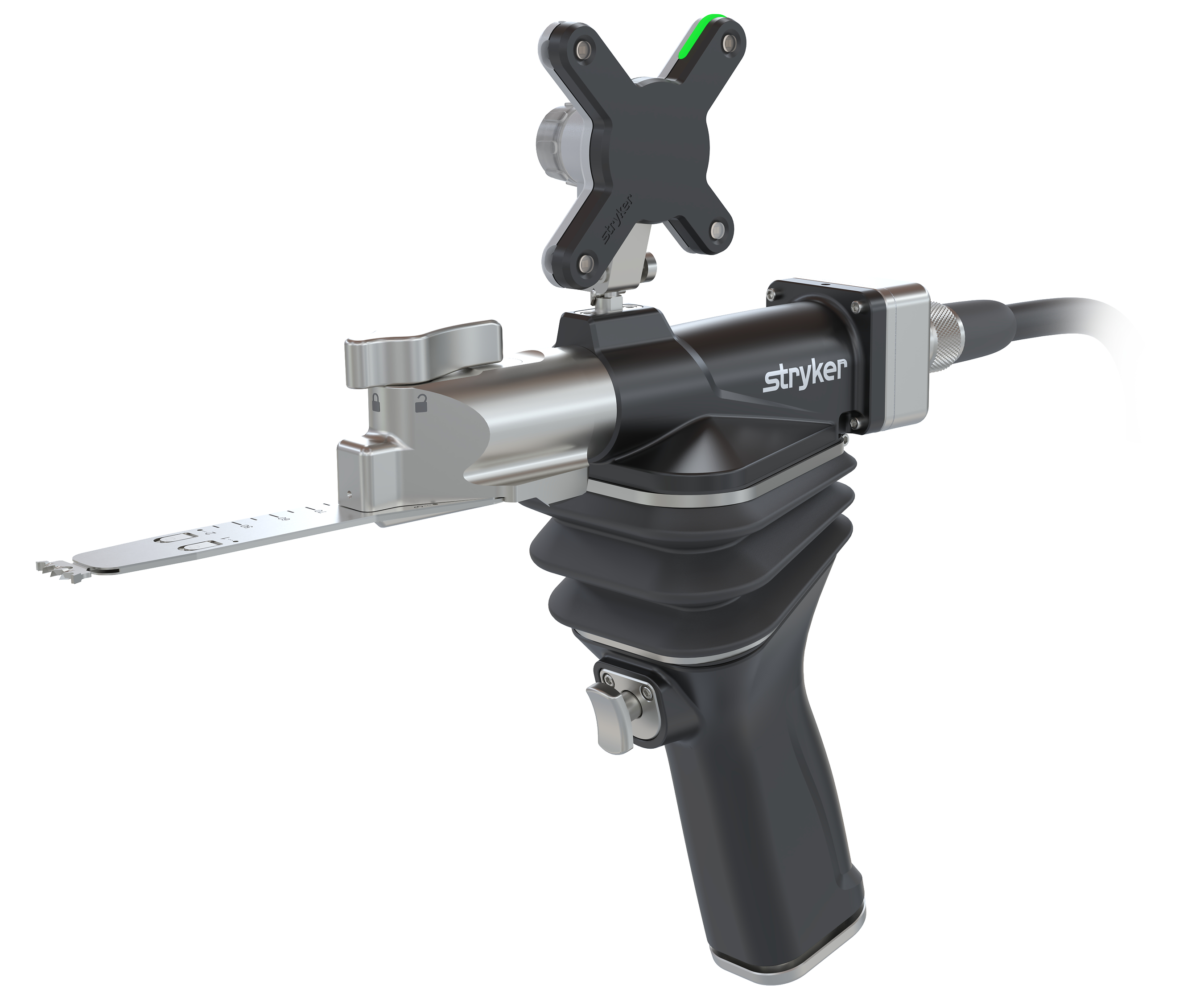
In July 2026, Stryker expanded its Mako robotics portfolio with the launch of the Mako RPS handheld robotic platform, a system designed to enhance robotic-assisted total knee replacement by integrating robotic-enabled saw cutting and patented active adjustment technology. This innovation allows real-time alignment with the surgical plan and seamless compatibility with the Triathlon Total Knee System, effectively eliminating the need for traditional cutting blocks. The market responded enthusiastically, with Stryker’s shares surging 4.7%, reflecting strong investor confidence in the company’s orthopedic robotics innovation.
The Mako RPS system represents a strategic extension of Stryker’s Mako ecosystem from robotic-arm systems into handheld robotics, blending robotic precision with familiar surgical workflows to lower barriers for adoption among a broader range of surgeons and care settings. Executives Keith Evans and Lisa Kloes emphasized this design philosophy, aiming to democratize access to robotic-assisted surgery by integrating intraoperative planning with a robotically enabled saw and compatibility with the Q Guidance platform, thereby expanding the reach of Stryker’s surgical robotics technology.
While the Mako RPS launch reinforces robotics as a pivotal growth catalyst for Stryker and underscores the centrality of robotics and enabling technologies in its long-term innovation pipeline, it does not materially alter near-term challenges such as supply chain reliability and pricing pressures. These operational sensitivities remain critical watchpoints ahead of upcoming earnings, suggesting that despite the technological leap, Stryker must navigate ongoing market and production complexities to fully capitalize on its expanded handheld robotics portfolio.
Financial Resilience Amid Pressure
Despite margin contraction and acquisition costs, Stryker sustains robust cash generation and reaffirms bullish growth targets, betting on procedural demand to offset reimbursement and operational headwinds.
By early 2026, Stryker showcased a resilient financial profile with Q1 net sales climbing 2.6% to $6.0 billion and organic growth of 2.4%, alongside a robust increase in operating cash flow to $581 million from $250 million the previous year. Despite these gains, margin pressures surfaced as adjusted operating income margins contracted by 180 basis points to 21.1%, driven by acquisition and integration costs, which also led to an 8.5% decline in adjusted diluted EPS to $2.60. Nonetheless, management maintained a confident outlook, reaffirming full-year 2026 guidance of 8.0% to 9.5% organic net sales growth and adjusted EPS between $14.90 and $15.10, signaling strong conviction in the underlying procedure demand and pricing resilience.
Stryker’s diversified portfolio, spanning MedSurg, Neurotechnology, and Orthopaedics, underpins its balanced growth and financial flexibility by reducing dependence on the more volatile capital equipment segment. In fiscal 2025, MedSurg and Neurotechnology accounted for 62% of net sales ($15.65 billion), with Orthopaedics contributing 38% ($9.47 billion), and both segments delivered solid organic sales growth in Q1 2026—5.0% and 4.1% respectively—highlighting the strength of its procedure-driven installed base model.
The July 2026 launch of the Mako RPS handheld robotic knee system reinforces Stryker’s commitment to surgical robotics as a key growth engine, projecting ambitious targets of $32.6 billion in revenue and $6.5 billion in earnings by 2029. However, this innovation does not immediately mitigate near-term challenges such as supply chain reliability and pricing pressures, which remain critical watchpoints for investors. Consequently, market valuations vary widely—from $331 to $402 per share—reflecting divergent views on whether Stryker can successfully balance heavy investment in robotics with sustaining financial discipline amid reimbursement headwinds.
THINK Surgical Bets Big
A $65 million capital boost propels THINK Surgical’s TMINI robot, whose broad implant compatibility and scalability intensify the race for dominance in adaptable orthopedic robotics.
By mid-2026, THINK Surgical’s strategic move to secure a $65 million debt facility from Symbiotic Capital to scale its TMINI orthopedic robotic platform underscores the intensifying financial commitments fueling growth in surgical robotics within orthopedics. This substantial capital injection not only accelerates TMINI’s development and commercialization but also reflects investor confidence in the sector’s expansion potential, as highlighted by Symbiotic Capital’s Himani Bhalla, who emphasized the platform’s dual value proposition for physicians and patients alike.
THINK Surgical’s TMINI system distinguishes itself competitively by its broad compatibility, supporting approximately 70% of the total knee implant market and multiple implant brands. This versatility enhances its market penetration potential and positions the company as a formidable player in orthopedic robotics, signaling a strategic focus on scalability and interoperability that aligns with broader industry trends toward adaptable robotic platforms.
