Submarine surge: electric boat ramps up hiring, training push
The gist
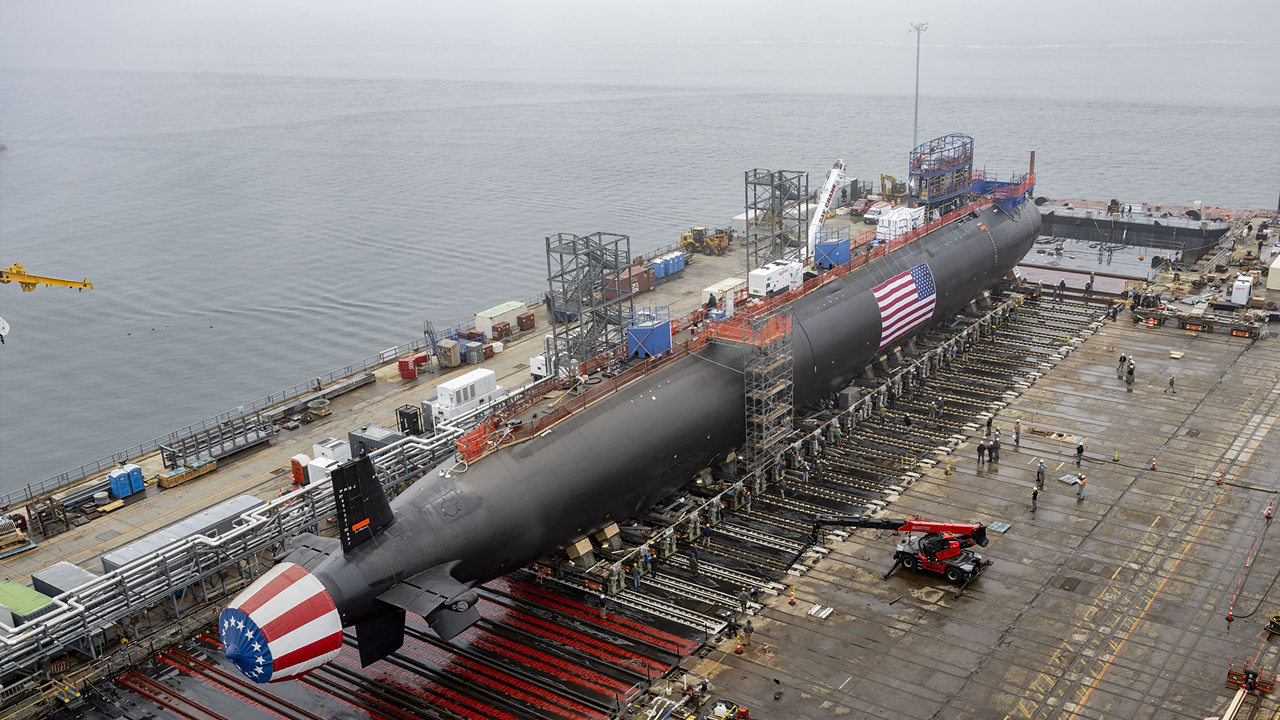
General Dynamics Electric Boat is on a hiring and training blitz, fueled by a record $76.6 billion Navy contract to supercharge America’s submarine fleet through 2038.
What to know
- The contract funds 14 nuclear subs—five Columbia-class and nine Virginia-class—locking in continuous production and major shipyard expansions.
- Electric Boat plans to hire 8,000 workers by 2026 and, with partners like NEIT, will train thousands annually in trades like welding and machining.
- Despite faster supply chain deliveries and a $5B industrial base boost, sole-source supplier bottlenecks remain a challenge as the Navy targets two new Virginia-class subs per year by 2028.
Historic Submarine Investment
A $76.6 billion contract is reshaping America’s submarine fleet, fueling massive shipyard expansions and guaranteeing uninterrupted production through 2038.
The landmark $76.6 billion contract awarded to General Dynamics Electric Boat and Newport News Shipbuilding marks a transformative investment in the U.S. submarine industrial base, encompassing the construction of 14 nuclear-powered submarines—five Columbia-class ballistic missile subs and nine Virginia-class attack subs. This allocation, with $29.5 billion dedicated to Columbia-class and $42.1 billion to Virginia-class vessels, not only sustains continuous production but also modernizes the undersea fleet amid an expanding operational portfolio that includes seven Columbia-class and 26 Virginia-class subs already under contract or in service. The deal further commits to extensive shipyard expansions and workforce growth at key facilities in Groton, Connecticut, and Quonset Point, Rhode Island, underscoring a comprehensive approach to industrial capacity building.
Beyond the sheer scale of production, this contract embodies a strategic imperative for national security and industrial base resilience, underpinning the recapitalization of the nation’s nuclear triad and ensuring uninterrupted submarine manufacturing through at least 2038. Navy and company leaders have hailed the agreement as a 'historic investment' and a 'major milestone in defense acquisition transformation,' reflecting its critical role in maintaining long-term deterrence capabilities while stabilizing a workforce and infrastructure essential for sustained undersea dominance.

Training Pipeline Transformation
Electric Boat and NEIT are scaling up training facilities and incentives, forging a direct path from classroom to high-demand submarine manufacturing jobs.
Electric Boat is aggressively scaling its workforce to meet the demands of a historic $76.6 billion Navy contract by planning to hire 8,000 new employees by 2026. Central to this effort is the creation of the Shipbuilding Advanced Institute for Learning (SAIL) at the redeveloped Crystal Mall site, designed to train up to 400 individuals daily and rapidly expand workforce capacity to 4,000–5,000 employees by mid-2025. This ambitious build-out underscores Electric Boat's commitment to aligning workforce growth tightly with production goals.
In partnership with the New England Institute of Technology (NEIT), Electric Boat is dramatically expanding training infrastructure by tripling NEIT’s Warwick campus to 100,000 square feet, establishing it as the primary hub for submarine workforce development in Rhode Island. This expansion, supported by a combined $45 million investment from the U.S. Navy’s Submarine Industrial Base and General Dynamics Electric Boat, will enable the Shipbuilding Advanced Institute for Learning to train approximately 3,000 new hires annually over the next three years. The facility will offer hands-on instruction in critical trades such as welding, shipfitting, and machining, while also providing ongoing upskilling and recertification to maintain a versatile and skilled workforce.
The collaboration between Electric Boat, NEIT, and federal and state leaders is not only expanding training capacity but also creating direct pathways to well-paying manufacturing careers, reinforcing Rhode Island’s strategic role in the U.S. submarine industrial base. As NEIT President Richard Gouse emphasizes, this partnership is pivotal in cultivating a skilled labor pipeline tailored to the industry’s evolving needs. Complementing these efforts, Electric Boat has introduced an employee incentive program that accelerates production by rewarding workers for meeting delivery milestones, a strategy highlighted by Contracts VP Mark Nackman who notes, 'The incentives are structured in a way that each step along the way we're incentivized to be going as fast as we can.'
Supply Chain Progress—and Risks
Despite faster supplier deliveries and a $5 billion base boost, sole-source bottlenecks threaten the Navy’s push for two new subs a year by 2028.
By mid-2026, General Dynamics Electric Boat has benefited from notable improvements in delivery speeds among its supply chain partners, which has been crucial for maintaining its submarine production schedule. However, persistent challenges with sole-source suppliers continue to complicate efforts to build a resilient and flexible supply chain, underscoring the delicate balance between progress and vulnerability in the industrial base.
A substantial $5 billion investment aimed at revitalizing the submarine industrial base is gradually enhancing both labor retention and supplier capacity, though these gains are unfolding incrementally rather than instantaneously. This cautious but steady progress supports the ambitious goal of producing two Virginia-class submarines annually by 2028, reflecting a tempered optimism that acknowledges the time-intensive nature of scaling production and fortifying supply chains.

University-Led Innovation Surge
URI’s RISE-UP program, backed by Navy funding, is uniting academia, industry, and defense partners to accelerate new maritime and security technologies.
URI’s RISE-UP program stands as a prime example of how university-led initiatives can effectively bridge academia, industry, and government to accelerate the commercialization of dual-use technologies in maritime, energy, and defense sectors. Bolstered by a $2.5 million grant from the U.S. Office of Naval Research, the RISE-UP 4.0 expansion not only enhances workforce development but also deepens collaboration with prominent partners such as Saab, Anduril, General Dynamics Electric Boat, and key research institutions like the University of Alaska Fairbanks and Naval Undersea Warfare Center Division Newport. This integrated innovation ecosystem positions URI as a pivotal catalyst for advancing national security technologies while driving regional economic growth.