Supreme court decapitates agency independence, crowns president with sweeping firing power—except at the Fed
The gist
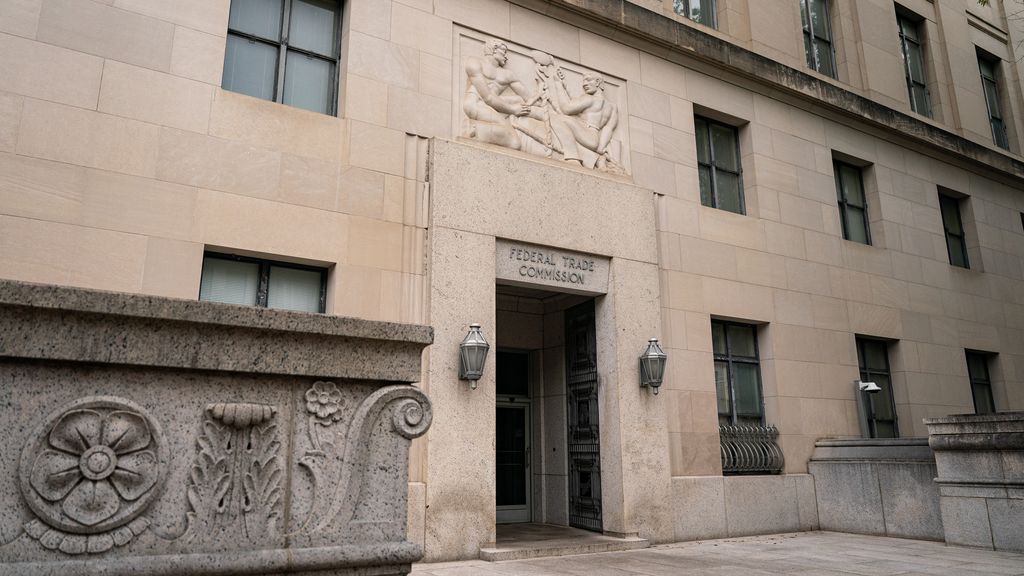
The Supreme Court just handed the president sweeping power to fire independent agency leaders at will—except at the Federal Reserve—upending nearly a century of regulatory checks and balances.
What to know
- The Trump v. Slaughter ruling overturns the 1935 Humphrey’s Executor precedent, letting presidents axe officials from agencies like the FTC, SEC, and FCC without cause.
- The Court carved out a special exception for the Federal Reserve, blocking President Trump’s attempt to fire Fed Governor Lisa Cook and affirming unique due process protections.
- Experts warn this seismic shift could politicize rulemaking, fuel agency instability, and revive a spoils system where loyalty trumps expertise.
Presidential Power Unleashed
The Supreme Court’s Trump v. Slaughter decision shatters nearly a century of agency independence, handing presidents sweeping authority to fire regulatory officials at will and igniting fears of political retaliation.
In a landmark 2026 decision in Trump v. Slaughter, the Supreme Court, led by Chief Justice John Roberts, overturned the 1935 Humphrey’s Executor precedent, dramatically expanding presidential authority to remove officials from independent agencies like the Federal Trade Commission at will. Embracing the unitary executive theory, the Court asserted that executive power vests solely in the president, enabling unilateral firing of agency heads without cause and effectively dismantling nearly a century of bipartisan protections designed to preserve agency independence. Roberts described independent agencies as a “headless fourth branch” of government, justifying the need for direct presidential control to ensure accountability, while Justice Gorsuch acknowledged the vast new powers granted but warned of potential abuses and political retaliation against disfavored individuals or businesses.
Despite this sweeping expansion of presidential removal power, the Court drew a clear legal distinction preserving the Federal Reserve’s unique protections, blocking President Trump’s attempt to fire Fed Governor Lisa Cook without cause and due process. This carve-out underscores a selective application of the unitary executive theory, with the Court affirming Congress’s authority to shield the Fed from at-will removal, recognizing its critical role in monetary policy governance as distinct from regulatory agencies like the FTC. Justice Breyer emphasized that while the president’s removal power has broadened, it does not extend unconditionally to all federal officials, leaving open questions about the scope of executive authority beyond agencies explicitly exercising executive power.
The Court’s ruling not only legitimizes recent presidential purges of independent agencies—including the FTC, FCC, and NLRB—but also signals a profound shift in the balance of power between Congress and the presidency. By stripping away the bipartisan safeguards that insulated agency heads from political interference, the decision places these officials squarely under presidential control, raising concerns about the politicization of regulatory governance and the erosion of impartial, long-term policymaking. Legal experts warn that this newfound authority enables presidents to remove officials for political reasons without cause, potentially destabilizing agencies and undermining their ability to function as independent arbiters.
Underlying this legal transformation is a faction within the Supreme Court that views federal agencies as constitutionally problematic, advocating for a recalibration of power that diminishes bureaucratic autonomy in favor of executive control. This ideological stance reflects a broader conservative legal movement skeptical of the administrative state, with some justices suggesting that many agencies should be dismantled entirely. The ruling thus not only reshapes presidential removal power but also signals a potential long-term shift in the constitutional role and legitimacy of federal agencies within the American government.




Bipartisan Safeguards Eroded
By toppling long-standing protections for independent agencies, the Court’s ruling threatens bipartisan governance, risks a return to spoils system politics, and destabilizes regulatory planning across the federal government.
The Supreme Court's 2026 ruling in Trump v. Slaughter dismantled a 90-year-old precedent protecting the independence of multi-member federal agencies such as the FTC, SEC, FCC, and NLRB by allowing the president to remove commissioners at will. This landmark 6–3 decision overturned the 1935 Humphrey’s Executor precedent, fundamentally shifting the balance of power toward the executive branch and expanding presidential control over more than two dozen independent agencies previously insulated from direct political influence. Chief Justice Roberts emphasized that 'if anything more is left of Humphrey’s, the Court overrules it,' signaling a profound transformation in regulatory governance.
This ruling threatens the bipartisan governance and regulatory stability that independent agencies have historically maintained, raising alarms about the erosion of consumer protection, antitrust enforcement, and civil service integrity. Former FTC Commissioner Rebecca Kelly Slaughter highlighted that bipartisan leadership fosters durable policy decisions by requiring engagement across political perspectives, warning that the ability of presidents to remove commissioners at will risks agencies swinging wildly with each administration and losing the 'quality of debate and discussion.' Moreover, the decision revives fears of a modern-day Spoils System reminiscent of Andrew Jackson’s era, where loyalty to the president could trump merit and constitutional fidelity, undermining the civil service and long-standing norms of impartial governance.
The ruling's practical consequences extend beyond agency leadership to destabilize regulatory planning and complicate enforcement of emerging issues like AI regulation. Analysts note that regulatory policy will now track presidential election cycles more closely, shortening planning horizons from a decade to as little as four years and increasing operational chaos for regulated entities. Additionally, the elimination of guaranteed minority-party representation on commissions raises constitutional questions and risks agency dysfunction, prompting companies to shift advocacy strategies toward the White House and cabinet-level agencies to influence policy amid heightened politicization.
While some conservatives, including former FTC technologist Neil Chilson, view the decision as a necessary correction to reassert presidential accountability over agencies accused of overreach, the ruling aligns with the unitary executive theory that prioritizes presidential control over executive personnel at the expense of traditional separation of powers. This shift has already manifested in cases like the Surface Transportation Board's termination of Robert Primus without cause, illustrating the diminished job protections for agency leaders and signaling a new era where independent agencies may serve more as instruments of the executive rather than impartial regulators accountable to Congress and the public.



Fed’s Firewall Holds Firm
The Court drew a hard line protecting the Federal Reserve’s autonomy, blocking President Trump’s attempt to oust Lisa Cook and affirming that Fed governors cannot be removed without due process—even as other agencies lose such shields.
The Supreme Court's landmark 5–4 ruling in June 2026 firmly upheld the Federal Reserve's statutory and constitutional independence by blocking President Trump's attempt to immediately remove Fed Governor Lisa Cook over mortgage fraud allegations without due process. Chief Justice John Roberts underscored that the president cannot remove a Fed governor “for any reason, or no reason,” emphasizing the unique status of the Federal Reserve as insulated from at-will executive interference to preserve economic stability and sound monetary policy. This decision marked the first time a sitting Fed governor faced presidential firing attempts and allowed Cook to remain on the Board while litigation continued, signaling judicial caution in altering the Fed’s governance structure amid broader expansions of presidential removal power over other independent agencies.
Central to the Court’s ruling was the affirmation of robust due process protections for Federal Reserve governors, requiring that any removal must be preceded by notice, an opportunity to respond, and a clear explanation of evidence. The Court remanded Lisa Cook’s case precisely because she had been denied these procedural safeguards, highlighting that mere allegations of wrongdoing are insufficient grounds for removal. Justice Roberts articulated that the president failed to accord Cook the procedural protections mandated by statute, reinforcing that the Fed’s independence is not absolute immunity but contingent on adherence to formal removal procedures designed to prevent arbitrary or politically motivated dismissals.
While the Court preserved the Federal Reserve’s distinct removal protections, it deliberately refrained from establishing a blanket 'for cause' removal rule, leaving unresolved critical questions about what constitutes legal cause and how these standards will be applied in future cases. Justice Amy Coney Barrett acknowledged the 'serious tension' and ambiguity surrounding the Fed’s unique status compared to other agencies, reflecting ongoing legal uncertainty. This nuanced approach balances the Fed’s need for insulation from political pressures with a recognition that presidents may remove governors if they can meet procedural and substantive cause requirements, thereby maintaining a delicate equilibrium between executive oversight and monetary policy independence.
The Court’s decision to shield the Federal Reserve from at-will removal stands in stark contrast to its simultaneous rulings that expanded presidential firing power over other independent agencies like the Federal Trade Commission, signaling a judicial recognition of the Fed’s critical role in safeguarding economic stability. This exception underscores the legal and policy significance of preserving the Fed’s autonomy against political interference, as unchecked presidential control over monetary policy could destabilize financial markets—risks the Court implicitly acknowledged by protecting Fed governors such as Lisa Cook. As former CFPB Director Rohit Chopra noted, while the ruling bars arbitrary removal, it leaves the door open for future firings if procedural safeguards are properly observed, illustrating the ongoing tension between independence and accountability in economic governance.


Checks and Norms Upended
Legal experts and dissenting justices warn the ruling hands the presidency unprecedented control over agency heads, fueling accusations of royalism, undermining public trust, and setting off calls for urgent institutional reform.
The Supreme Court's 2026 ruling in Trump v. Slaughter dramatically expands presidential power by overturning a 91-year precedent that protected independent agencies from at-will removal, effectively dismantling a key democratic check on executive authority. Justice Sotomayor warned the Court had granted the president "more power than kings," while Chief Justice Roberts criticized independent agencies as a “headless fourth branch” now subsumed under presidential control. This shift revives fears of the 19th-century spoils system, where agency heads could be purged for political loyalty rather than merit, threatening the impartial governance that agencies like the FTC, OSHA, and SEC historically provided. Experts including Rebecca Kelly Slaughter and Senator Cory Booker have voiced concerns that this ruling transforms agencies designed to serve the public interest into instruments of executive power, eroding bipartisan debate and weakening the civil service expertise built over centuries.
The ruling has ignited intense debates over the Supreme Court’s legitimacy and its role in safeguarding democracy, especially as it coincided with the nation’s 250th anniversary. Critics like Boston University law professor Jed Shugerman have accused the Roberts Court of “embracing royalism,” exceeding even historical monarchical powers by concentrating authority in the presidency. The Court’s selective exemption of the Federal Reserve from removal powers—highlighted by Justices Roberts and Kavanaugh’s refusal to allow President Trump to fire Fed Board member Lisa Cook—has been denounced as political opportunism, further undermining public trust. This perceived hypocrisy fuels calls for reforms to restore democratic checks and balances and preserve institutional legitimacy amid rising political polarization.
While the ruling is hailed by some as a corrective measure against the so-called 'deep state'—an entrenched bureaucracy insulated from voter control since the 1883 Pendleton Act—it raises profound questions about the future of administrative governance and democratic accountability. By empowering presidents to remove agency officials at will, the decision introduces a potent political tool that could be wielded to purge opponents and reshape federal agencies with each administration change, intensifying partisan swings and destabilizing long-standing norms of merit-based public service. Justice Breyer and others have expressed concern about the ruling’s uncertain boundaries, pondering whether it might extend to administrative law judges or territorial courts, thereby further eroding independent oversight and complicating the balance of powers.

Regulatory Chaos and Global Ripples
Industry and international partners scramble to adjust as agency instability, politicized enforcement, and doubts over the FTC’s independence threaten everything from domestic rulemaking to transatlantic data flows.
The Supreme Court's ruling enabling presidents to remove members of independent agencies at will has forced regulated industries to rethink their advocacy strategies amid anticipated agency personnel upheaval. As noted in early July 2026 analyses, companies face operational chaos from potential mass firings that could disrupt agency quorums, such as the National Labor Relations Board losing its minority member and thus its decision-making capacity. Consequently, regulated parties are broadening their engagement beyond traditional multi-member commissions to include the White House and cabinet-level agencies, leveraging new political pathways intensified by the Office of Management and Budget's expanded role since 2025.
This judicial shift has accelerated the politicization of regulatory agencies like the FTC, where the president’s newfound power to dismiss commissioners undermines bipartisan independence and injects overt political pressure into regulatory decisions. Experts such as Herb Hovenkamp and former FTC technologist Neil Chilson highlight that the FTC now operates under a 'different world' where presidential threats can sway rulings, complicating the agency’s ability to regulate emerging technologies like AI without partisan influence. This dynamic increases reliance on congressional oversight and public commentary to preserve minority viewpoints and maintain checks on agency power.
Internationally, the ruling has destabilized the EU-US Data Privacy Framework by calling into question the FTC’s independence, a cornerstone of the agreement’s adequacy under GDPR Article 45(2)(b). Privacy advocates like noyb have urged an orderly withdrawal from the framework, citing the Supreme Court decision as undermining the legal foundation for transatlantic data transfers. While the framework remains operational as of mid-2026, the ruling has intensified debates on data sovereignty and propelled European initiatives to develop local data infrastructure, signaling a potential fracturing of US-EU data cooperation and heightened regulatory uncertainty for companies reliant on cross-border cloud strategies.
Despite heightened concerns over regulatory independence and data privacy, actual engagement by EU citizens with the procedural protections under the EU-US Data Privacy Framework remains minimal, with reports indicating only one or two complaints filed. This limited utilization contrasts sharply with the significant strategic advantage the ruling grants challengers of the framework, effectively delivering a 'penalty kick' against its validity and threatening EU companies’ ability to comply with GDPR adequacy requirements and access US digital services. This paradox underscores the complex interplay between legal certainty, political shifts, and practical enforcement in the evolving transatlantic regulatory landscape.
Due Process in the Crosshairs
Expanded presidential removal powers spark constitutional uncertainty, as agency adjudicators face mounting pressure to align with executive preferences—casting a shadow over impartiality and fair process in federal governance.
The Supreme Court's decision in the Cook case underscores unresolved due process dilemmas surrounding the removal of Federal Reserve governors, revealing a constitutional tension between executive authority and agency independence. Justice Amy Coney Barrett highlighted the 'serious tension' between this ruling and the earlier Trump v. Slaughter decision, questioning how historical precedent can simultaneously support broad presidential removal powers and carve out protections for certain officials like Fed governors. Former CFPB Director Rohit Chopra emphasized this ambiguity, noting that while President Trump could not simply oust Lisa Cook, the ruling leaves open avenues for future removals if the administration follows the 'proper channels,' leaving the precise definition of 'cause' to lower courts and prolonging legal uncertainty.
The expanded presidential removal power recognized in Trump v. Slaughter raises profound due process concerns by potentially compromising the impartiality of agency adjudicators. As detailed in the July 2026 analyses, officials who face dismissal for decisions displeasing the president may be incentivized to align rulings with executive preferences, violating the due process principles established in Tumey v. Ohio and Gibson v. Berryhill. This dynamic creates a conflict of interest akin to the 'possible temptation' that Tumey prohibits, where adjudicators’ job security hinges on political loyalty rather than impartial judgment, thereby risking invalidation of administrative adjudications.
The current political climate, marked by numerous unexplained firings of federal officials including immigration and administrative law judges, exacerbates the chilling effect on agency adjudicators and deepens due process uncertainties. The erosion of traditional job protections—especially in agencies like the FTC where congressional confirmation no longer guarantees tenure—amplifies fears that presidents could dismiss politically opposed officials without cause, undermining fairness and Fifth Amendment protections. Analysts warn that unless the Supreme Court's composition shifts or Congress enacts stronger safeguards, this expanded executive removal power will persist, leaving agency adjudications vulnerable to constitutional and procedural conflicts.