Tariffs push supply chains regional
The gist
Tariff tensions and forced labor crackdowns have shattered global trade as we knew it—ushering in a high-stakes era of regional supply chains, relentless policy uncertainty, and a scramble for resilience.
What to know
- By early 2026, U.S.-China rivalry drove tariffs to WWII-era highs, with Section 301 tariffs and forced labor rules now touching 80–85% of world trade.
- Companies are pouring over $100 billion into reshoring (biopharma leads the charge), with 79% shifting sourcing away from China and nearshoring to hubs like Mexico and India.
- Tariffs are now permanent, complex, and digitally managed, forcing firms to lean on AI-powered compliance and advanced logistics—while the old era of globalization fades fast.
Tariffs Weaponized in Power Rivalry
Tariffs have become a tool of geopolitical leverage, with the U.S. using trade policy to pressure allies and adversaries alike, fueling global uncertainty and delaying major trade agreements.
By early 2026, the persistent U.S.-China rivalry has entrenched a volatile trade environment marked by tariff uncertainty and escalating geopolitical tensions that continue to disrupt global supply chains, especially in critical sectors like memory chips and rare earth minerals. The U.S. administration's legal battles over tariff authority, exemplified by the Supreme Court's rejection of the International Emergency Economic Powers Act for tariffs and the subsequent imposition of a 10-15% tariff via executive order, have compounded instability, delaying trade agreements with partners such as the EU and India. This uncertainty is further intensified by U.S. demands on allies like South Korea and Japan to increase investments under threat of tariff hikes, underscoring how trade policy is being wielded as a strategic lever amid great-power competition. Industry leaders like Jason Oxman emphasize that companies urgently need tariff certainty to sustain investment and navigate this fraught landscape.
The global trade landscape has shifted from episodic trade wars to a sustained era of structural protectionism, characterized by a clear East-West divide and increased regionalization. Average effective tariffs between the U.S. and the rest of the world have surged to approximately 10%, the highest since World War II, with further increases expected on strategic industries such as rare earth minerals. This protectionism is highly targeted, varying by industry and trade partner, reflecting a nuanced U.S. strategy that differentiates between critical defense allies—whose trade agreements are described as 'truces, not really deals'—and emerging markets like China, India, and Brazil, which wield greater negotiation leverage. Such dynamics underscore a permanent recalibration of global supply chains away from globalization toward geopolitical alignment.
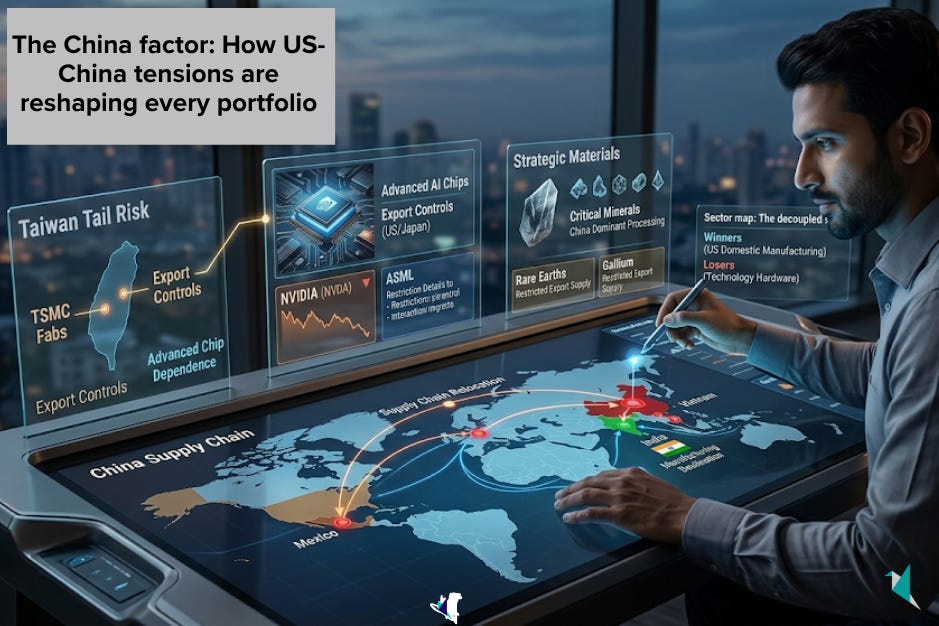
The U.S.-China economic decoupling has become a deliberate, multi-front campaign reshaping global supply chains and embedding geopolitical risk into market valuations. This process, rooted in strategic vulnerabilities exposed by decades of deep integration since the 1990s and China's WTO accession in 2001, has accelerated through successive escalations: the 2018-2019 trade war, COVID-19 disruptions, 2022 semiconductor export controls involving allies like the Netherlands and Japan, and the 2025 'Liberation Day' tariff regime that pushed tariffs on Chinese goods to multidecade highs. Both nations now accept near-term economic pain—manifested in tariffs and retaliatory measures on sectors from agriculture to technology—to achieve long-term goals of reducing mutual dependence, with critical supply chain nodes such as Taiwan's TSMC and China's rare-earth processing capacity becoming focal points of geopolitical contestation.
In March 2026, the U.S. Trade Representative launched a sweeping global investigation under Section 301 into forced labor practices across supply chains in over 60 economies, including major partners like China, India, and the EU. This probe, unfolding from March through July with public hearings and diplomatic consultations, aims to establish a legal foundation for a new U.S. tariff regime potentially affecting 80-85% of global trade in sectors such as textiles, electronics, and automotive. This strategic pivot follows the Supreme Court's invalidation of parts of the Trump-era tariff framework, compelling the Biden administration to adopt Section 301 as an alternative mechanism to maintain trade pressure and enforce labor standards, thereby weaponizing trade policy to address human rights concerns while sustaining economic leverage.






Reshoring Redefines Biopharma Supply
U.S. regulatory crackdowns forced a $100 billion biopharma reshoring wave, triggering a scramble for Western manufacturing capacity and driving up valuations as companies race to exit China.
By early 2026, U.S. tariffs and regulatory measures like the BIOSECURE Act catalyzed a strategic reshaping of supply chains, particularly in biopharma, where companies such as Novo Nordisk and Eli Lilly invested over $100 billion to reshore and expand sterile fill-finish capacity domestically and in allied countries. This reshoring was driven by prohibitions on using Chinese biotech firms like WuXi AppTec, forcing a five-year wind-down of contracts and pushing Western CDMOs like Lonza and Samsung Biologics to absorb displaced capacity at premium valuations of 15–20x EBITDA. Concurrently, 79% of companies across sectors diversified sourcing away from China in 2025, expanding into Southeast Asia and India, while leveraging Foreign Trade Zones and bonded warehouses to mitigate tariff impacts and enhance supply chain resilience.
Amid escalating geopolitical risks and trade uncertainties, firms increasingly prioritized supply chain resiliency by reducing reliance on single-source suppliers in China and Asia, embracing agility through redesigned logistics networks that shifted up to half of freight to new routes and modes, including intermodal transport and port diversification. Companies also adopted flexible contract strategies, favoring shorter durations and spot market freight usage to swiftly adapt to policy changes, while front-loading shipments ahead of tariff deadlines helped over half avoid higher duties despite increased storage and working capital pressures. Foreign Trade Zones emerged as a critical tool in this resilience playbook, facilitating cost management and compliance amid ongoing geopolitical volatility.
The fashion industry exemplifies a pronounced shift from broad sourcing diversification toward strategic consolidation, with nearly half of brands planning to reduce their supplier base over the next two years to enhance capacity, flexibility, and compliance amid persistent tariff challenges. While overall geographic sourcing diversity remains stable—brands sourced from 49 countries in 2026, up from 46 in 2025—the share sourcing from 20 or more countries dropped sharply, reflecting a focus on deepening partnerships with fewer, more capable vendors. Nearshoring into CAFTA-DR countries surged, with 76% sourcing from the region to leverage duty-free benefits under the 'yarn-forward' rule, yet reshoring to the U.S. remains limited, with only about 10% increasing 'Made in the USA' sourcing despite tariff pressures.
Beyond immediate tariff mitigation, U.S. fashion firms are transitioning from crisis-driven tactics to long-term operational resilience, emphasizing supply chain optimization, compliance capabilities, and strategic supplier partnerships. This evolution is marked by increased renegotiation and extension of contracts—rising from 61% in 2025 to 63% in 2026—and a growing embrace of multi-country sourcing platforms like the PDS-Busana partnership spanning six countries to flexibly navigate tariff fluctuations and market demands. Despite softening industry optimism, hiring in specialized roles such as data science and trade compliance remains robust, underscoring a commitment to sophisticated supply chain management amid ongoing trade policy challenges.


Regional Supply Chains Take Hold
Global supply chains are fragmenting into regional blocs, as companies pivot to nearshoring hubs like Mexico and India to minimize geopolitical risk and shorten lead times.
The global supply chain landscape is undergoing a profound transformation from broad globalization toward a multipolar and regionalized structure, largely driven by escalating US-China tensions and structural protectionism. Since the 2018–2019 trade war, accelerated by the COVID-19 pandemic and hardened by export controls and tariff escalations such as the 2025 Liberation Day regime, companies have been compelled to physically relocate supply chains across continents to reduce dependency and geopolitical risk. This shift has crystallized into distinct regional blocks—Asia, Europe, and North America—each developing nearshoring hubs like Mexico, Southeast Asia, and India that emphasize proximity, shorter lead times, and geopolitical stability, as noted by analysts observing a “permanent era of structural protectionism” dividing East and West.
Tariffs and trade policy uncertainties have accelerated the diversification and regionalization of supply chains, with nearly 79% of companies in 2025 shifting sourcing away from China toward Southeast Asia and India, while Mexico has emerged as the primary nearshoring hub for the US, surpassing China as the main source of imports by 2023. This nearshoring trend is reshaping logistics networks, boosting intermodal freight demand in North America, and prompting companies to adopt flexible contracts and multiple sourcing strategies to navigate persistent geopolitical disruptions. However, challenges remain, including infrastructure deficits and regulatory uncertainties in Latin America, as well as complex trade rules like the USMCA’s yarn-forward provisions, which have unsettled sourcing plans in sectors such as apparel despite Mexico’s advantages in speed to market and duty savings.
Beyond cost considerations, companies increasingly prioritize supply chain resilience, speed to market, and proximity to demand centers, recognizing that highly globalized supply chains often add complexity and environmental costs without commensurate value. Surveys reveal that US executives are actively re-evaluating sourcing strategies, with three out of five emphasizing regional and domestic sourcing to reduce lead times and enhance flexibility. This strategic pivot is supported by significant investments in digital tools and data-driven processes—74% of companies plan supply chain digitization in 2026—to gain end-to-end visibility and anticipate disruptions in complex multipolar networks, reflecting a broader move from 'just in time' to 'just in case' inventory models amid constant geopolitical instability.
Nearshoring offers tangible benefits in speed and risk mitigation, especially when proximity to customers is critical, but its cost-effectiveness hinges on factors such as manufacturing efficiency, labor availability, and compliance with evolving trade policies. For example, the Western Hemisphere’s growing nearshoring activity is creating new demand for traceable U.S. cotton, as manufacturers seek to shorten delivery times and meet stringent rules of origin and customs enforcement. Yet, companies must navigate trade-offs, balancing higher nearshoring costs against resilience gains, while competing on price, quality, and traceability to capitalize on this regionalization trend amid ongoing geopolitical and economic uncertainties.




Tariff Regimes Rewrite Trade Rules
Permanent, region-specific tariffs and forced labor enforcement have upended trade flows and forced companies to overhaul sourcing, compliance, and logistics strategies.
The U.S. tariff landscape has undergone a profound transformation since early 2026, shifting from emergency powers under the International Emergency Economic Powers Act to a more structured yet volatile regime under Section 301 of the Trade Act of 1974. This transition, catalyzed by a Supreme Court ruling invalidating prior tariffs, introduced temporary 10% global tariffs that evolved into permanent, variable tariffs ranging from 10% to 12.5% targeting over 60 economies, including key trading partners such as China, India, and the EU. As Ambassador Jamieson Greer explained, tariffs are now strategically layered by region to reflect geopolitical priorities, with the highest rates imposed on China due to overproduction and non-market practices, while tariffs remain lower in the Western Hemisphere to encourage nearshoring and regional supply chains. This evolving tariff regime has disrupted trade negotiations, delayed agreements with the EU and India, and forced companies to reconsider their global sourcing and logistics strategies amid persistent uncertainty.
Forced labor enforcement has emerged as a central geopolitical lever intertwined with tariff policy, dramatically reshaping global trade dynamics. The USTR’s 2024 launch of a sweeping Section 301 investigation targeting forced labor practices in supply chains across 60 economies—representing 80-85% of global trade and over $40 trillion in GDP—signaled a new era where labor standards enforcement is inseparable from trade policy. The resulting tariffs, ranging up to 12.5%, selectively penalize countries based on compliance levels, as seen with Nigeria facing the highest rates and others like India and Canada receiving reduced duties due to partial reforms. This approach has pressured countries such as the Philippines and Malaysia to strengthen forced labor controls, while sectors like apparel and electronics remain highly vulnerable, with 98% of U.S. apparel imports originating from high-risk countries. As USTR Ambassador Greer noted, these measures aim to level the playing field for American workers but have also sparked diplomatic tensions and legal challenges, underscoring the permanence and complexity of forced labor enforcement as a trade reality.
In response to tariff volatility and forced labor enforcement, companies have been compelled to redesign supply chains with agility and precision, transforming trade execution into a dynamic, tariff-optimized discipline. Surveys reveal that in 2025, over 85% of shippers front-loaded shipments to circumvent rising tariffs, though this strategy strained balance sheets through increased inventory and storage costs. Sourcing diversification accelerated markedly away from China toward Southeast Asia and India, with nearly 80% of firms adjusting supplier bases. Additionally, the use of bonded warehouses and Foreign Trade Zones (FTZs) surged, with over 40% of companies leveraging these tools to defer duties and absorb tariff fluctuations without disruptive relocations. As Matthias Hodel emphasizes, aligning supply chain strategy with corporate objectives and harnessing advanced analytics for real-time tariff exposure modeling are now essential to building 'decision muscle' and sustaining competitive advantage in an environment where tariffs are no longer temporary disruptions but enduring operational variables.
The ongoing tariff and forced labor enforcement regime has catalyzed a shift toward multi-country sourcing platforms and regional trade frameworks that offer flexibility amid persistent uncertainty. Apparel sourcing, for instance, increasingly relies on multi-country platforms capable of dynamically reallocating orders in response to variable Section 301 tariffs and forced labor-related duties, as exemplified by the PDS-Busana partnership. Meanwhile, trade agreements like CAFTA-DR provide duty-free access under the yarn-forward rule, granting countries such as Nicaragua and Honduras strategic advantages in the face of complex tariff landscapes. However, countries excluded from such arrangements, like Vietnam, face higher tariffs and mounting pressure to finalize reciprocal trade deals with the U.S. This environment underscores that tariff volatility and forced labor enforcement are no longer episodic challenges but enduring trade realities that compel continuous strategic adaptation across global supply chains.


Digital Compliance Becomes Essential
Surging tariff complexity and dynamic trade rules have made automation, analytics, and Foreign Trade Zones indispensable for cost control and operational agility.
By mid-2026, tariffs evolved from static cost factors into dynamic variables actively managed through sophisticated operational strategies such as mode selection, routing, and warehousing. The Infios Report highlights how companies increasingly rely on digital compliance systems to handle the near doubling of Harmonized Tariff Schedule classifications—from about 6 to 11.6 sequences per entry—and the rise in bonded warehouse usage from roughly 10% to 16–18%, signaling that duty deferral has become mainstream. This operational complexity underscores the necessity of automation and advanced analytics to maintain compliance and optimize costs amid tariff volatility.
The strategic shift in transportation modes further illustrates how logistics automation and analytics are employed to mitigate tariff risks. Air freight usage surged by approximately 12 percentage points while ocean freight declined by 10–12 points and did not rebound, reflecting a deliberate move to use faster, more flexible transport as a form of policy-risk insurance rather than mere cost optimization. This recalibration of supply chain logistics demonstrates companies’ growing agility in adapting to an unpredictable trade environment.
Foreign Trade Zones (FTZs) have emerged as critical tools for enhancing supply chain resilience amid soaring tariffs—now averaging 20 to 25% compared to 2.5% pre-Trump. FTZs offer four major financial benefits including duty deferral, exemption on exports, no duty on scrap or returns, and reduced merchandise processing fees exceeding $635 per entry, cumulatively saving companies hundreds of thousands annually. Investor interest has surged, with major real estate investment trusts integrating FTZ capabilities into new developments, reflecting the zones’ growing strategic and financial importance in supply chain design.
Artificial intelligence and digital transformation are central to building adaptive, resilient supply chains capable of navigating ongoing tariff volatility and geopolitical shifts. By mid-2026, 74% of companies planned investments in supply chain digitization to enhance end-to-end visibility, real-time collaboration, and data-driven decision-making, with fully mapped networks outperforming on quality and cost metrics. AI acts as a connective enabler, integrating resilience-building, automation ROI acceleration, and embedded trade compliance intelligence, allowing firms to model tariff exposure and FTZ savings proactively—turning previously complex trade compliance into a strategic operational advantage.

Resilience Versus Cost Pressures
The post-globalization era pits CFOs’ cost-cutting instincts against supply chain leaders’ push for resilience, with investments in infrastructure and FTZs emerging as the new competitive edge.
By mid-2026, companies are navigating a complex balancing act between cost efficiency and supply chain resilience, driven by a post-globalization shift toward nearshoring and multipolar trade blocs in Asia, Europe, and North America. This evolution responds to an environment of persistent geopolitical disruptions and inflationary pressures, where the traditional just-in-time model gives way to just-in-case strategies emphasizing flexibility and multiple contingency plans. As Jeff Bezos aptly put it, despite these upheavals, the fundamental demand for better service and lower prices remains unchanged, compelling firms to innovate supply chain designs that reconcile these competing priorities.
The strategic recalibration toward resilience is underscored by tensions between supply chain leaders advocating for increased inventory buffers and optionality, and CFOs focused on cost containment through shorter contracts and lean inventories. This dynamic complicates efforts to build agility amid ongoing disruptions, as noted in studies where CFOs currently 'are winning' the debate. Yet, investments in long-term infrastructure—such as the nascent U.S. manufacturing boom highlighted by Craig Fuller of Freight Waves and DP World's new UAE port project to bypass the Strait of Hormuz—signal recognition that supply chain robustness requires patient capital and multi-year planning horizons.
Foreign Trade Zones (FTZs) have emerged as a critical lever for American importers to enhance supply chain resilience while mitigating tariff impacts, supported by favorable U.S. policies. For instance, an importer facing a $30 million tariff increase could recoup $5 million annually through FTZ benefits, effectively reducing tariff burdens by 20%. This approach addresses vulnerabilities inherent in single-source dependencies, particularly on China and Asia, where geopolitical risks and natural disasters disrupt global flows, underscoring the imperative to bring production and inventory management closer to home.
Nearshoring continues to gain traction as a strategic response to supply chain volatility, with its benefits hinging on manufacturing process efficiency, labor availability, and proximity to customers. Positive indicators like five consecutive months of growth in the ISM purchasing managers index reflect manufacturing expansion in Mexico and North America, boosting intermodal freight demand and creating new logistics opportunities. However, as analysts caution, nearshoring is not inherently more expensive but requires careful calibration of speed, cost, and operational efficiency to truly enhance resilience without sacrificing competitiveness.