Tether exits, circle pushes EU to rethink stablecoin rules
The gist
Tether is out, Circle is lobbying hard, and the EU’s tough new stablecoin rules are reshaping the crypto market—sparking a fierce regulatory showdown that could split liquidity and redraw the digital asset map.
What to know
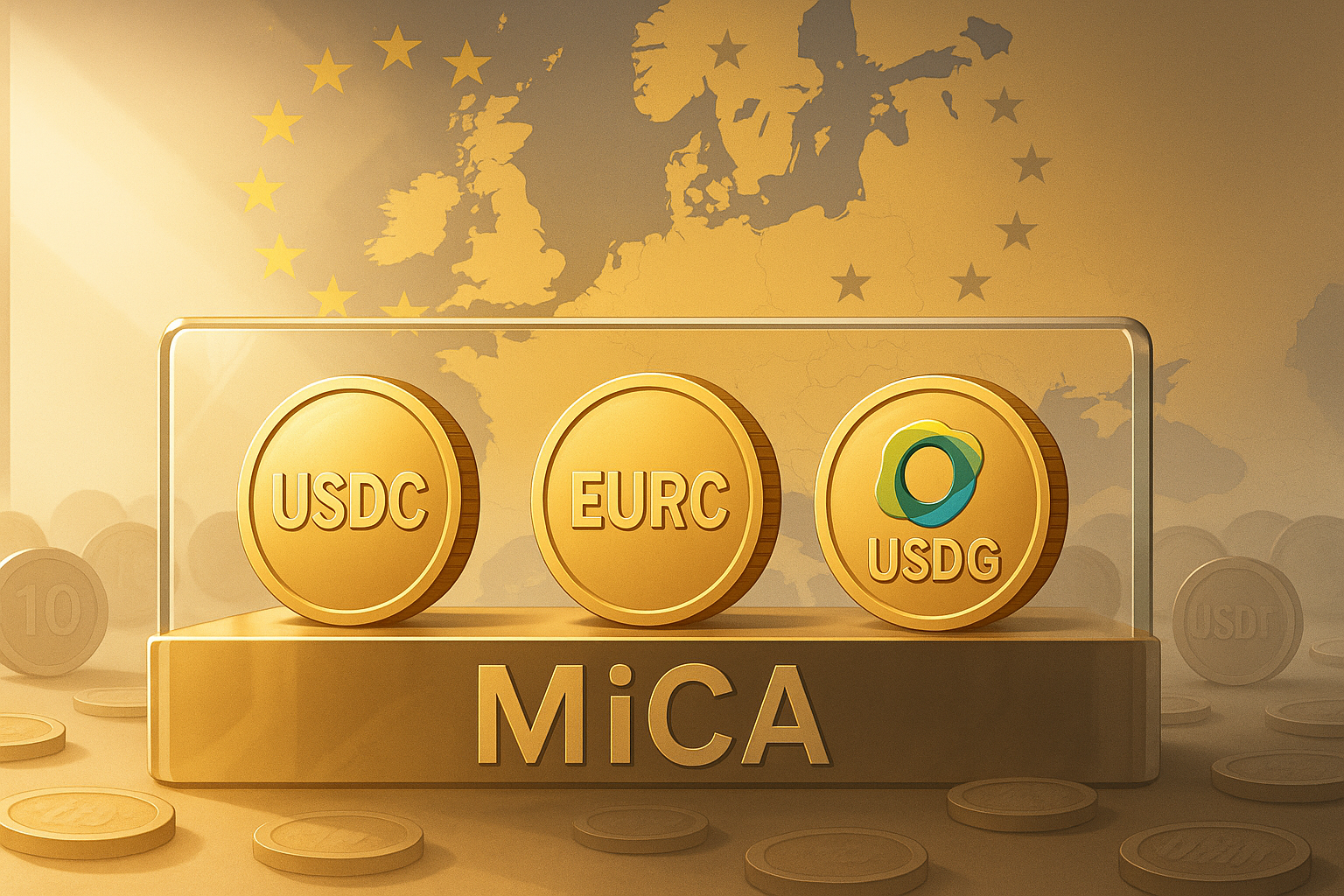
- Tether’s USDT will be fully delisted from all MiCA-licensed EU exchanges by July 2026 due to strict reserve requirements, leaving only USDC, USDG, and EURC authorized under MiCA.
- Fragmented custody rules and limited CASP licenses are forcing stablecoin issuers to rely on third-party custodians, driving up costs and splitting stablecoin liquidity across EU exchanges.
- Circle is pushing for a MiCA 'equivalence' framework to reopen the EU to foreign stablecoins, as the European Commission prepares a 2026 consultation and potential 2027 regulatory overhaul.
Compliance Chaos Reshapes Market
MiCA’s strict reserve and custody rules have fractured the EU stablecoin landscape, giving a select few issuers like Circle and Société Générale-Forge a regulatory edge while driving up costs and splintering liquidity.
MiCA's stringent reserve and licensing requirements have posed formidable compliance challenges for stablecoin issuers, particularly those like Tether that find the mandate to hold 60% of reserves in EU bank deposits incompatible with their existing operational models. CEO Paolo Ardoino criticized these rules as 'very dangerous,' highlighting the regulatory friction that ultimately led to USDT's withdrawal from the EU market. This regulatory rigidity has not only forced major issuers to reconsider their EU presence but also created a compliance gap where only three of the top 50 stablecoins—USDC, USDG, and EURC—have successfully navigated the authorization process.
A critical consequence of MiCA’s framework is the widespread inability of stablecoin issuers to custody their own tokens, which has fractured the custody service landscape across the EU. Only nine out of approximately 23 authorized electronic money token issuers possess full authorization to provide both EMT issuance and CASP services, leaving 14 issuers reliant on third-party custodians. This fragmentation complicates compliance and operational efficiency, as issuers without CASP licenses cannot hold tokens or process automated payouts, forcing alliances with regulated platforms like Ripple’s MiCA-licensed services.
The fragmented regulatory implementation across EU member states exacerbates custody service challenges, with inconsistent licensing deadlines and political deadlocks—such as Poland’s failure to launch a licensing system—pushing firms to seek authorization and custody services abroad. This patchwork approach not only increases operational complexity and costs but also dilutes the intended harmonization of MiCA, resulting in liquidity fragmentation on exchanges and higher costs for users. Consequently, fully authorized players like Circle and Société Générale-Forge have capitalized on this environment, securing competitive advantages by offering comprehensive custody and payment services within the EEA.
Overlaying MiCA with the requirement to obtain Electronic Money Institution (EMI) licenses places stablecoin issuers under dual regulatory scrutiny, intensifying compliance burdens and deterring major players like Tether from pursuing EU registration. The European Central Bank’s cautious stance, underscored by President Christine Lagarde’s warnings about systemic risks, reinforces this stringent oversight. This dual framework has contributed to a high attrition rate among crypto firms, with approximately 80% disappearing under national CASP regulations and only a fraction managing to secure the necessary licenses, underscoring the regulatory complexity stablecoin issuers must navigate.
USDT’s EU Ban Fragments Liquidity
Tether’s forced exit and the delisting of USDT from European exchanges have concentrated the market around a handful of compliant tokens, leaving traders with fewer options and pushing smaller players out.
The enforcement of MiCA regulations has led to the complete delisting of Tether's USDT from all MiCA-licensed exchanges across the European Economic Area by July 1, 2026, fragmenting stablecoin liquidity within the EU market. This decisive exit was largely driven by MiCA's stringent reserve requirements, notably the mandate that 60% of reserves be held in EU bank deposits—a rule Tether CEO Paolo Ardoino criticized as 'very dangerous' and incompatible with USDT's reserve strategy, which heavily relies on US Treasury bills. Consequently, major platforms like Coinbase, Binance, Kraken, and Revolut progressively delisted or restricted USDT trading for European users well before the deadline, signaling broad market anticipation of MiCA's impact.
With USDT effectively barred from regulated EU venues, the stablecoin market has become increasingly fragmented and concentrated around a handful of MiCA-compliant tokens such as Circle’s USDC and EURC, along with Paxos’ USDG. These authorized e-money tokens, primarily licensed in France, now dominate trading activity, forcing European crypto businesses to adapt to a multi-stablecoin environment or risk regulatory repercussions. Circle Senior Director Patrick Hansen highlights that only three of the top 50 stablecoins meet MiCA standards, a reality that shrinks available options for EU traders and raises operational complexity and costs for exchanges reliant on non-compliant stablecoins.
MiCA’s regulatory framework has effectively bifurcated the global stablecoin market into the EU’s tightly regulated sphere and an offshore market where USDT and other non-compliant stablecoins continue to circulate freely. While Europeans can legally hold USDT, they cannot trade it on regulated platforms, underscoring the absence of a foreign-recognition regime under MiCA that would ease cross-border stablecoin liquidity. This division not only fragments liquidity but also incentivizes some issuers to block EU users or avoid costly authorization processes, potentially squeezing out smaller players and concentrating market power among large, bank-backed stablecoins.
Circle Pushes for MiCA Reform
Circle is spearheading efforts for EU regulatory reform as Brussels weighs a foreign stablecoin ‘equivalence’ regime, aiming to open the market to global issuers and break the current compliance deadlock.
Circle has been at the forefront of lobbying efforts to establish a MiCA 'equivalence' framework that would allow foreign stablecoins like Tether's USDT to regain access to the European market, highlighting current restrictions that limit European users' access to major stablecoins. This push aligns with the EU's ongoing regulatory review of MiCA, which aims to potentially relax rules for non-EU stablecoin issuers, thereby facilitating smoother market entry and operation within the bloc.
The European Commission's formal consultation launched in May 2026 reflects a broader initiative to assess MiCA’s practical application and consider legislative amendments by 2027. This review is particularly focused on how to regulate non-EU crypto issuers—including stablecoins—to ensure they comply with EU standards without creating regulatory loopholes, balancing consumer protection with market openness.
Global regulatory developments such as the U.S. GENIUS Act have exerted pressure on the EU to reconsider its approach, prompting potential MiCA revisions that may introduce clearer conditions for offshore stablecoin issuers. These revisions are expected to address critical issues like reserve requirements, transparency, and cross-border compliance, aiming to keep the EU competitive and broaden consumer choice by enabling non-EU stablecoins to operate under well-defined and equitable rules.