Trucking supercycle shifts gears: capacity crunch sparks rate surge and industry shakeup
The gist
America’s trucking industry is roaring into a multi-year supercycle, with capacity so tight and rates so high that only the largest, most diversified carriers are thriving while everyone else scrambles to keep up.
What to know
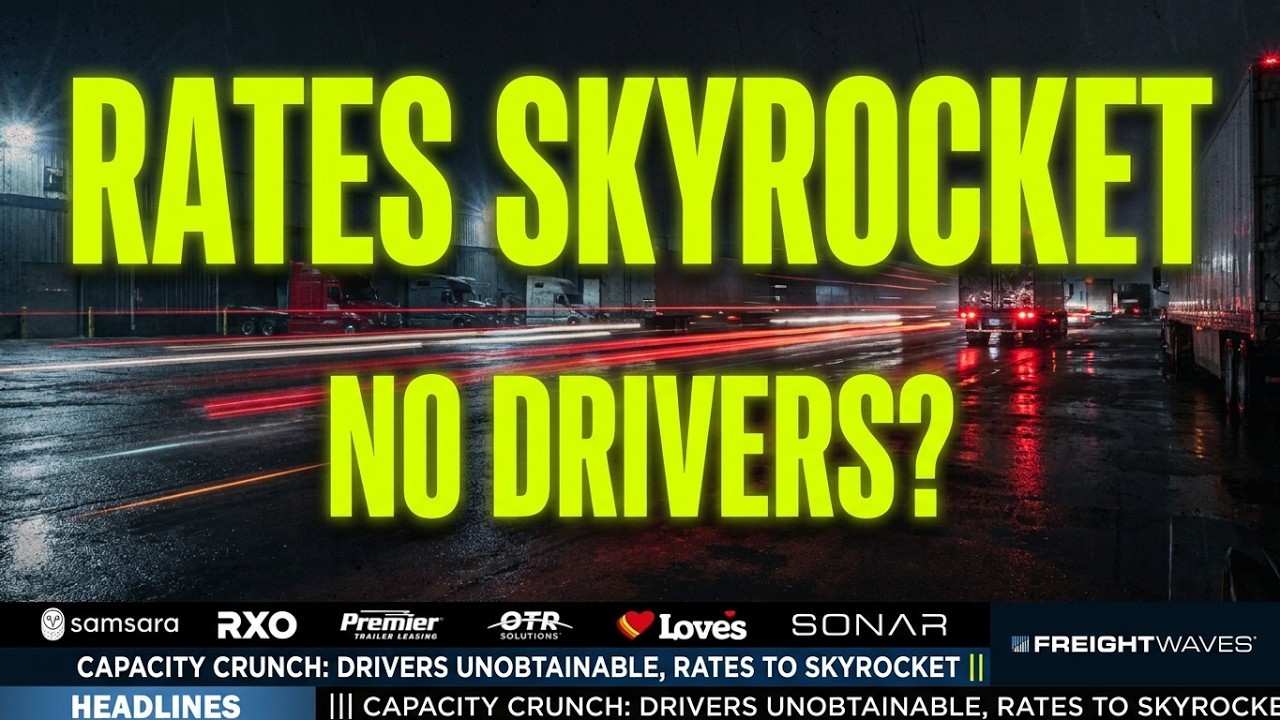
- Trucking capacity is in crisis—by mid-2026, spot rates have surged 52% and tender rejection rates are brushing 20% as driver shortages and new regulations squeeze the market.
- Big names like J.B. Hunt, Schneider, and Knight-Swift are cleaning up, using their scale and intermodal muscle to ride out regulatory crackdowns and snatch market share from struggling rivals.
- Intermodal freight volumes hit 18.9 million loads in 2025, while J.B. Hunt posted record Q2 revenues and a whopping 45.8% GAAP EPS jump—proof that scale and flexibility are the new kings of the road.
Supply Crunch Redefines Freight
Trucking’s capacity crisis is delaying recovery as operator exits, driver shortages, and leaner inventory models squeeze the market and force a fundamental rebalancing of freight demand.
By early 2026, trucking capacity was contracting sharply as a result of a prolonged freight recession and low profitability that forced many smaller operators out of the market. This shrinkage was compounded by evolving inventory strategies shifting toward a 'just enough' hybrid model that, while maintaining lean stocks, increased reliance on transportation over storage, subtly rebalancing freight demand back toward trucking from rail. Industry observers noted that this combination of reduced supply and potentially improving economic conditions could eventually stabilize the market, but the supply-side constraints would delay any meaningful capacity recovery.
The trucking industry's recovery from a multi-year slump is distinctly supply-driven, marked by operator exits and persistent driver shortages that have tightened capacity and driven spot rates dramatically higher—dry van spot rates surged 52% year-over-year by mid-2026. Nationwide's fleet expansion efforts, increasing its 10,500 trucks and 11,000 drivers, illustrate attempts to bridge the gap, yet overall capacity remains constrained amid rising costs for fuel, equipment, and insurance, exacerbated by regulatory crackdowns and geopolitical tensions. These external pressures have forced carriers to pass increased expenses onto customers, reinforcing the tight market conditions.
Industry experts like Jason Miller anticipate that trucking capacity expansion will lag behind the market turnaround, with significant new capacity unlikely to come online until 2027 despite a market shift beginning as early as December 2025. This delay reflects the inherent time required for fleet growth and driver recruitment, a process complicated by ongoing challenges in attracting and retaining drivers amid regulatory hurdles and competitive labor markets. Miller underscores the split freight economy, where booming AI-driven industrial sectors contrast with weaker consumer and housing markets, further complicating capacity and pricing dynamics due to the price-agnostic nature of high-tech freight demand.
The current trucking market tightness is primarily a supply-side phenomenon, a departure from previous cycles historically driven by demand fluctuations. Since spring 2026, indicators such as tender rejections and spot rates have surged and stabilized at elevated levels, reflecting severe driver shortages that even well-resourced carriers struggle to overcome. This capacity crunch is expected to elevate costs across the board and risk freight bottlenecks at ports. However, a strengthening manufacturing and industrial base, supported by reduced tariff and regulatory uncertainties, promises to bolster demand further, potentially intensifying the capacity squeeze before recovery gains traction.



Regulatory Squeeze Fuels Mergers
Federal crackdowns and landmark court rulings are accelerating industry consolidation, pushing out smaller brokers and cementing the dominance of large, diversified carriers.
By mid-2026, the Montgomery court case alongside federal mandates has emerged as a pivotal force accelerating consolidation in the trucking and brokerage sectors by systematically sidelining less compliant operators. This regulatory crackdown is not merely cyclical but represents a structural transformation, as it drives out 'bad capacity' and raises operational costs, particularly squeezing smaller brokers who now require greater scale to absorb these expenses. As one industry insider observed, this shift is making the brokerage landscape more competitive and challenging, thereby fostering a safer and more compliant trucking environment.
Large, diversified carriers such as J.B. Hunt, Schneider, and Knight-Swift stand to gain significantly from this regulatory-driven consolidation due to their scale and multi-modal business models. These companies are not only better positioned to capitalize on the freight supercycle but also more resilient during potential downturns, with Knight-Swift notably expanding its LTL business to buffer against market fluctuations. As one analyst put it, 'J.B. Hunt is like the largest player that also is a trucking company,' highlighting how scale and diversification are becoming critical competitive advantages in this evolving landscape.
Intermodal Emerges as Lifeline
Rail-based intermodal freight is surging as shippers use slower, cost-effective trains as ‘moving warehouses’ to offset trucking’s tightest capacity in years.
By 2025, intermodal freight emerged as a vital strategic alternative amid trucking capacity constraints, with domestic volumes reaching 18.9 million loads—just shy of the 2018 record—and surging 10% in recent weeks. This growth is primarily supply-driven, fueled by trucking driver shortages and regulatory pressures rather than increased demand, positioning intermodal as a critical relief valve for the constrained trucking sector.
Shippers are increasingly leveraging intermodal’s cost-effectiveness and operational flexibility to manage inventory and supply chain expenses during capacity shortages. Notably, some have intentionally opted for slower trains to capitalize on discounts and use intermodal shipments as 'moving warehouses,' a strategic adaptation that underscores intermodal’s evolving role beyond mere transportation.
Railroads hold a competitive edge in mitigating fuel cost volatility compared to trucking, especially amid geopolitical tensions affecting fuel prices, such as disruptions near the Strait of Hormuz. This advantage, combined with the ability of railcars to carry volumes equivalent to multiple trucks, enhances intermodal’s appeal for large-volume freight and supports carriers like J.B. Hunt, Hub Group, and Schneider in handling 15-20% additional volume with existing container fleets.
Strong service quality and ample availability of 53-foot domestic intermodal containers have encouraged shippers to shift freight from truckload to rail, particularly on long-haul lanes anchored by major cities. This strategic shift not only hedges against truckload capacity shortages but also sustains consistent year-over-year intermodal volume growth above seasonal trends, benefiting diversified carriers such as J.B. Hunt whose earnings reflect this robust intermodal performance.
J.B. Hunt’s Diversified Surge
J.B. Hunt’s record-breaking growth stems from its multi-pronged logistics model, which boosts profit margins and shields it from market volatility as rivals struggle to keep pace.
By mid-2026, J.B. Hunt's diversified business model, anchored by robust growth in its intermodal and dedicated contract services, has propelled its financial performance well beyond traditional trucking cycles. The company reported a 19% revenue increase to $3.5 billion in Q2, with intermodal revenue hitting a record $1.75 billion—up 22%—driven by a 10% surge in loads and a strategic shift from road to rail, especially in the Eastern U.S. market where volume and revenue per load outpace the West Coast. This diversification not only fuels top-line growth but also enhances operating leverage, as evidenced by a 32% jump in operating income to $259 million, supported by cost efficiencies and favorable tax and interest expenses.
J.B. Hunt’s integrated logistics platform, encompassing Intermodal, Dedicated Contract Services, and brokerage units, creates a competitive moat through specialization and scale, making it difficult for smaller rivals to replicate its success quickly. This portfolio approach not only drives strong earnings growth—with Q2 GAAP EPS soaring 45.8% year-over-year to $1.91 and net margins expanding to 5.2%—but also positions the company to capitalize on capacity constraints and evolving shipper preferences for contracted fleets amid tightening truckload markets and regulatory pressures.
Despite its strong momentum, J.B. Hunt remains cautiously optimistic as it navigates headwinds from rising driver wages, tightening drayage capacity, and shippers’ reluctance to lock in long-term contracts at elevated rates during the supercycle. These challenges underscore the complexity of sustaining disciplined, profitable growth in a market where adding dedicated capacity now comes at a significantly higher cost, and where brokerage and last-mile segments face softness due to a weak housing market and reduced discretionary spending.
J.B. Hunt’s early-cycle intermodal strength defies capital markets’ typical late-cycle expectations, as the company’s pricing power and asset utilization improvements have driven outsized earnings beats and volume growth. The Eastern U.S. intermodal market, benefiting from more responsive truckload pricing dynamics, exemplifies J.B. Hunt’s strategic agility in adapting to regional freight trends, reinforcing its position as a bellwether for the broader trucking supercycle and setting the tone for industry earnings expectations.

Spot Rates Soar on Scarcity
Acute driver shortages and record utilization are driving spot rates and contract prices sky-high, leaving freight stranded and challenging traditional market cycles.
By mid-2026, the trucking industry is grappling with a severe capacity crunch primarily driven by a persistent driver shortage and regulatory pressures, leading to record freight utilization rates unseen in nearly eight years. Carriers are maximizing every inch of available space amid high tender rejection rates nearing 20%, as highlighted by J.B. Hunt executives, who foresee at least a 20% increase in two-year contract rates for 2026 and 2027. This scarcity is so acute that freight risks being stranded at ports, underscoring operational challenges that extend beyond mere demand fluctuations.
Contrary to traditional freight cycles driven by demand surges, the current tight market is fueled predominantly by supply constraints, with supply-demand graphs showing demand far outpacing available capacity. Analysts emphasize that rising freight rates stem from diminished supply rather than increased freight volumes, a dynamic that could render current rate hikes unsustainable without an economic boom. However, improving clarity around trade policies and tariff resolutions may soon enhance demand visibility, potentially stabilizing this imbalance.
Freight pricing dynamics in this supercycle are notably influenced by incremental capacity changes rather than percentage shifts alone, causing spot rates to spike dramatically during shortages. Industry voices like John Kingston warn of hyperbolic market reactions, with spot van rates stubbornly high around $3.63 to $3.70 per mile despite cheaper fuel costs. Projections of double-digit spot rate increases, though seemingly counterintuitive given transportation’s modest share of final goods prices, are gaining traction as a plausible scenario in this tight capacity environment.
Operational and regulatory headwinds, including widespread carrier safety rating deficiencies and potential new legislation such as Delilah's law, threaten to further tighten capacity and sustain elevated freight rates. This backdrop supports a robust multi-year bull case for carriers, with consensus models underestimating both rate increases and utilization improvements. Analysts suggest there could be up to 50% upside to earnings and valuations for major players like Knight-Swift, signaling significant upside potential amid ongoing market constraints.
Supercycle Rewards the Giants
The multi-year rate boom is supercharging profits for scale-driven carriers but industry veterans warn that volatility and cyclical downturns are never far behind.
The trucking industry is poised for a multi-year supercycle marked by elevated rates and volumes, which will disproportionately benefit carriers with substantial operating leverage and controlled capacity. Companies like J.B. Hunt, Schneider, and Knight-Swift, which combine diversified business models with both owned and owner-operator capacity, are strategically positioned to capitalize on this environment. As one analyst observed, “If this cycle does go on for a couple of years... higher rates, higher volume, they just have such operating leverage,” underscoring the advantage of scale and flexibility amid rising regulatory pressures.
Despite the bullish outlook, industry veterans caution that trucking remains a brutally cyclical business where downturns inevitably follow upcycles. The consensus echoes the adage, “what goes up must come down,” reminding stakeholders that even with promising fundamentals, prudence is essential. This tempered optimism is reflected in the recognition that while the supercycle may last multiple years, companies must prepare for volatility and potential contractions, balancing growth ambitions with risk management.
The current supercycle is also catalyzing strategic shifts including potential industry consolidation and a renewed focus on specialization. Regulatory crackdowns and strong industrial demand are making asset-based carriers more attractive, potentially reversing decades of fragmentation among large players. Meanwhile, companies like J.B. Hunt leverage highly specialized business units—such as intermodal and dedicated trucking—to deliver differentiated value and competitive moats that smaller operators struggle to replicate, fueling disciplined, profitable growth despite rising costs and driver shortages.
Market dynamics underpinning the supercycle include persistent capacity constraints and robust rate increases, with contractual rate hikes of around 20% expected over 2026 and 2027 amid nearly 20% tender rejections. Even as fuel costs decline, van spot rates remain elevated near $3.63 to $3.70 per mile, signaling underlying pricing strength. Shippers’ current reluctance to commit to long-term contracts at higher rates is anticipated to wane as capacity tightness forces recognition of the necessity to secure freight capacity, reinforcing the sustainability of this supercycle despite short-term hesitations.