Trucking supercycle shifts gears: tight capacity, soaring rates, and a regulatory shakeup fuel industry overhaul
The gist
Trucking is roaring into a new supercycle as tight capacity, soaring rates, and regulatory crackdowns spark an industry overhaul favoring giant, compliant carriers.
What to know
- Dry van spot rates jumped 52% year-over-year by mid-2026 amid decade-high utilization and persistent driver shortages.
- The 2026 Montgomery ruling and stricter regulations are driving rapid consolidation, locking out smaller players and boosting the appeal of large, compliant fleets.
- Investors are bullish: truckload carriers forecast up to 80% earnings growth for 2027, fueling a frenzy of M&A and private equity activity despite mounting compliance hurdles.
Supply Crunch Drives Upheaval
A wave of small carrier exits and persistent driver shortages has shifted trucking from a demand-driven to a supply-constrained market, sending utilization and spot rates soaring despite uneven freight demand.
By early 2026, the trucking industry was grappling with a significant contraction in capacity driven by a prolonged freight recession and low profitability, which forced many smaller carriers and individual operators to exit the market. This reduction in supply, combined with a potential economic recovery and a shift toward leaner, more transportation-focused inventory strategies, set the stage for tighter utilization rates and rising freight costs as demand began to rebalance amid constrained capacity.
The capacity crunch intensified through mid-2026 as driver shortages and depleted back-office resources compounded the supply constraints, pushing dry van spot rates up by 52% year over year and utilization rates to record highs not seen in nearly a decade. Companies like Nationwide responded by expanding their fleets and driver pools, yet rising operational costs—including fuel price spikes due to geopolitical tensions and looming emission standards—continued to squeeze margins and prevent a full recovery despite the rate environment.
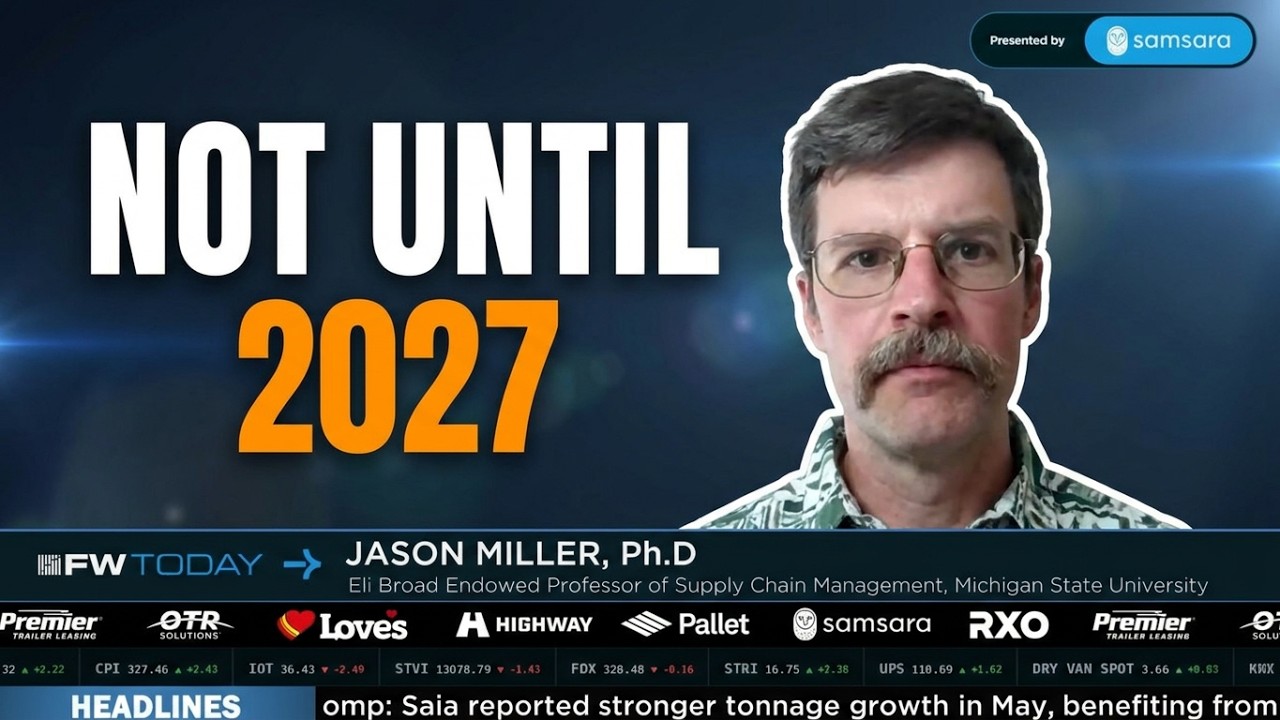
Industry experts such as Dr. Jason Miller forecast that trucking capacity would remain tight until at least 2027, as persistent driver recruitment and retention challenges, exacerbated by regulatory impacts like stricter CDL requirements and English proficiency enforcement, limit the supply side. This structural shift marks a departure from previous freight cycles where demand was the primary driver; now, supply constraints dominate, causing elevated freight costs and tender rejections even as demand growth remains uneven across sectors influenced by AI-driven industrial booms and sluggish consumer markets.
The trucking business remains a brutal, highly cyclical industry where fixed labor costs—primarily driver wages—are unavoidable, and asset turnover is frequent due to the need to replace trucks every three years without the leverage benefits seen in other sectors like real estate. While the recent surge in freight rates reflects tight capacity rather than robust volume growth, analysts warn that without a sustained increase in freight demand, the market recovery may soon plateau, underscoring the delicate balance carriers must maintain between driver retention and freight availability.



Regulation Fuels Rapid Consolidation
Landmark legal rulings and intensified compliance standards are accelerating industry consolidation, raising barriers to entry and pushing out smaller, non-compliant operators in favor of large, well-capitalized fleets.
The 2026 Montgomery case has acted as a catalyst for profound structural change in trucking, driving out non-compliant operators and raising compliance costs that many smaller players cannot bear. This legal ruling, coupled with stricter CDL and ELP proficiency standards, has created formidable barriers to entry and scale advantages that are reshaping the brokerage sector’s competitive landscape. As one interviewee observed, the case is more than a cyclical disruption—it is fundamentally improving industry safety and structural soundness by accelerating consolidation and pushing the market toward fewer, more compliant operators.
Regulatory crackdowns and compliance pressures are not only tightening operational standards but also contributing to what some analysts describe as a potential trucking super cycle. This environment is making asset-based carriers more attractive investment targets, potentially unlocking the long-anticipated wave of mass mergers and consolidation that the industry has historically lacked. As noted in mid-2026 interviews, the combination of regulatory rigor and economic conditions is transforming fragmented trucking assets into valuable, investable entities, setting the stage for sustained industry consolidation.
Ongoing regulatory demands, including the introduction of the Lonnox emission standards and intensified FMCSA safety enforcement, are significantly increasing operational costs and complexity for trucking companies. These pressures are compounded by a tough rate environment and capacity constraints, leading many firms to aggressively cut costs and downsize back-office functions, including recruiting departments. Such structural pressures are not only squeezing margins but also accelerating consolidation by creating higher barriers to entry and operational scale advantages for larger, more compliant players.
The regulatory landscape is effectively creating a partial moat around compliant trucking companies, enhancing their ability to command higher returns on equity and improved profitability. Capacity contraction—estimated at around 5%—driven by these structural shifts is tightening the market and enabling sustained rate increases and margin improvements over the next two to three years. Meanwhile, post-Montgomery risk pricing challenges have intensified due diligence rigor in acquisitions, with firms like CH Robinson strategically targeting specialized operations such as Desper to build competitive moats and increase capabilities, signaling a more selective and consolidation-focused investment approach.
Private Equity’s Operational Turn
Facing higher rates and tougher exits, private equity has pivoted to hands-on value creation and deep operational diligence, with only the most specialized investors navigating trucking’s brutal cycles and asset risks.
By early 2026, private equity had decisively shifted from a defensive, capital-focused approach to one centered on operational alpha and long-term value creation, recognizing that liquidity scarcity and unreliable public market exits demanded repeatable, hands-on value generation. Firms like KKR, under Pete Stavros, emphasize deep operational improvements and disciplined investment pacing—deploying about 20% of funds annually and exiting only after achieving 80% of value creation—eschewing market timing as a 'fool's errand.' This evolution is underscored by the adoption of 'full potential diligence,' integrating product, technical, and AI-driven assessments pre-close, and the professionalization of operating capabilities, talent, and data infrastructure to drive productivity and decision quality.
The private equity landscape now demands materially higher earnings growth—often 10–12% annually—and tighter execution to offset higher financing costs and conservative leverage, as Scott Kleinman of Apollo highlights the industry's need to adjust to a 'higher-for-longer' interest rate environment after a 'lost decade' of cheap money. This recalibration has led to prolonged hold periods and uneven exit markets, pressuring returns from vintages raised between 2017 and 2022 and prompting limited partners to insist on concrete, repeatable liquidity models rather than merely strong TVPI multiples.
Private equity’s forays into asset-heavy trucking vividly illustrate the sector’s operational challenges and the critical importance of cycle recognition. As Spencer Tenney of The Tenney Group and other analysts note, many firms falter by buying based on historical earnings without appreciating trucking’s brutal cyclicality, fixed labor costs, and rapid asset depreciation. Consequently, about 90% of deals are executed by strategics, with most private equity players self-selecting out due to the unforgiving nature of the business. Successful investments, like the Texas Trans Eastern deal, hinge on specialized expertise, partnering with 'run hard' owners, and adopting hybrid operating models that blend operational alpha with long-term value creation amid geopolitical tensions and AI-driven logistics disruptions.
In response to trucking’s volatility and the broader capital-intensive logistics landscape, private equity firms are adopting more cautious yet strategic approaches, emphasizing rigorous carrier vetting and risk pricing in a post-Montgomery insurance environment. They are also leveraging AI not merely as a disruptive force but as a tool to enhance customer service and operational efficiency, as seen in investments like Thrive. This nuanced strategy reflects a recognition that expert execution, hands-on leadership, and technological integration are indispensable for navigating the sector’s complexities and generating sustainable returns amid a $2 trillion capital logjam and evolving international market expansions.



Truckload Earnings Spark Frenzy
Surging earnings forecasts and a dramatic stock rally have reignited M&A and private equity activity, though sky-high valuations and a preference for asset-light models reveal underlying caution.
By mid-2026, investor sentiment in the trucking sector, particularly among truckload carriers, has surged on expectations of robust earnings growth and an extended truckload cycle. Publicly traded carriers anticipate earnings increases of 26 to 30% in Q2, with projections soaring up to 80% next year, reflecting a recovery from the freight recession and tightening capacity. This optimism has propelled truckload stocks to outperform broader markets, with gains around 50% compared to the S&P 500’s 10%, although concerns linger about elevated valuation multiples, such as Swift trading at 360 times earnings, prompting hopes that earnings ('the E') will eventually catch up to prices ('the P') to normalize valuations.
The dramatic 50%+ year-over-year spike in spot freight rates has been a catalyst for renewed stability in earnings expectations, which in turn has revitalized M&A activity and private equity exits within logistics. This shift has narrowed divergent views on earnings streams between buyers and sellers, fostering a more conducive environment for deal-making despite historically high valuation multiples. Private equity investors remain cautious about highly leveraged, capital-intensive asset plays due to cyclical risks, favoring asset-light models that provide strategic capacity access, as evidenced by convergence around hub operations and trailer leasing programs.
Strategic repositioning post-COVID and a backlog of over $2 trillion in private equity capital poised for deployment have combined to fuel a bullish outlook on freight and logistics M&A through 2026 and beyond. Boardrooms reassessing global supply chains have triggered significant transactions, such as FedEx’s logistics divestiture, while even traditionally acquisitive-light companies like CH Robinson are entering the M&A arena. This momentum is underpinned by macroeconomic stability, recovering freight rates, and capacity reductions that improve business performance, with hybrid operating models emerging as the preferred structure for successful deals.
Despite the buoyant market, investor caution is rising around risk pricing in trucking acquisitions, especially post-Montgomery, leading to more rigorous carrier vetting during due diligence. This risk-averse approach is driving a preference for acquiring specialized operations with proven capabilities, which offer more stable returns amid evolving market conditions. Such diligence reflects a maturing market where quality and risk mitigation are paramount, even as deal activity remains busy and attractive to private equity seeking to capitalize on technology disruption and rising cost-per-mile pressures.
AI Becomes a Strategic Weapon
AI and advanced tech are now essential for competitive advantage in trucking, but only firms with deep sector expertise and strong management can harness these tools to thrive amid industry complexity.
By mid-2026, AI and technology have evolved beyond mere operational tools to become strategic levers in trucking and logistics, with companies like Thrive leveraging these innovations not just for technological advancement but to enhance customer service amid growing complexity. This shift underscores the necessity for specialized expertise and strategic partnerships, as evidenced by private equity’s ongoing struggles to penetrate asset-based trucking without deep sector knowledge, highlighting that successful navigation of this tech-driven transformation demands more than capital—it requires a nuanced understanding of both technology and market dynamics.
The integration of AI-driven enterprise shifts and international market expansions in 2026 is fundamentally redefining how trucking and logistics firms approach technology adoption and business execution. Firms that combine cutting-edge AI with robust financial structures and strong management teams focused on fundamentals are positioned to generate significant value despite increasing complexity, illustrating that strategic adaptation is not only about embracing new technologies but also about aligning them with sound operational and financial frameworks to thrive in a challenging logistics landscape.

Supercycle Reshapes the Industry
A regulatory-driven supercycle and delayed capacity recovery are polarizing trucking into dominant mega-carriers and specialized niches, setting the stage for sustained margin expansion and high-stakes investment plays.
By mid-2026, industry experts like Jason and Dr. Miller anticipate trucking capacity recovery to commence in 2027, driven by a notable surge in Class 8 truck orders—up over 100% from the previous year—yet tempered by the inherent lag between order placement and capacity coming online. Historical cycles, such as the 2017-2019 period, illustrate how capacity additions often arrive after market peaks, risking overcapacity. This delayed response is compounded by persistent challenges in driver recruitment and retention, which continue to constrain supply despite rising demand.
The trucking market is poised for a structural transformation characterized by a looming supercycle fueled by regulatory crackdowns and economic demand growth, as highlighted in interviews and opinions from July 2026. This supercycle is expected to catalyze significant industry consolidation, reversing decades of fragmentation, particularly among large asset-based carriers operating in commoditized freight segments. The market will likely polarize into a 'barbell' structure, with dominant consolidated players on one end and specialized niche operators on the other, reflecting a strategic bifurcation in service models.
Investment implications of the anticipated supercycle are profound, with regulatory moats creating partial barriers to entry that enhance profitability and returns on equity. Analysts predict a robust two to three years of growth marked by high visibility into contractual rate increases and margin expansion, defying typical cyclical patterns where valuation multiples peak before earnings growth. Moreover, the freight economy’s bifurcation—booming AI-driven industrial sectors contrasted with struggling consumer and housing markets—alongside the price-agnostic nature of high-tech freight demand, suggests that patient capital combined with specialized operational expertise will be critical for sustainable success in this evolving landscape.