Trump’s DOJ in turmoil: loyalty litmus test fuels AG succession circus after bondi ouster
The gist
President Trump’s abrupt firing of AG Pam Bondi has thrown the DOJ into chaos, as loyalty and media muscle now trump legal chops in a high-stakes scramble for control.
What to know
- Pam Bondi was fired in April 2026 for mishandling the Epstein files and failing to target Trump’s political rivals, triggering a leadership crisis.
- Trump is pushing fiercely loyal, combative figures like Todd Blanche and Alina Habba for AG, sidelining traditional legal qualifications in favor of TV-ready allegiance.
- Mass firings of seasoned DOJ staff have gutted prosecutorial firepower, raising alarm over politicization and complicating Senate confirmation battles.
Bondi’s Downfall: Loyalty vs. Results
Pam Bondi’s ouster exposed how political loyalty trumped legal results, with her tenure defined by failed prosecutions, public rebukes from Trump, and the DOJ’s slide into partisan chaos.
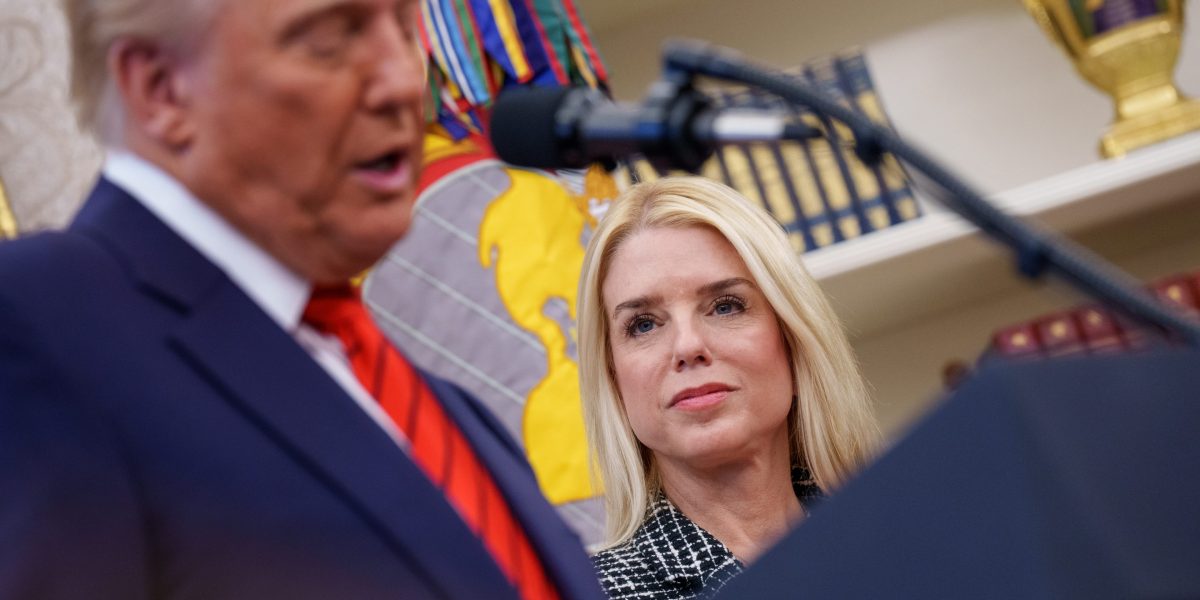
Pam Bondi's abrupt firing by President Trump in early April 2026 was the culmination of mounting dissatisfaction over her handling of the Jeffrey Epstein files and her failure to aggressively pursue Trump's political adversaries. Despite her combative public persona and loyalty performances designed to align with Trump's confrontational style, Bondi was perceived as ineffective, having failed to secure any successful prosecutions against key targets and mishandled sensitive investigations, including the Epstein case. This dissatisfaction was publicly underscored by Trump's direct social media criticisms and his refusal to allow Bondi to remain in office until summer, signaling a stark repudiation of her tenure.
Bondi's tenure was marked not only by underperformance but also by a politicization of the Department of Justice that undermined its institutional independence and integrity. Her DOJ prioritized loyalty-driven, politically motivated prosecutions over substantive justice, exemplified by meritless charges against Black independent journalists and a high rate of declined criminal cases—four times that of her predecessor. This erosion of professional standards and the DOJ's transformation into a political instrument intensified internal disarray and contributed to the leadership crisis that followed her dismissal.
The decision to replace Bondi with Todd Blanche, Trump's personal defense attorney, as Acting Attorney General signaled a decisive shift toward consolidating DOJ leadership around personal loyalty rather than competence. This move underscored Trump's prioritization of presentation and combative engagement in DOJ officials, reflecting his own media-savvy, confrontational style, but also highlighted the administration's growing impatience with any perceived lack of political utility from its top legal officers. Blanche's appointment amid the Epstein files controversy and DOJ turmoil epitomizes the ongoing redefinition of the Attorney General’s role as an extension of presidential appetite and grievance.




Trump’s DOJ: Loyalty as Policy
Trump is reshaping the DOJ into a bastion of personal loyalty, demanding his Attorney General serve as both aggressive legal enforcer and relentless political defender—on camera and in Congress.
President Trump’s strategy to maintain policy continuity at the DOJ hinges on appointing leaders he personally trusts and who align closely with his agenda, ensuring that despite leadership upheavals, the department’s direction remains steady. This approach is exemplified by his preference for figures like Todd Blanche, a former personal attorney known for his aggressive defense tactics, signaling a desire for combative, media-savvy officials who can both execute policies and publicly defend Trump’s interests. As one analysis noted, Trump expects his attorney general not only to manage legal priorities but also to be a formidable presence before Congress and on television, reflecting a broader pattern of elevating loyal, controversial figures over traditionally qualified candidates.
Trump’s insistence on a combative attorney general capable of managing politically sensitive controversies was a key factor in his dissatisfaction with Pam Bondi, particularly regarding her handling of the Epstein files. Unlike her effective congressional performances, Bondi failed to resolve the Epstein issue to Trump’s satisfaction, illustrating his expectation that the attorney general role involves navigating impossible political demands with both legal acumen and aggressive problem-solving. This perspective diverges sharply from previous administrations’ views of the position and raises questions about the DOJ’s leadership stability under Trump’s tenure.
The continuity strategy at the DOJ mirrors Trump’s broader approach in other departments, such as the Department of Homeland Security, where leadership changes have not altered core policy goals. Following Secretary Gnome’s departure at DHS, for example, the administration maintained its policy trajectory, underscoring Trump’s focus on consistent execution of his priorities regardless of personnel shifts. This pattern reveals a deliberate effort to insulate his agenda from internal turbulence by installing loyalists who prioritize unwavering adherence to his directives.
AG Race: Loyalty Trumps Law
The contest to replace Bondi is a loyalty test, pitting media firebrands and Trump loyalists against Senate skepticism, as legal expertise is sidelined in favor of political allegiance.
The succession battle to replace Pam Bondi as Attorney General is marked by a diverse and politically charged field of candidates, including Jeanine Pirro, known for her prosecutorial failures with numerous grand jury no-bills; Alina Habba, a senior DOJ advisor lacking federal prosecution experience; Lee Zeldin, the EPA Administrator praised by Trump but criticized for lacking courtroom experience; and Harmeet Dhillon, a Trump personal lawyer who has steered the DOJ Civil Division toward conservative social agendas. This mix underscores the politicized nature of the contest, where legal competence often takes a backseat to ideological alignment and loyalty to Trump’s hardline vision.
Trump’s insistence on absolute loyalty and a combative approach to his political adversaries heavily influences the candidate dynamics, as he seeks an Attorney General who will aggressively pursue his agenda—figuratively 'burning the house down.' However, this ambition clashes with the legal system’s inherent checks and balances, which resist conflating personal grievances with prosecutable crimes, frustrating Trump’s desire for retribution. This tension narrows the field to candidates willing to toe a radical line, even as many of Trump’s preferred figures like Matt Gates, Cydney Powell, and Rudy Giuliani face insurmountable Senate confirmation hurdles.
While Lee Zeldin’s Senate-approved tenure as EPA head positions him as a plausible nominee, his lack of experience with judicial processes such as grand juries and trials makes him an unsatisfactory fit for the Attorney General role in Trump’s eyes. Similarly, Todd Blanch emerges as a serious contender likely to pass Senate confirmation, but Trump doubts his full allegiance, deeming him too moderate compared to the radical loyalty he demands. Meanwhile, Alina Habba remains a wildcard under close watch, reflecting Trump’s ongoing struggle to balance ideological zeal with the practical necessity of Senate approval before the looming November deadline threatens to shift Senate control to Democrats.

DOJ Gutted as Senate Looms
Mass firings have crippled the DOJ’s prosecutorial muscle, with inexperienced attorneys scrambling to fill the void and Senate confirmation battles threatening to paralyze Trump’s legal agenda.
The mass firing and resignation of thousands of experienced prosecutors and FBI agents since the start of Trump's second term has severely undermined the DOJ's prosecutorial capacity, leaving less seasoned attorneys—including military lawyers—to handle complex federal cases. This erosion of expertise has diminished the department's credibility with federal judges and raised concerns about jeopardizing conviction rates in critical cases involving national security and terrorism, as inexperienced prosecutors face off against highly skilled defense attorneys. Such operational vulnerabilities are expected to be a focal point during Senate confirmation hearings, complicating the approval of new DOJ leadership.
Acting Attorney General Todd Blanch has staunchly defended the purge of DOJ prosecutors by asserting that those dismissed were 'not doing the right thing,' implicitly referencing investigators probing President Trump. While Blanch frames these actions as necessary to preserve DOJ integrity, this justification risks further eroding the department's credibility and complicates his prospects for Senate confirmation, especially as the DOJ reverses prior assurances of insulating career attorneys from political influence by transferring white collar prosecutors to a politically sensitive new division.
Trump's search for a permanent Attorney General is fraught with Senate confirmation hurdles, as his preferred candidates—Matt Gates, Cydney Powell, and Rudy Giuliani—are widely deemed unconfirmable. Although Todd Blanch is viewed as a likely Senate-confirmable nominee due to his moderate stance, Trump remains unconvinced of his loyalty and alignment with the administration's agenda. The timing of any nomination is critical, with efforts focused on securing confirmation before the November elections, after which a potential Democratic Senate majority could block nominees and dramatically alter the DOJ's future direction.
In navigating the confirmation impasse, Trump may consider alternative candidates like Alina Haba, who could potentially strike a balance between loyalty to the administration and Senate acceptability. Meanwhile, Todd Blanch continues to serve in an interim capacity, leveraging his 210-day window to solidify his position and appeal to Senate moderates. This delicate balancing act underscores the broader challenge of maintaining DOJ leadership continuity amid political pressures and institutional credibility concerns.