Trump’s ego diplomacy leaves U.S. alliances in ruins
The gist
Trump’s ego-driven, transactional diplomacy has shattered U.S. alliances, destabilized global order, and left America’s credibility in freefall.
What to know
- By early 2026, Trump’s leadership alienated NATO, Canada, and Italy, turning allies into pawns and fueling unprecedented diplomatic chaos.
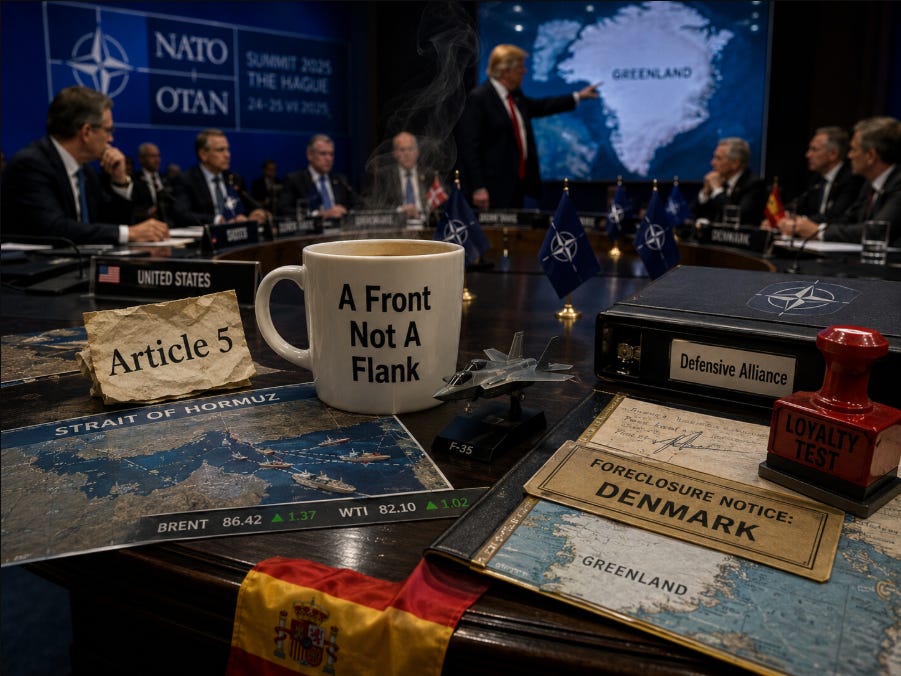
- Erratic foreign policy—including igniting a war with Iran and forcing Gulf states to fend for themselves—spiked Brent crude by 5% and empowered rivals like Russia.
- America’s global stature now mirrors the decline of the Roman Empire, as executive overreach and political dysfunction threaten both domestic stability and international influence.
Ego at the Helm
Trump’s foreign policy was driven by personal vendettas and megalomania, turning alliances into disposable tools for self-promotion and leaving global trust in tatters.
By early 2026, Trump's leadership style had crystallized into a deeply narcissistic and transactional approach, where alliances and global institutions were treated less as partners and more as tools for personal leverage and aggrandizement. His pattern of instigating conflicts—such as starting a 'war of choice'—only to demand that NATO and other allies manage the fallout, often with explicit financial ultimatums, exemplified this dynamic. This self-centered tactic not only undermined diplomatic coherence, as seen in his contradictory statements on Iran's military status and willingness to negotiate, but also eroded trust by dismissing inconvenient facts as 'AI generated' or fake news, further destabilizing global discourse and alliances.
Trump's personal grievances and megalomania profoundly shaped U.S. foreign policy, blurring the line between his ego and the nation's identity. His demand for Greenland from Norway's Prime Minister, framed as a 'good and proper' American entitlement, alongside social media posts depicting Canada, Greenland, and Venezuela as 'conquered American territory,' illustrated how his transactional view of alliances served his personal ego rather than strategic interests. This conflation of self and state not only threatened global stability by implying that the world must 'bow to Trump’s ego or face the horrific consequences of a hot war,' but also fueled international perceptions of American unpredictability and diplomatic dysfunction.
Analysts likened Trump's leadership to incipient megalomania, a psychological myth of omnipotence that has influenced post-Cold War presidents but manifested most starkly in his petty feuds and erratic diplomacy. His confrontational tactics—threatening to invade Greenland, disparaging close allies like Canada and South Korea while praising adversaries such as Kim Jong Un, and undermining European unity by destroying bridges built by allies like Giorgia Meloni—marked a stark departure from traditional imperial leadership models grounded in honor, integrity, and stability. This approach not only destabilized established alliances but also eroded the credibility of U.S. global leadership by treating partnerships as disposable and transactional.
While Trump's initial threats to European allies temporarily increased U.S. leverage, his leadership was ultimately characterized by a pursuit of instant gratification and superficial displays of power that undermined long-term strategic goals. Actions such as launching cruise missiles at a Syrian airport during a meeting with Xi Jinping and backing the Sultan of Morocco over European interests highlighted a leadership style driven by personal gratification rather than effective alliance management. This brittle and evanescent exercise of power, coupled with erratic behavior and a transactional mindset, fueled diplomatic dysfunction and contributed to global instability.



Allies on the Brink
Public humiliation and erratic threats fractured NATO and key partnerships, shifting summits from collective defense to damage control over Trump’s unpredictability.
By early 2026, Trump's confrontational and divide-and-conquer approach severely strained traditional alliances like NATO, as he publicly criticized allies for perceived disloyalty and threatened unilateral withdrawal despite congressional safeguards. His rhetoric, such as declaring on Truth Social that 'NATO WASN’T THERE WHEN WE NEEDED THEM,' not only undermined trust but also challenged the foundational post-World War II security architecture designed to prevent great-power conflicts, signaling a dangerous erosion of U.S. global credibility and collective defense commitments.
At the NATO summit in mid-2026, Trump's transactional view of alliances—as customers who owe him loyalty rather than partners—fueled diplomatic chaos and fractured cohesion. His erratic diplomacy, including publicly repudiating the Iran ceasefire without coordination, promoting Ukraine’s missile defense while simultaneously threatening troop withdrawals, and insulting allies, left leaders like NATO Secretary-General Mark Rutte diplomatically exasperated and shifted the summit’s focus from collective defense to managing one man’s unpredictability.
Trump's personal and blustery style extended beyond NATO, damaging U.S. relations with close allies such as Canada and European nations through threats of invasion and public feuds, exemplified by his boast that Italy’s Giorgia Meloni 'begged' for a photo op. This behavior contributed to a significant decline in America's global standing, with Pew polls showing China now viewed more favorably than the U.S. in key countries, reflecting a profound erosion of traditional American leadership and credibility on the world stage.
The fallout from Trump's decision to go to war with Iran compounded the erosion of U.S. global credibility, as the economic repercussions abroad outpaced domestic impacts and fueled international anger. This alienation of partners due to the war’s fallout further weakened longstanding alliances and underscored how Trump's confrontational policies inflicted greater pain on global partners than on his own constituents.




Chaos in the Gulf
Trump’s mismanagement of the Iran conflict and transactional ultimatums shattered Western unity, emboldened rivals, and sent global energy markets reeling.
The U.S. mismanagement of the Iran conflict under Trump’s leadership has destabilized a critical region, emboldening adversaries like Iran and Russia while undermining traditional alliances. Trump's transactional approach, exemplified by his demand that Gulf countries protect their own shipping lanes and his threats toward NATO allies, has fractured the cohesion of Western partnerships and diminished America's credibility. This erratic posture, coupled with dismissive rhetoric and conspiracy theories, has fueled global uncertainty and allowed Iran to aggressively assert control over the Strait of Hormuz, disrupting energy markets and prompting a more than 5 percent spike in Brent crude prices.
The Iran conflict has inadvertently strengthened Russia’s geopolitical position by driving up oil prices, lifting sanctions on Russian energy exports, and diverting U.S. strategic focus away from Eastern Europe. Russia’s continued efforts to destabilize NATO, support Iran with intelligence targeting U.S. assets, and exploit divisions within the alliance underscore the broader fallout from American strategic failures. Despite the urgent need to reaffirm commitments akin to the Truman Doctrine, mixed U.S. signals—such as simultaneously supporting Ukraine’s defense and threatening troop withdrawals—have sown confusion among allies and emboldened adversaries.
At the NATO summit in Turkey, the primary challenge was managing the unpredictability of the American president rather than addressing pressing geopolitical threats, revealing a profound strategic failure that weakens collective Western deterrence. Trump's focus on personal loyalty and insults over substantive defense discussions, alongside his unilateral declaration ending the Iran ceasefire and threats of renewed naval blockades, have exacerbated tensions and eroded trust among allies. This dysfunction has compounded the security challenges posed by Russia’s aggression, Iran’s maritime ambitions, and emerging threats in the Arctic, leaving a fractured alliance struggling to maintain cohesion.
The cumulative effect of Trump’s confrontational and erratic foreign policy has led to a significant erosion of U.S. global leadership and popularity, with China now favored over the U.S. in key countries including Mexico, Canada, and much of Europe. Energy market disruptions from the Iran war have inflicted widespread economic pain globally, fueling resentment toward American mismanagement. Moreover, antagonistic gestures such as threats against close neighbors and European allies have damaged longstanding relationships and undermined the traditional U.S. diplomatic approach of measured strength, leaving America isolated and its alliances weakened amid intensifying geopolitical competition.

Lessons from Rome’s Fall
America’s imperial overreach and crumbling institutions echo Rome’s decline, with unchecked egos and eroding honor undermining the foundations of global leadership.
The decline of U.S. global leadership mirrors the Roman Empire's overextension and resource drain, particularly the Western Empire's reliance on vulnerable territories that necessitated constant military intervention. This historical analogy suggests the U.S. should strategically retract from burdensome dependencies and refocus on core allies such as Japan, South Korea, and Australia to regain stability and strength, much like Rome's eastward shift to a more viable Greek-speaking core.
Contemporary U.S. leadership exhibits a troubling erosion of honor, strategic restraint, and institutional stability reminiscent of the 3rd-century Roman imperial system's unraveling. The political establishment's corruption has produced leaders incapable of confronting delusions, while the executive branch has grown overstretched and unchecked, paralleling the powerless Congress and compromised Supreme Court of late Roman governance. This institutional decay is compounded by a psychological myth of omnipotence that fuels erratic policies and undermines global credibility.
Modern U.S. foreign policy reflects a dangerous narcissism and megalomania akin to the erratic reigns of Roman emperors Caligula and Nero, marked by petty feuds with traditional allies and reckless diplomatic confrontations. Examples include aggressive disputes with Canada, disparagement of South Korea, and threats toward Oman, behaviors that Rome historically avoided to maintain imperial cohesion. This loss of strategic sobriety contrasts sharply with the disciplined, honor-bound leadership of Augustus, whose implicit rules preserved stability and longevity.
Despite leadership failures, institutional mechanisms akin to Roman checks on imperial excess offer hope for containing destabilizing tendencies within the U.S. government. Chief Justice John Roberts' rulings metaphorically represent these stabilizing forces, quietly restraining the president's excesses to safeguard national stability through turbulent times. This dynamic underscores the critical role of enduring institutions in preventing the rapid decline witnessed in historical imperial collapses.
Constitutional Guardrails Fail
Executive overreach and political dysfunction blurred the line between president and nation, fueling domestic decay and institutional paralysis.
By early 2026, the American constitutional order was visibly fraying under the strain of executive overreach and a leadership style deeply entwined with personal ego, as exemplified by the president’s impulsive threats to wage war over Greenland driven by bruised pride over a Nobel Peace Prize snub. This conflation of the president with the nation on the global stage not only tarnished U.S. legitimacy abroad but also mirrored a domestic erosion of institutional stability, where the executive’s pathologies became synonymous with the country’s identity and governance.
Despite clear constitutional mechanisms designed to check presidential power, political dysfunction rendered these safeguards ineffective, as the American electorate’s choice to retain the president highlighted systemic failures that undermined the rule of law and deepened domestic instability. This dysfunction, coupled with leadership unpreparedness, set the stage for accelerating internal divisions, with analysts warning that the United States was already embroiled in a form of civil conflict that threatened to intensify in the coming years.
The erosion of traditional alliances and misguided foreign policies drained critical U.S. resources, echoing the decline of the Western Roman Empire as a cautionary parallel, where overextension sapped domestic strength and necessitated a strategic reassessment. This imperial overstretch, combined with a political establishment too corrupt to foster genuine leadership, produced a cadre of ineffective 'pygmies' unable to confront prevailing delusions, thereby exacerbating institutional decay and weakening the nation’s ability to respond to mounting global challenges.
American institutions, increasingly resembling the dysfunctional imperial system of 3rd-century Rome, faced a long unraveling marked by an impotent Congress and a Supreme Court stretched beyond its constitutional remit to uphold foundational principles. The executive branch operated in a detached reality, ignoring the precariousness of global economic and military resources, which, combined with pathological leadership, pushed the nation toward a historical inflection point. This trajectory risked triggering a global economic fault or famine, underscoring the perilous domestic and international consequences of the ongoing institutional erosion.
From Gravitas to Grandstanding
The shift from Roosevelt’s quiet strength to Trump’s theatrical diplomacy has eroded U.S. credibility, leaving global crises mired in distrust and uncertainty.
Trump's diplomatic style represents a stark departure from the measured and strategic approach epitomized by Teddy Roosevelt's 'speak softly and carry a big stick' philosophy. While Roosevelt advocated for letting America's substantial power underpin a calm and dignified international posture, Trump's tenure has been marked by bluster and personal theatrics, such as his unfounded boast that Italian Prime Minister Giorgia Meloni 'begged' for a photo op. This abrasive and often trivial provocativeness not only undermines the traditional stature of U.S. leadership but also precipitates unnecessary diplomatic incidents that erode global credibility.
The contrast between past and present U.S. crisis management is starkly evident when comparing the grave credibility President Kennedy commanded during existential threats with the pervasive distrust surrounding current leadership. During the Cuban Missile Crisis, Soviet Premier Khrushchev genuinely feared a U.S. attack, underscoring the weight Kennedy's words carried. Today, however, skepticism about statements from the Oval Office hampers effective crisis response, creating a perilous dilemma: decisive action risks catastrophic fallout, yet inaction diminishes America's global influence. Paradoxically, the current administration's reluctance to engage militarily, while criticized, may inadvertently shield the nation from reckless overreactions that could permanently tarnish its historical legacy.