Trump’s holy war backfires: papal feud fractures GOP and ignites security scare

The gist
Trump’s feud with Pope Leo XIV has blown up spectacularly, splintering his political base, igniting international backlash, and turning family homes into targets.
What to know
- Trump attacked Pope Leo XIV on Truth Social and posted an AI image of himself as Jesus, sparking outrage from both political opponents and his own supporters.
- Pope Leo XIV hit back with Augustinian theology, urging peace and humility while condemning Trump’s attempts to blend political power with religious imagery.
- The conflict fractured Trump’s Catholic and evangelical support, drew warnings from GOP leaders, and triggered a bomb threat against the Pope’s brother in Illinois.
Blasphemy and Backlash
Trump’s self-deification and attacks on Pope Leo XIV triggered outrage from both MAGA loyalists and religious leaders, fracturing his image as a spiritual champion.
President Trump's public feud with Pope Leo XIV escalated dramatically through a series of direct verbal attacks and provocative actions, notably his unfounded accusations on Truth Social branding the Pope as “WEAK on Crime” and alleging support for Iranian nuclear weapons, while absurdly claiming credit for the Pope’s election. This conflict reached a new height when Trump posted a now-deleted AI-generated image of himself as Jesus Christ on Orthodox Easter Sunday, a move that sparked immediate backlash not only from political opponents but also from within his own MAGA base, with figures like Marjorie Taylor Greene condemning it as “more than blasphemy” and podcaster Michael Knowles urging its removal, highlighting discomfort with Trump’s messianic self-portrayal.
Pope Leo XIV responded to Trump's aggressive rhetoric with measured but firm statements that emphasized his unwavering commitment to the Gospel and peace, while subtly critiquing the irony of the platform—Truth Social—used for the attacks. He condemned the war as driven by a “delusion of omnipotence” and rebuked global leaders for pouring billions into conflict, signaling a moral stance that transcended personal insults. His remarks, including the pointed 'Say no more' about the social media platform, underscored a refusal to be intimidated by political pressure, reinforcing the Church’s role as a moral authority amid escalating tensions.
The feud between Trump and Pope Leo XIV has evolved beyond a mere political spat into a symbolic clash between the moral authority of the Catholic Church and a political figure attempting to sanctify his power through religious symbolism. The U.S. Conference of Catholic Bishops emphasized that the Pope is 'not his rival' but 'the Vicar of Christ,' underscoring the Church’s resistance to being co-opted into justifying violence. This confrontation reflects deeper conflicts over war, migration, and the definition of Christian public witness, with the Pope’s anti-war stance framed by Trump as weakness, intensifying the global religious and political fallout amid ongoing warfare.

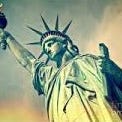

Augustine vs. Political Power
Pope Leo XIV’s Augustinian theology stands in sharp contrast to the aggressive, militarized faith rhetoric of Trump’s allies, spotlighting a battle over the soul of Christian public witness.
Pope Leo XIV’s theological framework is firmly anchored in the teachings of Augustine of Hippo, whose reflections on the destructive nature of pride and the lust for domination ('libido dominandi') profoundly shape the Pope’s stance against political aggression. Drawing from Augustine’s historical context—marked by the 410 AD Sack of Rome and the Vandal conquest—Pope Leo positions himself as a moral counterweight to contemporary figures like Trump, emphasizing peace and humility over power struggles. As the Pope declared, 'We are not politicians... I do believe in the message of the Gospel, as a peacemaker,' underscoring his commitment to a Gospel-centered approach that rejects the corrosive effects of pride and empire-building.
In stark contrast to Pope Leo XIV’s Augustinian emphasis on non-violence and spiritual humility, political figures such as Pete Hegseth have adopted a militaristic and combative use of religious language, exemplified by Hegseth’s invocation of a violent prayer blending Ezekiel 25:17 with the film Pulp Fiction to bless U.S. military actions. This repurposing of scripture through overtly political and cultural lenses distorts traditional Christian teachings, a trend the Pope actively counters by reaffirming the original Augustinian principles that warn against the perils of pride and the lust for power. Hegseth’s admission that scripture is interpreted 'through our own lens' highlights the divergence between aggressive political rhetoric and the Pope’s call for peace rooted in theological humility.
Faith Bloc Shattered
Trump’s feud with the Pope has alienated Catholic leaders, eroded his religious base, and fractured nationalist alliances from the U.S. to Europe.
The escalating feud between President Trump and Pope Leo XIV has deeply fractured Trump's once-solid Catholic base, as prominent U.S. Catholic leaders like Archbishop Paul Coakley and Bishop Robert Barron publicly condemned Trump's disparaging remarks and blasphemous use of AI-generated religious imagery. The Ancient Order of Hibernians labeled Trump's self-depiction as a Christ-like figure 'sacrilege,' underscoring how these actions have alienated religious voters who previously tolerated Trump's conduct, signaling a significant erosion of his credibility within key faith communities.
This religious rupture has reverberated through the broader Republican coalition, with figures like J.D. Vance warning that antagonizing the Pope risks losing evangelical swing voters crucial for Trump's 2028 nomination. Vance criticized the performative religiosity of Trump's camp and framed the feud as 'disastrous,' reflecting a growing consensus among conservative political actors that the conflict undermines Trump’s standing among essential religious constituencies and threatens his electoral viability.
Internationally, Trump's confrontational stance has alienated even his far-right European allies, such as Italy’s Prime Minister Giorgia Meloni and France’s Marine Le Pen, who have distanced themselves due to the political fallout from the Iran war and Trump's erratic behavior. The association with Trump contributed to Viktor Orbán’s landslide defeat in Hungary, illustrating how the feud's negative impact extends beyond U.S. borders and weakens nationalist and conservative alliances globally.
Public opinion polls reveal a stark decline in Trump's approval ratings, now at historic lows of 32-36%, coinciding with Pope Leo XIV's soaring popularity—60% favorable among Americans and an 84% approval rating among American Catholics. The Pope's measured, indirect criticism of Trump’s policies on mass deportations, Venezuela, and the Iran war has galvanized opposition, while his refusal to name Trump directly diminishes the president’s perceived stature, further eroding Trump’s credibility amid a wartime moral and political crisis.




From Feud to Security Threat
A bomb scare targeting the Pope’s brother reveals how political-religious vendettas are fueling real-world security risks for families caught in the crossfire.
The bomb threat targeting Pope Leo XIV's brother, John Prevost, at his New Lenox, Illinois home on a Wednesday evening underscores the tangible security risks emerging from the escalating political and religious conflict. Although the threat was ultimately unsubstantiated, the incident occurred just four days after President Trump publicly praised Louis Prevost as 'all MAGA' while criticizing the Pope, suggesting that Trump's divisive rhetoric may have indirectly contributed to John Prevost becoming a target. This connection highlights the dangerous real-world consequences when political figures weaponize family divisions in public discourse.
Beyond the immediate physical threat, the bomb scare functioned as a psychological weapon, with the visible deployment of K9 units, police perimeters, and evacuations delivering a chilling message: family members of public figures are now vulnerable targets amid rising tensions. As one analyst put it, 'The bomb didn’t need to be real... The point was the K9 units. The perimeter. The evacuation... That is the payload.' This shift signals a troubling new doctrine where private residences and loved ones become leverage points in political conflicts, fundamentally altering the security landscape for those who dare to speak their conscience.