Trump’s trading tsunami: DOJ probe unmasks white house market moves, sparks ethics uproar
The gist
A sweeping DOJ probe reveals Donald Trump’s record-shattering 3,700+ stock trades—timed with White House policy moves—igniting an ethics uproar over insider dealing at the highest level.
What to know
- Trump’s trades in oil, tech, and crypto surged past 3,700 in early 2026, with suspicious timing around policy announcements and market swings.
- Family conflicts of interest abound, including Eric Trump’s $24 million Pentagon contract and Don Jr.’s crypto prediction market ties, exposing regulatory blind spots.
- Despite mounting outrage, regulatory gaps let insiders capitalize on market-moving intel, prompting urgent calls to ban officials from trading on privileged information.
Market Turmoil and Manipulation Risks
The DOJ's probe into Trump’s energy and tech trades has fueled market instability and exposed how high-level political power can amplify risks of manipulation during a period of global economic upheaval.
The Department of Justice's probe into Donald Trump's aggressive trading in oil markets has significantly rattled investor confidence and amplified market volatility throughout 2026. Trump's high-stakes maneuvers, particularly in energy stocks tied to his portfolio, have spotlighted potential market manipulation risks at a time when financial stability is already precarious. This scrutiny underscores broader regulatory challenges as authorities grapple with enforcing rules amid complex trading strategies that intertwine with geopolitical and economic uncertainties.
Beyond oil, the investigation has unveiled a sprawling insider trading scandal that threatens to erode trust in the markets just as AI and major tech firms like NeuralNet Dynamics and QuantumGrid Technologies are reshaping global infrastructure and geopolitical dynamics. The timing is critical; as these sectors drive transformative change, revelations of illicit trading linked to Trump’s portfolio cast a shadow over market integrity, raising alarms about the effectiveness of regulatory oversight during this volatile period.


Presidential Trades Sway Tech Giants
Trump’s relentless, high-frequency trading in top tech and defense stocks frequently aligned with policy shifts and geopolitical events, raising alarms about the intersection of presidential influence and market timing.
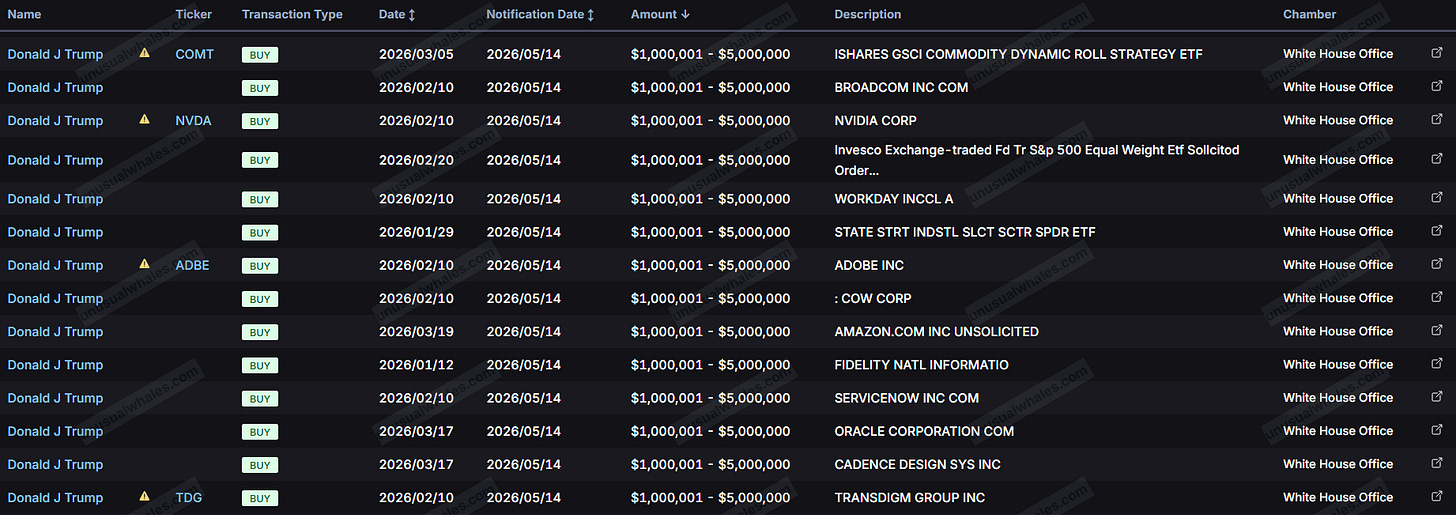
Donald Trump’s trading activity in Q1 2026 was marked by an extraordinary volume and frequency, with over 3,700 stock transactions averaging more than 40 trades per day, a scale unprecedented for a sitting president. These trades heavily targeted major tech companies such as NVIDIA, Meta, Microsoft, and Amazon—firms closely linked to the administration’s business dealings and policy decisions, including a notable surge in tech stock returns exceeding 100% in cases like Intel and Marvell. This aggressive and high-stakes trading pattern, disclosed in ethics filings, has drawn intense scrutiny from regulators and ethics experts who question the strategy and legality behind such rapid, high-volume transactions.
Trump’s trading strategy exhibited a keen responsiveness to geopolitical and policy developments, particularly during the March 2026 market selloff triggered by Middle East tensions. His brokerage account executed large-scale purchases in energy and defense stocks—such as Exxon Mobil, Chevron, Lockheed Martin, and General Dynamics—while simultaneously diversifying into gold miners and treasury bonds, signaling a defensive yet opportunistic posture amid volatility. Notably, on March 23 alone, 203 trades were made, reflecting anticipation of conflict-driven market swings and underscoring a sophisticated, multi-asset approach to capitalizing on geopolitical risk.
The timing of Trump’s trades often coincided suspiciously with his administration’s market-moving policy announcements, raising concerns about potential insider knowledge or conflicts of interest. For instance, substantial sales of AI hyperscalers like Microsoft, Amazon, and Meta on February 10 preceded a leaked carveout exempting these companies from chip tariffs, while simultaneous purchases targeted software firms predicted to suffer from AI disruptions. Similarly, his public endorsement of Dell followed prior multimillion-dollar stock purchases, with the stock surging over 12% intraday after his comments, illustrating a pattern where high-frequency trading intersected with public influence and policy shifts.
Trump and his family’s extensive crypto trading further complicates the picture, with over 3,600 crypto-related transactions valued between $220 million and $750 million executed during a critical legislative period. These trades, managed through trusts controlled by his children, included significant positions in Coinbase, Robinhood, and Bitcoin mining firms, aligning closely with the administration’s advancement of pro-crypto regulatory reforms such as the Clarity Act. This high-frequency crypto activity, alongside widespread crypto holdings among nearly 70 administration officials, highlights a coordinated engagement with volatile digital assets amid a politically sensitive environment.





Insider Gains and Family Profits
Trump’s use of privileged information, murky trading operations, and family-linked deals reveal systemic ethical lapses and regulatory failures at the heart of the administration’s financial dealings.
Donald Trump’s financial dealings during his presidency reveal a troubling pattern of leveraging insider knowledge and political power for personal gain, particularly through high-stakes trades in tech stocks like Nvidia and ventures in cryptocurrency. These actions, including a $500,000 to $1 million Nvidia purchase just before the Commerce Department approved chip sales to China, underscore serious ethical breaches and insider trading concerns, as well as outright corruption involving crypto betting platforms such as Kalshee and Polymarket. The failure of ethics oversight mechanisms allowed these potentially manipulative activities to proceed unchecked, exposing systemic regulatory weaknesses in monitoring conflicts of interest and insider trading risks.
The Trump administration’s weakening of cryptocurrency regulations coincided with the launch of multiple Trump-affiliated crypto enterprises, some involving foreign investors like a UAE sheik who secretly acquired a 49% stake in one business. This intersection of lax enforcement, foreign investment, and national security concerns has ignited a regulatory firestorm amid ongoing geopolitical tensions and AI-driven market disruptions in 2026. Moreover, Trump family members have profited from government contracts and regulatory shields—Eric Trump’s company secured a $24 million Pentagon contract while Don Jr. maintained financial ties to prediction markets even as his father shielded the industry from oversight—highlighting pervasive conflicts of interest and ethical challenges.
Trump’s frequent, unprecedented meetings with corporate executives and his public endorsements of companies like Apple, Dell, and Thermo Fisher around the time he purchased their stocks raise red flags about potential market manipulation and insider trading. Complicating transparency, it remains unclear whether Trump himself, his sons, or automated third parties executed these trades, with the Trump Organization denying direct involvement yet acknowledging that his sons oversee much of the portfolio. This murky arrangement, combined with access to non-public information and the absence of a truly blind trust, fuels skepticism about the integrity of these transactions and the broader market fairness.
Despite widespread indignation over these insider trading and market manipulation allegations, there remains a critical enforcement gap as political actors struggle to propose effective regulatory reforms. Calls for legislative action to ban political insiders, including White House aides, from betting on markets influenced by government decisions reflect growing awareness of the problem, yet concrete solutions remain elusive. As one commentator lamented, 'we're long on indignation, but we're short on ideas,' underscoring the urgent need for coordinated efforts among presidential candidates and state attorneys general to restore market legitimacy and prevent future abuses.