TSMC, rivals pour billions into U.S. fabs
The gist
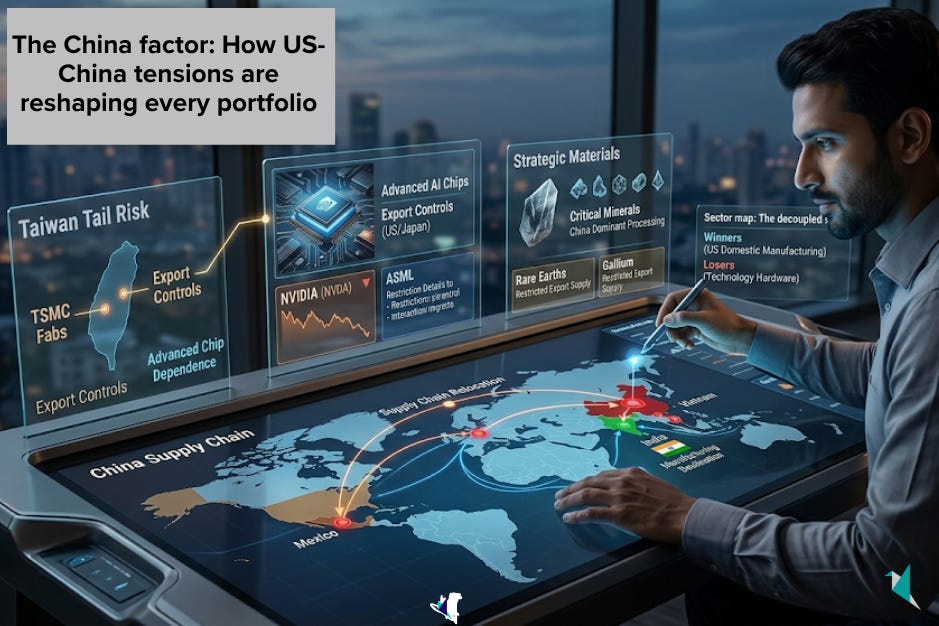
Semiconductor heavyweights are pouring billions into regional fabs as tech supply chains splinter under escalating US-China trade tensions and the global race for tech sovereignty heats up.
What to know
- TSMC and rivals have committed over $100 billion to US-based manufacturing by mid-2026 to hedge against tariff risks and geopolitical shocks.
- Europe’s €200 billion InvestAI program and sovereignty push lag behind as US cloud giants still control up to 83% of its market, with local chip production projected at just 11.3% by 2030.
- Despite massive investments and policy sprints, tech sovereignty will barely budge—rising only from 39% to 40% globally by 2030, while the US and China keep their grip with 79%+ control.
Tariffs Upend Tech Trade
Tariff hikes and US-China tensions forced tech giants to rethink global supply chains, amplifying risks and stalling cross-border deals.
By early 2026, the persistent tariff uncertainty stemming from ongoing legal challenges to U.S. trade policies and the volatile U.S.–China rivalry significantly disrupted global tech supply chains. President Trump's announced intentions to raise tariffs from 10% to 15% or higher, coupled with the U.S. leveraging tariffs to enforce semiconductor investment commitments from countries like Taiwan, South Korea, Japan, and the EU, created a climate of unpredictability that delayed critical trade agreements with partners such as the EU and India. This environment complicated investment decisions and heightened supply chain risks, especially in critical minerals and memory chips, underscoring the fragile balance between trade policy and technological advancement.
The rapid expansion of data centers driven by the AI boom intensified demand for semiconductor components, particularly memory chips imported from Korea and Taiwan, pushing prices and air freight volumes to unprecedented levels. Despite the end of the de minimis shipping exception for China, air freight costs remained elevated due to the surge in shipments supporting global data center build-outs. Companies like Shein adapted nimbly to tariff pressures by establishing large U.S. fulfillment centers and maintaining small, frequent purchase orders, avoiding excess inventory and discounting. Meanwhile, firms with privileged policy access or agility shifted manufacturing to Mexico and Latin America, highlighting how tariff-induced supply chain challenges favored those able to navigate geopolitical complexities swiftly.
The foundational geopolitical tensions revealed an 'impossible triangle' in supply chain management—balancing cost, efficiency, and security—that became increasingly untenable amid US-China trade conflicts and tariff uncertainties. European stakeholders expressed a deep sense of betrayal as tariffs and the undermining of institutions like the WTO eroded trust, complicating transatlantic relations. This environment exposed the vulnerabilities of a globalization model that prioritized low cost and efficiency over security, prompting a strategic shift toward selective fragmentation and decoupling in critical technology supply chains, especially in AI and semiconductors. Discussions emerged around new regulatory frameworks and multilateral governance, such as an AI Global Council or AI WTO, to stabilize the evolving landscape.
The US-China trade conflict evolved into a structural decoupling by mid-2026, driven by escalating tariffs reaching multidecade highs and progressively tighter export controls on advanced semiconductors and chip-making equipment involving allies like the Netherlands and Japan. This decoupling disrupted the deep economic integration built since China's WTO entry in 2001, with companies like Apple still heavily reliant on Chinese manufacturing hubs such as Zhengzhou. China's dominant control over rare-earth processing and its export restrictions on critical minerals emerged as a strategic countermeasure, exposing a critical vulnerability in Western supply chains. Taiwan's geopolitical risk, given TSMC's chip manufacturing dominance, further heightened market volatility and motivated US initiatives like the CHIPS Act to reshore semiconductor production and reduce dependency.




TSMC’s High-Stakes U.S. Bet
TSMC’s $100 billion U.S. expansion aims to outmaneuver rivals and de-risk operations, but faces margin pressures and fierce foundry competition.
By late 2025, TSMC was aggressively expanding its advanced node production with volume output of N2 nodes and N2P/A16 slated for 2026, alongside significant investments in its Arizona gigafab cluster and advanced packaging fabs. This strategy serves as a hedge against tariff risks and geopolitical tensions, though it comes with margin dilution of 2–3% in early overseas operations and persistent packaging bottlenecks that could constrain near-term capacity utilization and profitability.
The U.S. semiconductor landscape in early 2026 witnessed a strategic pivot toward localized manufacturing driven by a coordinated ecosystem involving Tesla, Intel, Samsung, and UMC, with Elon Musk’s TeraFab initiative emerging as a transformative $119 billion bet to multiply global chip production capacity fiftyfold. This wave of investments signals a shift from traditional foundry competition to a multi-front realignment emphasizing national security and supply chain resilience amid Taiwan-related risks.
TSMC’s substantial U.S. expansion, including a $100 billion commitment announced by mid-2026, reflects a preemptive defense against Intel’s foundry resurgence by securing customer loyalty and policy support while challenging Intel’s narrative of U.S.-based manufacturing supremacy. By bolstering advanced packaging and fab capacity stateside, TSMC aims to refocus customer decisions on technology, cost, and yield rather than geopolitical considerations, positioning itself as the most reliable partner for advanced process localization.
Despite TSMC’s roughly 40% capex growth, capacity constraints remain acute due to multi-year clean room construction timelines and back-end bottlenecks, prompting industry players to retrofit existing facilities and cautiously expand capacity incrementally. While initiatives like TeraFab promise to accelerate fab buildouts, practical supply responses will likely lag demand by two to three years, underscoring the semiconductor sector’s transition from globally optimized, cost-efficient production to a geographically distributed, government-influenced, and strategically resilient infrastructure that elevates manufacturing costs and barriers to entry.



Europe’s Sovereignty Dilemma
Europe’s scramble for tech independence is hampered by regulatory fragmentation and reliance on U.S. cloud giants, despite massive local investments.
Europe's engagement with technological sovereignty has rapidly evolved from near absence to urgent priority within just a few years, driven by stark gaps in semiconductor and AI capabilities where only a handful of companies like ASML and Mistral stand out. This urgency is compounded by a geopolitical landscape that increasingly treats technology as a weaponizable scarce resource, reminiscent of the 1970s oil crises, compelling Europe to either build its own technology stack or forge trusted partnerships to avoid overdependence on external powers that might restrict access.
In response, Europe has launched ambitious initiatives such as the €75 million EURO-3C federated AI network and the €200 billion InvestAI program to foster indigenous AI development while simultaneously awarding €180 million in sovereign cloud service contracts to European providers like Post Telecom and Scaleway. However, these efforts are hampered by fragmented regulatory frameworks and inconsistent data governance across member states, alongside heavy reliance on US cloud giants—Amazon, Google, and Microsoft—who control roughly 70-83% of Europe's cloud market, exposing the continent to legal risks under laws like the US Cloud Act.
Europe’s strategic policy response crystallized in the June 3, 2026 Tech Sovereignty Package, which seeks to balance competitiveness and autonomy by instituting a cloud sovereignty framework that permits US hyperscalers to operate only if they maintain formal control within European subsidiaries. While this 'buy European' approach emphasizes geographic provision over ownership, it risks perpetuating dependence on foreign Big Tech, as seen in Microsoft's expansion of European data centers and governance structures aligning with EU requirements. Meanwhile, regulatory tools like the Digital Markets Act and merger controls have been underused, exemplified by the Dutch government's blocking of Kyndryl's acquisition of Solvinity due to sovereignty concerns.
Despite these initiatives, Europe faces a daunting sovereignty gap with only about 5% of global computing capacity and a semiconductor production forecast far below its 20% target, projected at just 11.3% by 2030. Analysts like Forrester argue that full technological self-sufficiency is unrealistic; instead, Europe should focus on managing dependencies through strategic alliances, open-source solutions, and selective investments. This pragmatic stance is echoed by experts advocating for a transatlantic AI infrastructure project with binding sovereignty guarantees, recognizing that Europe's path to sovereignty will be incremental, politically complex, and reliant on immediate actionable steps within industry and government alike.


Supply Chains Enter Survival Mode
Supply chain risk has become a boardroom crisis as companies abandon just-in-time models for resilience amid geopolitical flashpoints and labor shocks.
By early 2026, global supply chains have become frontline battlegrounds in the intensifying U.S.–China rivalry, with critical sectors like memory chips and minerals facing acute risks due to tariff policies, geopolitical tensions, and labor challenges. Ted Krantz, CEO of interos.ai, emphasizes that supply chain risk has escalated to a board-level imperative, yet many organizations remain reactive, risking losses upwards of $60 million. The weaponization of supply chains is evident in geopolitical flashpoints such as Ukraine, Venezuela, Iran, and Taiwan, underscoring the urgent need for anticipatory risk management supported by AI-powered platforms like interos.ai’s Resilience, which integrates multi-domain risk assessments to enable real-time mitigation strategies.
The AI boom has paradoxically sustained high air freight prices and reshaped trade flows, particularly through surging imports of memory chips from Korea and Taiwan essential for data center expansions, defying expectations of cost drops after the May 2026 end of China’s de minimis shipping exemption. Meanwhile, Chinese e-commerce giant Shein exemplifies adaptive resilience by establishing expansive U.S.-based fulfillment centers and maintaining ultra-granular, small purchase orders to minimize inventory and avoid discounting. Entrepreneurial firms rapidly nearshoring to Mexico and Latin America further highlight a strategic pivot toward regional manufacturing hubs to navigate tariff complexities and geopolitical uncertainties.
The longstanding paradigm of globalized supply chains optimized for cost and efficiency is unraveling under what analysts term the 'impossible triangle'—balancing cost, efficiency, and security. As supply chains fragment into multipolar regional blocks across Asia, Europe, and North America, companies increasingly prioritize resilience and flexibility over traditional just-in-time models, adopting just-in-case strategies despite the higher costs. This shift is propelled by structural US-China decoupling, accelerated by export controls and tariff regimes since 2018, with governments and corporations accepting near-term economic pain to reduce long-term dependencies and vulnerabilities.
Nearshoring and reshoring have gained tangible momentum as cornerstone strategies for supply chain resilience, exemplified by the U.S. CHIPS Act’s push to repatriate semiconductor manufacturing and companies like Ford pivoting to domestic production of critical supplies during the pandemic. Despite 50% of global supply chain functions still concentrated in China, emerging manufacturing booms in the U.S., Mexico, and Europe reflect a deliberate diversification to mitigate geopolitical risks. This transition is supported by accelerated investments in digital transformation—with 74% of companies planning to enhance supply chain digitization in 2026—enabling end-to-end visibility, multi-hub sourcing, and data-driven decision-making essential for managing complex, multipolar supply networks.

Tech Sovereignty Stalls Globally
Despite billions in investment, most nations will barely improve tech autonomy by 2030, as U.S. and China cement their dominance and alliances become essential.
By 2030, global tech sovereignty is expected to inch upward only marginally from 39% to 40% across 14 major economies, underscoring the slow and incremental nature of progress toward full autonomy. Forrester’s forecast highlights that despite ongoing efforts, most countries will remain far from achieving complete tech sovereignty, reflecting deep-rooted structural challenges that cannot be resolved quickly.
The tech sovereignty landscape continues to be dominated by the US and China, with Forrester projecting scores of 79% and 82% respectively by 2030, while European powerhouses like Germany and France lag significantly behind at around 33-34%. This persistent dominance by the two superpowers underscores their entrenched roles in the global technology ecosystem and the widening gap with midsize economies.
Recognizing the impracticality of absolute sovereignty even for leading nations, midsize countries are advised to pursue strategic partnerships and alliances to attain a minimum viable level of sovereignty. As Forrester’s Dario Maisto suggests, pooling sovereignty through blocs or partnering with hyperscalers can create infrastructure insulated from foreign legal jurisdictions, offering a pragmatic path forward amid complex geopolitical and infrastructural constraints.
The slow pace of sovereignty gains is largely due to entrenched structural barriers such as limited land availability, energy grid constraints, and talent shortages, which require long-term development beyond quick fixes. Moreover, nations and companies face difficult trade-offs between sovereignty and innovation, often having to choose less advanced local on-premises solutions over cutting-edge foreign SaaS products, highlighting the evolving balance between autonomy and interdependence in a fragmented yet interconnected tech ecosystem.