UAE flexes oil muscle after OPEC exit, bets big on dollar ties and digital currency
The gist
The UAE has rocked global oil markets by quitting OPEC after nearly 50 years, seizing control of its own oil destiny, deepening its U.S. ties, and fast-tracking its digital currency ambitions.
What to know
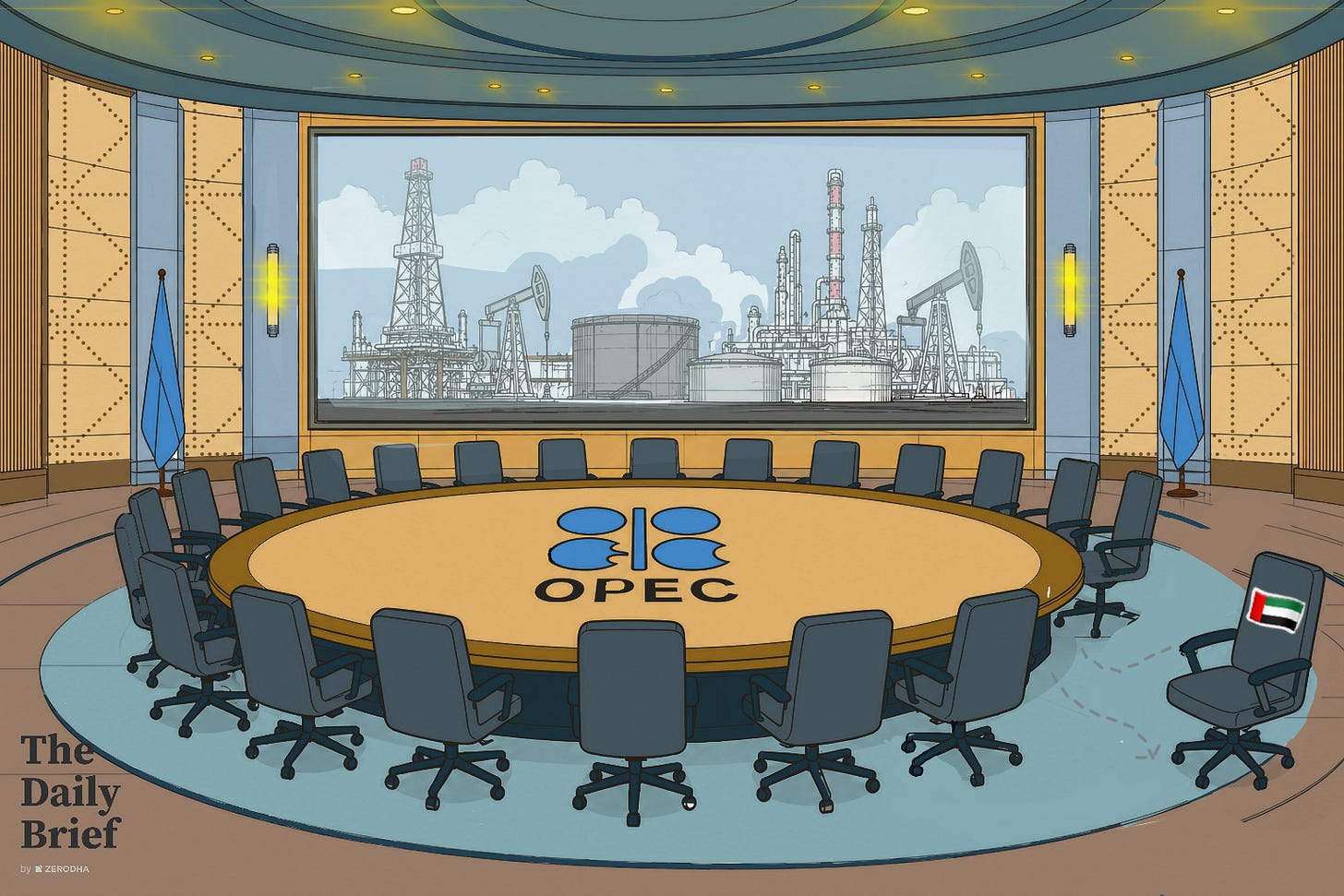
- The UAE's OPEC exit lets it slash or surge oil output at will, threatening to unravel the cartel's price control and potentially lowering global oil prices.
- Securing a $20 billion swap line with the Federal Reserve, the UAE is tightening economic bonds with the U.S. while distancing itself from Saudi-led Gulf alliances amid Iran tensions.
- The Emirates is leapfrogging regional rivals by launching a dirham-pegged stablecoin and joining mBridge, aiming to reduce its reliance on the U.S. dollar and boost financial sovereignty.
OPEC’s Power Unravels
The UAE’s dramatic OPEC exit dismantles decades of cartel discipline, threatening to flood the market with oil and upend Saudi-led price controls.
The UAE's historic exit from OPEC after nearly 50 years marks a strategic assertion of independence from the Saudi-led cartel, fundamentally challenging OPEC's cohesion and its ability to control global oil supply and prices. By shedding the production caps, export limits, and quotas imposed since the 2016 technocratic restructuring—which introduced strict baselines and enforcement mechanisms via the Ministerial Monitoring Committee—the UAE gains full autonomy to increase its oil output, potentially driving down global prices over time. This move not only signals the end of an era for one of OPEC's staunchest members, who had consistently supported Saudi leadership and production cuts, but also threatens to unravel the cartel's long-standing supply control strategy that kept prices elevated.
The UAE's departure from OPEC is widely viewed as a blow to the cartel's influence, with analysts suggesting it could precipitate the breakdown of OPEC's price control leverage. As one expert noted, 'I think that the UAE leaving OPEC basically dealt a death blow to OPEC... Supply control keeps prices elevated. But when a major producer steps outside the game, that's when everything changes.' This realignment may benefit the United States, which has historically been constrained by OPEC's coordinated output restrictions, and is believed to have supported the UAE's move to weaken the cartel's grip on the market.
Beyond market mechanics, the UAE's exit reflects broader geopolitical and economic shifts in the Gulf region, as the country seeks greater autonomy over its oil policy amid rising regional tensions, particularly with Iran. The UAE's absence from key Gulf Cooperation Council emergency sessions and its criticism of the GCC's perceived weakness underscore a strategic pivot toward more independent decision-making. This move aligns with the UAE's concurrent securing of a $20 billion U.S. dollar swap line, signaling a deepening financial partnership with the United States and a recalibration of its regional alliances and economic strategies.


Gulf Alliances Fracture
Rising Iran tensions and diverging strategies have pushed the UAE to abandon pan-Arab unity and align more closely with the US and Israel, exposing deep rifts with Saudi Arabia.
The UAE's departure from OPEC marks a decisive geopolitical realignment driven by escalating hostilities with Iran and a strategic desire to break from traditional pan-Arab and pan-Islamic frameworks that historically opposed Western alliances. As tensions intensified with Iran targeting Gulf energy infrastructure, the UAE chose to sever ties with OPEC, an organization it now views as compromised by conflicting loyalties, signaling a shift toward greater autonomy and alignment with Western powers, particularly the United States and Israel. This move reflects a broader regional recalibration as the shrinking diplomatic space between the US and Iran leaves little room for reconciliation, prompting the UAE to strengthen military and economic cooperation outside established Gulf mechanisms.
The ongoing Iran war has exacerbated fractures within Gulf alliances, notably between the UAE and Saudi Arabia, whose divergent approaches to regional conflicts and Iran have deepened rifts. While the UAE supports continuation of the war to prevent Iran from maintaining military and nuclear capabilities, Saudi Arabia pursues a pragmatic post-war accommodation facilitated by Pakistan and China. This discord has manifested in proxy clashes from Yemen to Sudan and a breakdown in Gulf Cooperation Council (GCC) unity, highlighted by the UAE’s absence from the GCC emergency meeting and its public criticism of the council’s weakness, underscoring the erosion of collective Gulf military and political coordination.
Leveraging its substantial spare oil production capacity, the UAE is capitalizing on its exit from OPEC to assert economic independence and reduce reliance on the strategically vulnerable Strait of Hormuz. With production capacity poised to reach 5 million barrels per day by 2027—well above its previous OPEC+ quota—the UAE plans to maximize exports once the Strait reopens, rejecting voluntary output restrictions to capitalize on higher prices amid regional supply disruptions. This economic strategy is tightly interwoven with its geopolitical pivot towards closer security ties with the US and Israel, positioning the UAE as a financially and militarily autonomous actor amid Gulf instability.


Dollar Ties Deepen
A $20 billion swap line with the Fed cements the UAE’s elite status among US allies, fortifying its financial defenses as Gulf states brace for regional shocks.
The UAE's securing of a $20 billion U.S. dollar swap line with the Federal Reserve marks a pivotal step in deepening financial cooperation with the United States, placing the Emirates alongside a select group of close U.S. allies such as the Bank of England and the Bank of Japan. This arrangement grants the UAE immediate and streamlined access to U.S. dollars, enhancing its financial autonomy by mitigating reliance on volatile currency markets and reducing exchange rate pressures, especially amid potential energy market disruptions. As Evercore analysts highlight, such swap lines not only act as financial backstops but also reinforce the UAE's capacity to fulfill substantial U.S. investment commitments, exemplified by its $1 trillion aluminum smelting plant investment in Oklahoma, underscoring the intertwined economic ties between the two nations.
Beyond liquidity support, the UAE’s public pursuit of the swap line serves as a strategic political signal reflecting its nuanced stance on the ongoing regional conflict with Iran. According to Brad Setser of the Council on Foreign Relations, this move communicates the Gulf states’ dissatisfaction with the economic burdens imposed by the war and a sense of being insufficiently consulted or compensated. Treasury Secretary Scott Bessent’s remarks that multiple Gulf allies have requested swap lines to maintain order in dollar-funding markets underscore the swap’s role as a precautionary mechanism designed to prevent disorderly asset sales and ensure financial stability amid escalating tensions.
While the UAE currently holds ample dollar reserves, the $20 billion swap line functions as a prudent safeguard against potential liquidity crunches should the Iran conflict intensify and disrupt oil exports. Vishal Khanduja of Morgan Stanley explains that such preemptive measures enable the Emirates to prepare for cash flow challenges before conditions deteriorate, reflecting a broader regional trend of Gulf states seeking to bolster their dollar liquidity buffers. This strategic financial maneuver, coupled with the UAE’s exit from OPEC, signals a deliberate shift towards greater financial autonomy and closer alignment with U.S. monetary mechanisms, thereby reinforcing the dominance of the U.S. dollar in Gulf regional finance.


Digital Currency Power Play
By championing mBridge and launching a dirham stablecoin, the UAE is leapfrogging rivals to reduce dollar dependency and claim a leading role in next-gen Gulf finance.
The UAE is spearheading a strategic pivot in Gulf financial systems by embedding itself within innovative digital currency frameworks like mBridge, which it joined from inception and complemented by approving a regulated dirham-pegged stablecoin in December 2024. This proactive stance enables the UAE to circumvent traditional US dollar dominance and regulatory oversight, effectively 'tunneling around' the dollar system to gain greater financial autonomy. In contrast, Saudi Arabia remains more cautious, having only signed a $7 billion currency swap with China in 2023 and still largely exposed to US dollar assets, highlighting divergent Gulf approaches to economic sovereignty amid shifting geopolitical currents.
While the Gulf region remains heavily reliant on the US dollar, emerging alternative financial channels such as the mBridge platform and China's expansive currency swap network are reshaping the landscape by diluting Washington's leverage. By early 2026, mBridge had processed over $55 billion in transactions, with 95% settled in digital yuan, underscoring China's growing role as a liquidity provider. Moreover, China's swap-line network now spans approximately 40 central banks, offering liquidity insurance not only in yuan but also in euros and occasionally dollars, thereby furnishing Gulf states with diversified options to mitigate dollar dependency and enhance regional economic sovereignty.