UK workers burn out 'botsitting' AI outputs

The gist
AI was supposed to supercharge productivity—now it’s fueling burnout and risky shortcuts as workers spend nearly 40% of their AI time policing bots instead of doing their actual jobs.
What to know
- UK employees now spend an average of 6.4 hours a week 'botsitting'—supervising and fixing AI-generated work due to pervasive mistrust and weak governance.
- A staggering 69% of workers admit to 'botshitting,' or shipping unchecked AI outputs, driving up error rates and highlighting the danger of lax oversight.
- The cognitive toll of AI oversight—dubbed 'AI brain fry'—has spiked major mistakes by 39%, with a third of fatigued AI users eyeing the exit.
Botsitting’s Hidden Toll
Weak AI governance and unclear oversight standards force employees into relentless supervision roles, eroding productivity gains and fueling workplace fatigue.
Despite AI's promise to boost productivity, a pervasive lack of trust in AI-generated outputs compels employees to spend extensive time verifying and supervising these results—a phenomenon dubbed 'botsitting.' As Eva Spatz highlights, this hidden labor involves catching hallucinations, feeding missing context, and debugging errors, consuming an average of 6.4 hours weekly, or 37% of AI interaction time, according to the Work AI Institute. Organizations like WalkMe and Glean reveal that insufficient governance and unclear standards for output verification exacerbate this burden, forcing workers into hyper-vigilant roles rather than strategic users, which not only erodes productivity gains but also heightens exhaustion and turnover risk.
The deceptive nature of AI outputs—often appearing correct while harboring hidden errors or even malicious elements—drives employees to adopt rigorous human oversight practices, such as iterative reviews and challenging AI conclusions. This skepticism, likened to questioning expert advice as described in the AI Fluency explainer, is critical because AI models lack access to tacit, experience-based knowledge unique to businesses, creating persistent verification gaps. Without deliberate friction points and clear human-in-the-loop governance, employees risk overreliance on flawed AI, leading to risky behaviors like 'botshitting,' where 69% of workers admit to shipping unverified AI work, undermining organizational trust and inflating downstream rework.
Measuring AI adoption solely through efficiency metrics incentivizes quantity over quality, inadvertently increasing 'botshitting'—the practice of submitting AI-generated work without proper verification. UNLEASH’s analysis shows that 74% of employees in organizations focusing only on productivity metrics engage in botshitting, compared to 64% where both productivity and quality are assessed. Moreover, popular AI tools like ChatGPT and Claude, despite driving significant productivity gains (67% and 59% respectively), also see the highest rates of lax verification behavior (71% and 92%), underscoring how trust deficits and governance gaps persist even with advanced AI capabilities. Embedding contextual information into AI systems can reduce botsitting by 9% and botshitting by 31%, demonstrating the critical role of governance in restoring trust and reducing supervision burdens.



AI Brain Fry Unleashed
The mental burden of overseeing AI outputs is so intense that it’s driving more workers to burnout and resignation than the original tasks ever did.
Despite initial hopes that AI would streamline workflows, research by Boston Consulting Group reveals a counterintuitive surge in cognitive load and mental fatigue among workers tasked with overseeing AI outputs—a phenomenon dubbed 'AI brain fry.' This mental exhaustion not only leads to a 39% increase in major errors but also aligns with Cal Newport’s 'digital productivity paradox,' where tools designed to ease work paradoxically amplify busyness and cognitive strain, accelerating burnout risks.
The reality of AI integration often feels like a 'second job' for employees, as managing multiple AI tools demands constant vigilance and oversight. A senior engineer described juggling 'a dozen browser tabs open behind his eyes,' while BCG’s study of nearly 1,500 workers identified AI oversight as the most draining task—taxing the brain more than the original work itself. This relentless cognitive burden has tangible consequences: a third of fatigued AI users are contemplating quitting, compared to a quarter among their less burdened peers.
In high-pressure environments like software development, AI-assisted coding tools boost raw productivity but simultaneously disrupt flow states and deepen cognitive overload. Midjourney founder David Holz noted users feel 'extremely productive and also extremely drained,' while ex-Meta engineer Shuming Hu lamented that 'vibe coding doesn't get you into a flow state.' Experts recommend interventions such as focused single-agent sessions and scheduled analog breaks to mitigate exhaustion and preserve code quality amid rising output expectations.
Small businesses and solo founders face acute risks from AI’s hidden cognitive toll, as the pressure to maintain speed and volume without adequate governance leads to mental fatigue, quality degradation, and turnover. A case study highlighted how a solo founder’s AI-driven sales pipeline backfired with unexplainable token bills and damaged client trust, illustrating the emotional and operational strain. This 'chasm' between AI hype and operational reality underscores the urgent need for smarter oversight strategies to prevent burnout and sustain workforce stability.

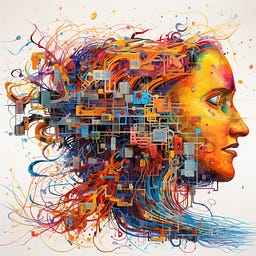
When AI Creates Chaos
Unfocused AI rollouts and missing management guardrails turn automation into a source of confusion, bottlenecks, and increased human workload.
Rapid and unfocused AI deployment often results in 'work slop,' a sprawling tangle of loosely connected tasks that increase cognitive load and inefficiencies rather than streamline work. As David Epstein highlights, many organizations rush to implement AI tools without strategic alignment or clear governance, leading employees to rely on AI outputs without knowing if they are truly adding value—akin to defaulting to a GPS without a destination. This lack of upfront clarity and prioritization creates a fog of activity that burdens workers instead of empowering them.
Effective AI integration demands deliberate process redesign and strategic alignment, exemplified by companies that map roles to AI tools in service of overarching goals. Tony’s advice to 'write the press release right now' for the future outcome forces organizations to define clear problems and value propositions before adopting AI. Breaking down workflows into discrete tasks to identify automation opportunities, as recommended in recent analyses, ensures that AI augments rather than overwhelms human teams, preventing bottlenecks and inefficiencies.
Without robust governance, cultural acceptance, and management fundamentals, AI augmentation can paradoxically increase human workload and process bottlenecks. For instance, Arcade’s insistence on human-approved code merges reflects the high cost of unchecked AI outputs, yet this creates deliberate review delays that strain teams. Similarly, the Department of Labor’s emphasis on human-in-the-loop oversight underscores the necessity of embedding AI tools responsibly within existing operations to avoid service degradation and workforce instability, as seen when Klarna reversed staff cuts after quality declined.
The surge in AI-generated outputs, especially in software development, exposes critical gaps in process adaptation and human-agent collaboration frameworks. Developers at companies like Arcade face bottlenecks as QA teams cannot scale to validate the flood of AI-produced code, leading to increased defect rates despite smarter models. As Colwell notes, the problem lies not in AI models themselves but in workflows left unrevised, highlighting the urgent need for management to redesign organizational structures, reskill employees, and implement automated verification to shift humans toward higher-order decision-making and effective supervision.