Unity or illusion? america’s 250th sparks soul-searching, brand balancing, and a push for authentic patriotism
The gist
As America gears up for its 250th birthday, unity becomes the rallying cry—one brands, politicians, and citizens are scrambling to embrace authentically in a nation still deeply divided.
What to know
- Despite 66% of Americans seeing the country as more divided than ever, 44% believe core issues are less polarized, and 65% expect brands to genuinely reflect a spirit of unity.
- Major brands like Coca-Cola and Jeep are walking the patriotic tightrope with inclusive messaging and partnerships, as American pride sinks to just 58%.
- The anniversary spotlights African American contributions and ignites a public push for a more inclusive national story, even as two-thirds doubt the nation will last another 250 years.
Unity: America's Rare Consensus
Despite deep divisions, unity stands as the one value embraced across generations and parties, with brands pressured to reflect it authentically amid skepticism of performative patriotism.
As America approaches its 250th anniversary, a compelling 'Unity Mandate' has crystallized across political and generational lines, positioning unity as a rare shared cultural value. Despite 66% perceiving the nation as more divided than ever, 44% believe core issues are less polarized than assumed, with unity uniquely resonating evenly among Democrats, Republicans, and Centrists. Brands are increasingly seen as pivotal agents in this landscape, with 65% expecting them to acknowledge the milestone and 60% looking to them to shape societal norms, even as 74% remain skeptical of performative patriotism. Bonnie Ulman Miller encapsulates this sentiment, stating, 'Unity is the common ground that Americans across the political spectrum are already standing on. Brands don't have to manufacture that sentiment or take a risk to embrace it. They simply have to show up and reflect it authentically.'
Generational attitudes reveal a hopeful shift, with Gen Z emerging as the most optimistic cohort about national unity and the future. Over half of 18-to-29-year-olds (55%) believe America is unified on important issues—more than double the rate of Baby Boomers—and 77% view the semiquincentennial as a pivotal moment to advance equity and equality. This optimism contrasts with the broader public’s mixed feelings about the anniversary, which is simultaneously seen as a time to celebrate achievements by 88% of Americans and a moment for reflection on shortcomings, especially among 81% of Liberals compared to 42% of Conservatives. This nuanced sentiment underscores the cultural fluency brands must exercise to balance celebration with critical reflection.
Unity is not just a symbolic aspiration but the nation’s top birthday wish for its 250th anniversary, transcending partisan divides. In a June 2026 survey, unity and greater cooperation from elected leaders emerged as the only option to garner majority support from Republicans, Democrats, and independents alike. However, the celebratory events themselves have become a source of contention, perceived by many as 'too political,' which dampens enthusiasm and attendance, particularly among Democrats and independents. This tension reflects the broader paradox of widespread concern about America's future—two-thirds doubt the country will endure another 250 years—yet hope and optimism persist, anchored firmly in the collective yearning for authentic unity.

The Power of Authentic Storytelling
In an era of fractured truths, genuine speeches and personal narratives are reclaiming their role as catalysts for national renewal and shared identity.
In a time marked by cynicism, apathy, and the unraveling of traditional truths amid technological disruption and concentrated power, authentic storytelling through speeches emerges as a vital tool to reimagine and renew a shared American identity. As highlighted in the July 2026 opinion piece, when Americans feel demoralized, they need voices that not only articulate why current events matter but also inspire hope and collective action by bridging the gap between who we are and who we aspire to be. This storytelling counters the distortions of truth shaped by algorithms and contested realities, offering a pathway forward grounded in understanding and purpose.
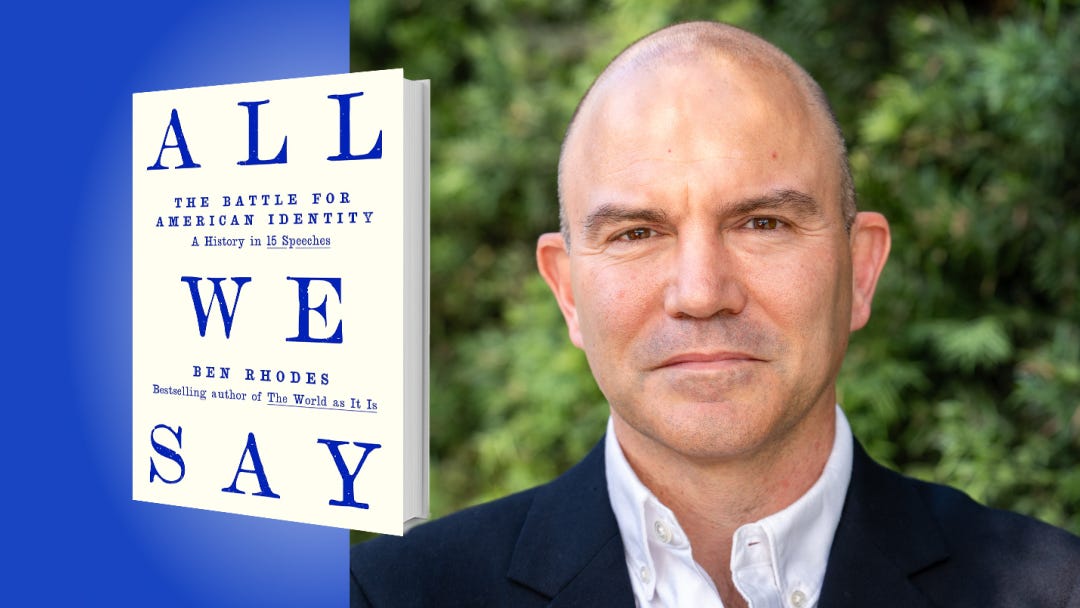
Ben Rhodes’ analysis underscores that storytelling—particularly through speeches—has been central to the ongoing 250-year debate over American identity, shaping movements, elections, and national self-understanding. These speeches do more than convey words; their authenticity, rooted in the unique experiences and motivations of the speaker, lends them power to resonate deeply. Rhodes stresses that a speech must be so authentic that only its speaker could deliver it, reflecting the speaker’s life story and voice, which in turn shapes the evolving narrative of what it means to be American.
American identity is not a fixed concept but a persistent, evolving argument between two competing narratives: one exclusive and rooted in original settler identity, the other inclusive and aspirational, striving to fulfill the nation’s unkept promises of equality. This battleground of stories is expressed and contested through speeches and narratives that reinterpret the past and sometimes forecast the future. Reviving authentic storytelling today is essential to inspire hope, bridge deep political and social divides, and motivate collective action amid heightened polarization, reaffirming storytelling’s enduring role in shaping and renewing American unity.

Milestones and the Meaning of Unity
National anniversaries prompt Americans to reconnect with founding ideals and civil discourse, drawing on historic documents rather than tribal loyalties to sustain democratic cohesion.
Senator Chris Coons reflects on the 250th anniversary as a pivotal moment for Americans to pause amidst contemporary divisions and reconnect with the unity that has historically surfaced during national milestones, recalling how the bicentennial 50 years prior served as a similar catalyst for reflection on common bonds. Complementing this perspective, Justice Stephen Breyer underscores that American unity is distinctively anchored not in tribal identity but in foundational documents like the Declaration of Independence, the Constitution, and the Gettysburg Address, which serve as enduring symbols fostering civil discourse and democratic participation. Breyer further emphasizes the democratic principle that citizens maintain agency to express dissatisfaction by supporting alternative political groups, reinforcing the importance of dialogue and engagement as mechanisms to sustain societal cohesion during such milestone commemorations.


Brands Walk the Patriotism Tightrope
With American pride at historic lows, top brands are navigating political minefields by aligning with inclusive, credible initiatives and avoiding the pitfalls of hollow nationalism.
By early 2026, brands celebrating America's 250th anniversary face the complex challenge of expressing authentic patriotism amid deep political polarization and economic strain, which has driven American pride to a record low of 58%—down nearly 30 points since 2001. As Robert Passikoff, president of Brand Keys, emphasizes, brands are increasingly scrutinized through a political lens, making genuine, inclusive messaging essential to avoid perceptions of opportunism or divisiveness.
Major corporations such as Coca-Cola, Ford, Disney, Amazon, and Walmart have successfully navigated this landscape by ranking highly on Brand Keys’ 25th annual patriotic brand index, demonstrating how established companies leverage their broad marketing reach to promote a unifying, inclusive vision of patriotism. Meanwhile, Jeep, which has topped the patriotic brand survey since 2001, exemplifies strategic alignment by partnering with the nonpartisan America250 initiative through Stellantis, gaining credibility while carefully balancing traditional patriotic themes with contemporary values to sidestep the politicization pitfalls that have marred other cultural celebrations.

Honoring African American Legacy
The 250th anniversary spotlights the vital, often overlooked contributions of African Americans, transforming commemoration into a collective act of recognition and inclusion.
The narrative of America’s history is a rich tapestry woven by diverse groups, with African Americans playing indispensable roles through their labor, sacrifice, creativity, and courage. From the first martyr of the Boston Massacre to pioneers who founded the African Methodist Episcopal Church, invented the modern traffic signal, integrated Major League Baseball, and broke barriers as the first African American Supreme Court Justice and woman in space, these contributions have fundamentally shaped the nation’s identity and progress. Recognizing these achievements is crucial to fostering an inclusive collective memory that reflects the true breadth of American experience.
The 250th anniversary of American independence in 2026 serves as a pivotal moment to actively commemorate and expand public awareness of African American contributions. By curating an initial list of 50 significant figures and inviting the public to add 200 more, this initiative transforms remembrance into a participatory act, encouraging Americans to acknowledge the courage, innovation, and leadership that have strengthened the nation. This collective effort not only honors the past but also cultivates a deeper appreciation that can guide the country toward a more inclusive and unified future.

A Nation at a Democratic Crossroads
Widespread doubt about America's future and rising calls for civic action reveal a country torn between hope for unity and urgent fears over internal threats to democracy.
As America marks its 250th anniversary, the nation confronts a profound moment of reflection on its enduring divisions and democratic challenges. A June 2026 survey revealed that 'unity and greater cooperation from elected leaders' was the singular wish resonating across Republicans, Democrats, and independents alike, underscoring a collective yearning for bipartisan collaboration. Yet, this hope is tempered by a sobering reality: two-thirds of Americans doubt the country will endure another 250 years, reflecting widespread skepticism about whether the nation still fulfills the promises of the American Dream.
The anniversary also serves as a clarion call for active civic engagement amid existential threats to democracy rooted not in foreign adversaries but in internal corruption and political malfeasance. Opinion voices in late June 2026 decried the 'malignancy occupying our White House' and its enablers across Washington, framing this moment as a crossroads where Americans must choose between passive celebration and mobilization—particularly in the upcoming midterm elections—to defend justice, the rule of law, and constitutional values. This urgency is heightened by critiques of current leadership, exemplified by Donald Trump’s superficial interpretation of the Declaration of Independence as merely 'a declaration of unity and love and respect,' revealing a disconnect from the document’s deeper ideals of equality and liberty.