US-China sanctions crossfire traps global firms in compliance maze
The gist
Global companies are caught in an unprecedented sanctions crossfire as the US and China escalate economic warfare, forcing multinationals to navigate a legal and financial compliance maze with no safe exit.
What to know
- By mid-2026, the US hit over 60 entities—including nearly 60 China and Hong Kong firms—with expanded Iran sanctions, while carefully sparing major Chinese banks ahead of the Trump-Xi summit.
- China fired back with Decrees 834 and 835 and its Malicious Entity List, threatening multinationals with lawsuits and criminal liability if they comply with US sanctions.
- Banks, luxury brands, and fintechs now face dual-compliance chaos, with emerging markets like Thailand and Africa scrambling for workarounds as global supply chains and liquidity are squeezed.
Sanctions as Economic Warfare
The US has weaponized global compliance networks, transforming banks and shippers into frontline enforcers in a financial siege against Iran that ripples far beyond the Gulf.
By early 2026, the US sanctions regime against Iran had evolved into a comprehensive compliance framework that transforms global banks, shipping firms, importers, exporters, and even diaspora communities into active enforcers of US foreign policy. This broad scope targets Iran’s critical economic sectors—especially oil refining and maritime transit through the Strait of Hormuz—aiming to economically isolate Tehran while avoiding direct military confrontation. The Treasury Department’s Financial Crimes Enforcement Network underscored this by warning that 'the war front runs through banks, compliance offices, flagged transactions, and shipping paperwork,' illustrating the intricate web of enforcement that extends far beyond Iran’s borders.
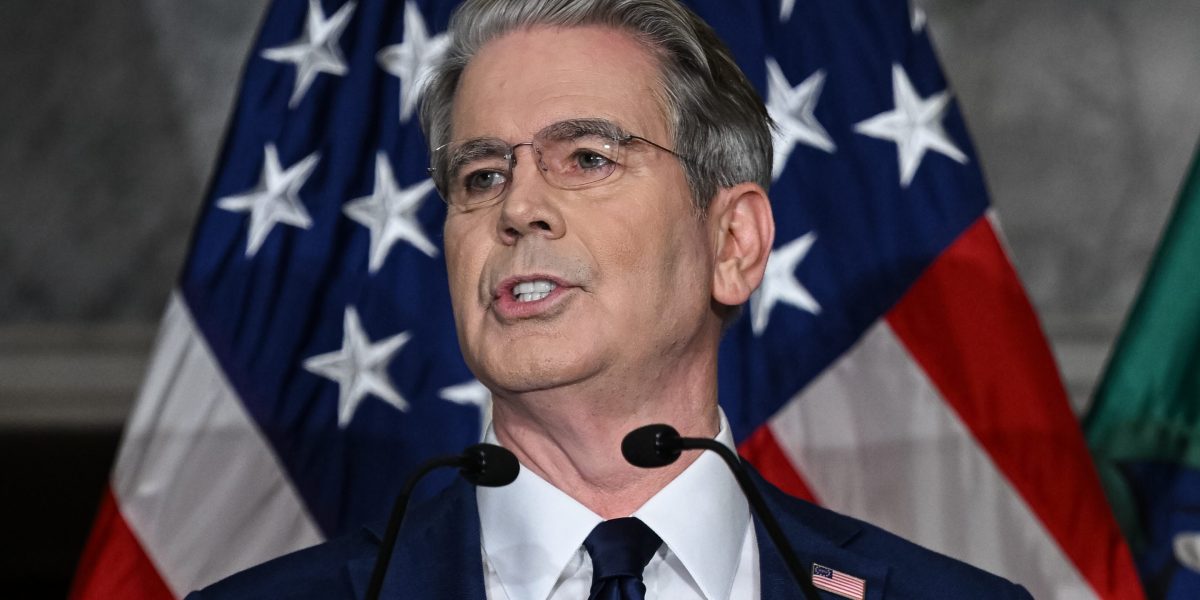
In mid-2026, under Treasury Secretary Scott Bessent, the US escalated its sanctions campaign to an unprecedented scale, branding it 'Operation Economic Fury' and later 'Operation Economic Outcast.' This strategic pivot expanded secondary sanctions beyond oil to five critical non-oil sectors—digital assets, technology, gold, aviation, and shipping—targeting over 60 entities, including nearly 60 China and Hong Kong-based firms, while deliberately sparing major Chinese banks to avoid exacerbating US-China trade tensions. Bessent emphasized a 'zero-leakage' economic blockade designed to choke off Iran’s revenue streams and regional proxy funding, signaling a shift from kinetic military deterrence to aggressive financial pressure aimed at forcing strategic concessions without escalating to armed conflict.
Despite the aggressive rhetoric and the imposition of what Bessent called the 'toughest sanctions in history,' analysts remain skeptical about the sanctions’ ability to fundamentally alter Iran’s ideological posture or fully sever its economic lifelines, especially given Tehran’s resilience through alternative payment systems and regional cooperation. The US administration has strategically withheld the most destabilizing punitive measures to avoid global financial system shocks, opting instead to give countries and companies time to comply while warning that continued business with Iran risks exclusion from the dollar-based financial system. This calibrated approach reflects a nuanced balance between maximizing economic isolation and managing geopolitical and market risks, such as the surge in Brent crude prices above $92 per barrel following the sanctions announcement.
A notable shift in US strategic objectives emerged as Vice President JD Vance publicly prioritized lowering domestic oil and gasoline prices over preventing Iran’s nuclear ambitions, underscoring the administration’s focus on economic outcomes that resonate with American voters. This recalibration aligns with the broader sanctions strategy that leverages financial tools to isolate Iran economically while avoiding military escalation, reflecting operational strains and political constraints on kinetic options. The campaign’s emphasis on cutting off Iran’s international financial connections through secondary sanctions and diplomatic pressure—such as urging global leaders via direct calls to cease business with Iran—illustrates a comprehensive, multi-layered effort to contain Tehran’s regional influence through economic means.

China’s Blocking Statute Strikes Back
Beijing’s aggressive counter-sanctions and Malicious Entity List force multinationals to choose between US penalties and Chinese legal reprisals, escalating the global compliance standoff.
By early 2026, China took a decisive regulatory stance against foreign extraterritorial sanctions through the introduction of Decrees 834 and 835 and MOFCOM Announcement No. 21, marking the first active invocation of its Blocking Statute regime since 2021. Decree 835 notably established mechanisms such as the Malicious Entity List, piercing rules, and provisions for private lawsuits and criminal liability, exposing multinational companies—including luxury watch brands like Richemont, LVMH, Swatch, and Kering—to a precarious dual-compliance dilemma: serving US-sanctioned clients risks US penalties, while refusing service risks Chinese legal action and sanctions under Article 14 and Malicious Entity List inclusion.
China’s counter-sanctions have evolved from symbolic gestures to robust operational enforcement, with Unreliable Entity List designations skyrocketing from just 3 in 2024 to 67 in 2025, alongside over 100 organizations and individuals facing countermeasures in 2025 alone. This aggressive posture underscores Beijing’s strategic diplomatic opposition to US extraterritorial sanctions, with MOFCOM explicitly forbidding any recognition or compliance with relevant US sanctions, thereby complicating global compliance frameworks for multinational corporations operating within China.
China’s role as Iran’s principal economic partner is pivotal, purchasing approximately 80-90% of Iranian oil and thus acting as the linchpin in the effectiveness of US sanctions targeting Tehran. Despite US authority to sanction Chinese financial institutions involved in Iran trade, Washington has refrained from targeting major state-owned banks to avoid destabilizing the global economy, especially ahead of high-level diplomatic engagements such as the scheduled September meeting between Presidents Xi and Trump. This careful calibration reflects the geopolitical sensitivity surrounding China’s strategic support for Iran.
China’s opposition to US sanctions extends beyond oil trade into the digital realm, where its domestic ban on cryptocurrency trading contrasts with the risk of US secondary sanctions on Chinese entities engaging in Iran-related digital asset transactions. Beijing’s Foreign Ministry, through spokesperson Lin Jian, has asserted that China-Iran cooperation operates within international law and must not be disrupted by unilateral US policies, signaling a broader geopolitical friction over economic and technological sovereignty. To mitigate US pressure, China has developed bureaucratic and financial countermeasures, including the Cross Border Interbank Payment System (CIPS), while warning of retaliation should Chinese companies be targeted.

Banks Caught in the Crossfire
Financial institutions and luxury brands are trapped between dueling US and Chinese sanctions, with compliance missteps threatening both dollar access and exposure to Chinese legal action.
By mid-2026, multinational banks and financial institutions found themselves on the frontline of enforcing US sanctions against Iran’s IRGC and China, facing heightened operational risks as they scrutinized entire categories of transactions and cross-border relationships. Treasury Secretary Scott Bessent’s warnings underscored the severe consequences for foreign financial entities engaging with sanctioned actors, with Chinese banks already feeling the pressure from overlapping US-China sanctions regimes. This evolving landscape transformed financial surveillance into a critical element of geopolitical conflict, where suspicious-activity reports became a new battlefield, extending compliance challenges beyond banks to shipping firms, energy companies, and diaspora communities grappling with overcorrection and transaction delays.
The introduction of China’s Decree 835 and MOFCOM’s Blocking Rules in 2026 plunged multinational luxury brands, especially watchmakers, into a dual-compliance quagmire, forcing them to choose between violating US sanctions or risking legal and reputational damage under Chinese law. With enforcement mechanisms like the Malicious Entity List, piercing corporate veil rules, private rights of action under Article 14, and potential criminal liability, companies face unprecedented stakes. This mirrors the late 2010s dilemma faced by global banks such as HSBC and Standard Chartered, illustrating how the rapid expansion of China’s Unreliable Entity List—from 3 to 67 designations in a year—and over 100 countermeasures signal a shift from symbolic to operational enforcement, intensifying the compliance burden.
By mid-2026, multinational corporations and banks were caught in a precarious legal vise, squeezed between US secondary sanctions demanding strict compliance and Chinese countermeasures like the Anti-Foreign Sanctions Law that prohibit adherence to US rules. This forced entities to balance access to the US dollar system against the lucrative Chinese market, with complex supply chains—featuring shadow fleets and last-leg shipping routes near Southeast Asia—creating enforcement blind spots that increase inadvertent exposure risks for insurers, logistics providers, and commodity traders. As one analyst noted, many firms were still unraveling the layers of their client networks, emphasizing the urgent need for strategic scenario planning to avoid becoming the 'first sacrificial lamb' in this escalating sanctions standoff.
The rapid expansion of US sanctions targeting Iranian financial networks has placed fintech firms under intense scrutiny, compelling them to embed rigorous onboarding and continuous screening processes to avoid servicing sanctioned entities. Complex evasion schemes, like the Ansari network’s use of shell companies such as Smart Global Limited to launder Iranian assets across Europe and the Middle East, highlight the operational difficulties in detecting indirect breaches. This cat-and-mouse dynamic has spurred growth in compliance technology startups like Chainalysis and Elliptic, which leverage blockchain analytics to identify sanctioned actors. Meanwhile, the US’s intensified secondary sanctions targeting crypto platforms have forced these firms to navigate a fraught trade-off between transaction confidentiality and strict regulatory compliance, accelerating the fragmentation of international finance and complicating global enforcement efforts.






Emerging Markets in a Bind
African and Southeast Asian firms face a mounting compliance maze as overlapping US and Chinese sanctions disrupt liquidity, fragment markets, and force costly workarounds.
By mid-2026, African businesses across sectors such as mining, banking, telecoms, and infrastructure found themselves ensnared in a labyrinth of overlapping US and Chinese sanctions, creating a compliance environment fraught with complexity. As Cheta Nwanze of SBM Intelligence explains, this is not a simple binary choice but a delicate balancing act under simultaneous pressures from two global powers, with the US enforcing at least 37 active sanctions programs that amplify the regulatory burden. This dual-compliance trap forces multinational corporations to risk violating one regime while adhering to the other, inflating overhead costs and restricting capital flows, while banks preemptively de-risk Chinese-linked entities, causing liquidity chokepoints and operational disruptions that fragment African financial markets.
The ripple effects of these sanctions extend beyond finance into procurement and sovereign concessions, undermining regional integration efforts by complicating supply chains and corporate operations. To navigate this fractured landscape, African firms and multinationals have adopted a three-tiered mitigation strategy involving ring-fencing corporate entities, transitioning to multi-currency clearing networks, and implementing asymmetric force majeure clauses, showcasing a pragmatic adaptation to regulatory fragmentation that threatens to stall economic cohesion across the continent.
In Southeast Asia, Thailand exemplifies the acute pressures emerging markets face under US sanctions on Iran, where despite no immediate domestic legal prohibitions, banks, exporters, and sectors including digital assets, gold, and aviation confront an urgent compliance countdown. The country’s deep reliance on US dollar clearing and correspondent banking channels magnifies Washington’s leverage, compelling Thai institutions to conduct exhaustive due diligence on ownership structures and transaction purposes to avoid secondary sanctions, which can freeze payments and sever access to critical financial networks. This intense scrutiny fragments market operations and complicates regional trade, as evidenced by Thailand’s US$138 million export exposure and the US$20 million SCG Plastics settlement.
Diplomacy Meets Market Shock
US sanctions timed before the Trump-Xi summit have rattled oil and financial markets, with Washington walking a tightrope to pressure China without triggering global instability.
The US Treasury, led by Secretary Scott Bessent, has strategically escalated sanctions against Iran as part of a broader effort to leverage economic pressure amid the intensifying US-China rivalry. This campaign, branded 'Operation Economic Outcast,' targets over 60 entities involved in Iran's oil smuggling and sanctions evasion, including nearly 60 firms based in China and Hong Kong, while deliberately sparing major Chinese banks to avoid triggering a full-blown trade war ahead of the Trump-Xi summit. The timing of these measures, just weeks before high-level diplomatic engagements, underscores Washington's balancing act between demonstrating resolve and managing the risks of escalating tensions with Beijing, as any aggressive move against systemically important Chinese financial institutions could destabilize global markets and complicate diplomatic relations.
The sanctions have significantly disrupted global oil markets and financial stability by choking off Iranian oil shipments to Asia, notably impacting China, which imports about 12% of its oil from Iran, and other key buyers like the UAE, Turkey, Iraq, and India. Brent crude prices surged above $92 per barrel following the imposition of the 'toughest sanctions in history,' reflecting the removal of discounted Iranian crude from the market and heightened geopolitical risks. These measures have also intensified supply chain bottlenecks in shipping and aviation sectors, forcing Asian refiners, including Chinese 'teapots,' to adjust crude grades or reduce utilization, while defensive asset positioning has driven up gold prices and US Treasury yields, signaling market caution amid ongoing US-China strategic rivalry.
Despite the aggressive rhetoric and expanded secondary sanctions targeting five critical Iranian sectors—digital assets, technology, gold, aviation, and shipping—the effectiveness of these measures remains uncertain, as Iran's ideological resilience and long-standing sanctions history suggest limited likelihood of policy change. Analysts caution that the US sanctions largely reiterate existing frameworks without substantive new enforcement, with skepticism about the US's ability to impose credible secondary sanctions on China or other third countries. This cautious approach reflects concerns about provoking retaliatory actions from China, which has built robust financial workarounds like the Cross Border Interbank Payment System and views unilateral US sanctions as illegal, threatening to escalate tensions and undermine delicate trade negotiations scheduled for the upcoming Xi-Trump summit.
The US sanctions campaign against Iran is a high-stakes geopolitical gambit that risks escalating into broader conflict rather than achieving swift compliance, as historical precedents show sanctions alone rarely end conflicts and often provoke retaliatory measures. Experts like Professor Robert Pape warn that cutting off Chinese banks could trigger reciprocal actions, threatening global financial stability and US economic interests, including higher domestic fuel prices. This dynamic places the US Treasury in a delicate position, attempting to enforce sanctions robustly while avoiding a destabilizing trade war with China, especially with the looming Trump-Xi summit, where the credibility of US sanctions enforcement will be critically tested.





Crypto Under the Sanctions Lens
US enforcement is targeting Iran’s crypto networks and exchanges, driving a global crackdown that forces fintechs to choose between regulatory compliance and operational secrecy.
By mid-2026, U.S. sanctions enforcement against Iran’s cryptocurrency networks has escalated sharply, targeting not just crypto exchanges but also intricate shadow banking and multi-jurisdictional financial networks like the Ansari network and Smart Global Limited. These entities exploit complex webs of shell companies and cross-border bank accounts spanning Europe and the Middle East, underscoring the formidable challenges fintech firms face in embedding robust sanctions compliance comparable to traditional banks. This intensifying crackdown compels fintech platforms to integrate stringent compliance frameworks to manage both primary and secondary sanctions risks amid an evolving financial warfare landscape.
The U.S. Treasury’s designation of crypto exchanges such as Shelbit and Aban Tether, implicated in laundering over $4 billion linked to the IRGC, highlights the sophisticated use of decentralized finance and crypto intermediaries as pivotal nodes in Iran’s shadow banking ecosystem. Shelbit’s operator, Siavash Kayvanpour, with multiple citizenships and UAE residency, exemplifies the enforcement complexities posed by cross-border crypto transactions. These actions not only freeze U.S.-linked assets but also expose foreign counterparties to secondary sanctions, significantly raising compliance burdens for global crypto platforms and stablecoin issuers tasked with preventing illicit fund flows.
The U.S. sanctions campaign has broadened to explicitly encompass Iran’s cryptocurrency sector, including foreign exchanges, brokers, and service providers, thereby intensifying legal and operational risks worldwide. This expansion drives centralized exchanges and stablecoin liquidity providers to drastically tighten KYC/AML protocols, implement enhanced blockchain analytics, and deploy geo-blocking measures to avoid prosecution and asset freezes. However, this rigorous enforcement creates a critical compliance dilemma within the crypto ecosystem, forcing a stark trade-off between maintaining transaction confidentiality and adhering to stringent U.S. regulatory frameworks.
The intersection of financial warfare and geopolitical tensions is starkly illustrated by the U.S. pairing military operations like 'Operation Epic Fury' with economic campaigns such as 'Operation Economic Fury,' targeting Iranian regime financing through crypto monitoring and sanctions. Meanwhile, China’s vocal opposition to these sanctions, framing them as extraterritorial overreach and defending its lawful cooperation with Iran, underscores the growing geopolitical friction over economic sovereignty and digital asset regulation. This dynamic complicates global compliance efforts and highlights the evolving complexity of securing financial infrastructure amid geopolitical crises.