U.S. oil blockade pushes cuba to brink, spurs migration fears
The gist
The U.S. has tightened the screws on Cuba with a near-total oil blockade, triggering a humanitarian crisis and stoking fears of mass Caribbean migration.
What to know
- By early 2026, up to 20-hour daily blackouts and $130–$200 billion in economic losses have crippled Cuba’s healthcare and sanitation under escalated U.S. sanctions.
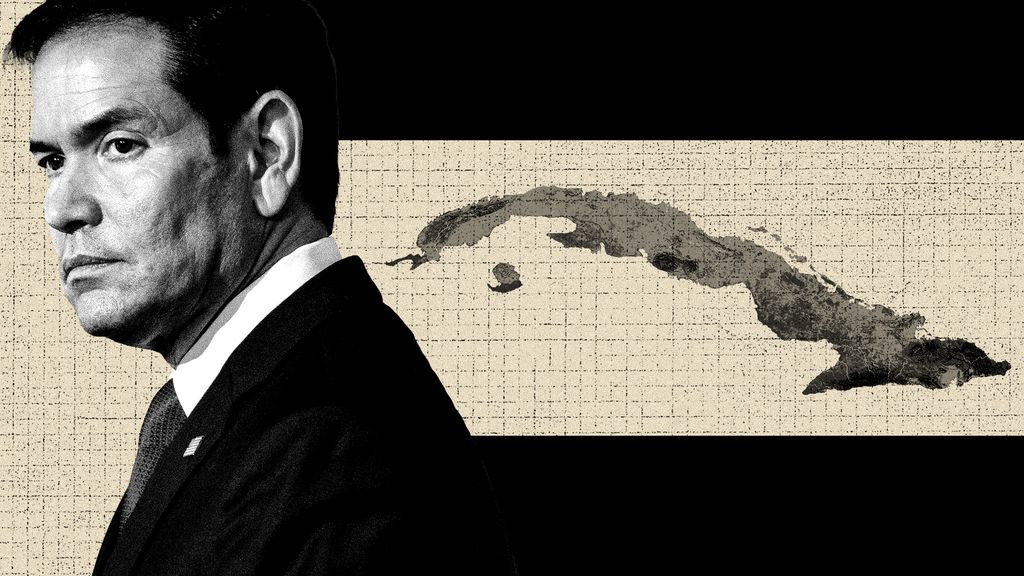
- Trump, Senator Marco Rubio, and military strategists weighed a rapid tactical intervention in Cuba, drawing on the playbook from the Venezuela incursion and leveraging Cuban American political clout.
- The embargo risks a surge of desperate migrants toward the U.S. as Russia scrambles to resupply Havana, while secret talks attempt to avert a regional meltdown.
Sanctions Trigger Humanitarian Spiral
Relentless U.S. oil sanctions have plunged Cuba into a dire crisis, crippling hospitals, fueling hyperinflation, and forcing the government into desperate negotiations as daily life collapses.
By early 2026, the Trump administration had escalated a decades-long sanctions regime codified by the Helms-Burton Act into a de facto wartime oil blockade that halted Cuba’s oil imports for three months, triggering rolling blackouts of up to 20 hours daily and crippling essential services like healthcare and sanitation. This intensified embargo has inflicted economic losses estimated between $130 billion and $200 billion in inflation-adjusted terms, deepening Cuba’s dependence on external patrons and remittances while pushing the island toward a severe humanitarian crisis marked by hospitals postponing surgeries and garbage piling up in Havana’s streets.
The Trump administration’s sanctions campaign, targeting 40 Cuban entities including state-run fuel, banking, and mining conglomerates, alongside at least 38 individuals, reflects a strategic gamble to force political change by exacerbating economic collapse. Secretary of State Marco Rubio underscored this relentless pressure, stating, 'Every time they create a new mechanism in which they try to get out of the noose, we just close it off,' signaling a no-exit strategy designed to maintain crippling sanctions for at least 2½ years. This multifaceted approach has rendered Cuba a 'de facto renegade colony' reliant on scarce imports of food, fuel, medicine, and currency, while also isolating it diplomatically by pressuring other nations to end support for Cuba’s doctor-export program, controversially labeled as 'human trafficking.'
While the U.S. has stopped short of a total economic blockade, focusing instead on an oil-specific embargo, the resulting fuel shortages have triggered hyperinflation and daily hardships for ordinary Cubans, from morgues lacking electricity to people desperately seeking fuel for transportation amid extreme heat and prolonged blackouts. This energy strangulation has pushed Cuba into a precarious humanitarian situation, with the government reportedly releasing 2,010 prisoners as part of ongoing strategic negotiations possibly linked to the arrival of a Russian tanker, illustrating the complex interplay between U.S. sanctions, geopolitical maneuvering, and humanitarian concerns.
The Trump administration’s dual-track approach oscillates between negotiating a deal that would open Cuba’s economy to American investment—potentially devastating for the poorest 40% of the population—and escalating pressure that could provoke civil unrest and justify forceful intervention. This high-stakes strategy bets on economic collapse to compel political capitulation, a tactic that has so far eluded success despite six decades of sanctions, covert actions, and even military threats, underscoring the fraught and volatile nature of U.S.-Cuba relations in this period.



Migration Wave Looms Large
Cuba’s economic freefall and energy collapse are fueling unprecedented migration pressures, as families risk everything to escape worsening shortages and blackouts.
Cuba’s economic freefall and energy collapse are fueling unprecedented migration pressures, as families risk everything to escape worsening shortages and blackouts.
Military Gambit on the Table
Top U.S. officials, emboldened by previous rapid interventions, openly weighed a Venezuela-style military incursion into Cuba, leveraging political support from Cuban Americans to justify action.
By mid-2026, U.S. military strategists, including former President Trump, were actively considering a rapid, tactical intervention in Cuba modeled after the swift operation conducted in Venezuela. Emphasizing Cuba's geographic proximity—described as 'hopscotch' from the U.S.—Trump contrasted this with the more prolonged and logistically complex Iran operation, suggesting that Cuba's closeness could facilitate a quicker, more efficient military approach akin to the 201-person incursion into heavily militarized Venezuela. This comparison underscores a strategic preference for rapid action in nearby theaters to minimize operational complexity and duration.
Senator Marco Rubio emerges as a pivotal figure in shaping U.S. policy toward Cuba, leveraging his Cuban heritage and strong support within the Cuban American community, which reportedly backed Trump by as much as 95%. Trump's repeated emphasis on Rubio's involvement highlights the political and strategic importance of engaging this demographic to bolster legitimacy and influence in any potential intervention. Rubio's role symbolizes a fusion of military strategy with domestic political considerations, reflecting how diaspora ties are instrumentalized in U.S. geopolitical maneuvers.

Russia Steps Into the Breach
Moscow’s bold moves to break the U.S. oil blockade—and secret talks involving all sides—signal a high-stakes geopolitical contest for influence over Cuba’s future.
By early 2026, Russia's active support for Cuba, exemplified by attempts to deliver fuel via a vessel challenging the U.S. oil blockade, underscores Moscow's strategic role in countering American pressure in the Western Hemisphere. This dynamic unfolds amid a broader geopolitical contest where U.S. attention is divided—particularly with the Trump administration's focus on Iran—while instability in Mexico intersects with U.S. interests, complicating Washington's approach to Cuba and regional security.
The United States is executing a multifaceted strategy to contain Cuba's influence and prevent the Caribbean from becoming a Chinese sphere of influence, recognizing Cuba's geographic leverage over access to the Gulf of America. This strategy includes sanctioning foreign individuals linked to Cuban state organizations deemed hostile influence operations, while also preparing for coordinated protests by pro-Cuba groups within the U.S. to counter potential military actions, reflecting Washington's intent to maintain hemispheric dominance.
Behind the scenes, the arrival of a Russian oil tanker in Cuba hints at secret negotiations involving the U.S., Cuba, and possibly the Castro family, revealing complex diplomatic maneuvering that tempers the overt confrontation. The U.S. has opted for an oil-specific blockade rather than a total economic embargo, allowing humanitarian goods like medicines and solar panels to enter, a nuanced approach that balances pressure with limited humanitarian considerations. This stance is also ideologically driven by influential Cuban-American figures such as Senator Marco Rubio, who view the policy as a mission rather than mere politics.
Elevating Cuba to a top-tier intelligence priority, the U.S. is conducting a strategic influence campaign aimed at fracturing the Cuban political elite to replace hardline anti-American leaders with more pragmatic figures. This campaign leverages existing hardships—fuel shortages and blackouts—not as collateral damage but as deliberate pressure points, signaling a shift from military intervention to psychological and economic tactics. However, this reallocation of CIA resources toward Cuba may dilute focus on other critical areas like Russia, highlighting the broader geopolitical balancing act in the hemisphere.



Regional Instability Intensifies
The Cuban crisis is spilling over borders, straining U.S. relations with Mexico and the Caribbean while threatening to destabilize the entire region.
The Cuban crisis is spilling over borders, straining U.S. relations with Mexico and the Caribbean while threatening to destabilize the entire region.
Toward a New U.S. Doctrine
The Trump administration’s hardline oil embargo marks a decisive shift toward open economic warfare and expansionism, with Cuba’s fate now a litmus test for U.S. power in the hemisphere.
By early 2026, the U.S. has escalated its long-standing economic pressure on Cuba to unprecedented levels, implementing a wartime oil embargo aimed at precipitating political collapse—a strategy President Donald Trump openly framed as a gamble to 'take Cuba.' This intensification builds on decades of sanctions that the Cuban government estimates have inflicted over $200 billion in inflation-adjusted economic losses, underscoring the deep vulnerabilities Washington seeks to exploit through economic strangulation rather than the engagement policies of prior administrations like Obama's.
The Trump administration's aggressive posture signals a hemispheric shift toward overt expansionism and resource imperialism, exemplified by the January 2026 extraction of Nicolás Maduro and the prospect of Cuba becoming a U.S. protectorate. Analysts warn this 'winner takes all' approach faces little international resistance given Cuba's isolation, marking a fundamental and potentially irreversible change in Western Hemisphere geopolitics that could lead to direct military intervention mirroring U.S. actions in Venezuela.
The humanitarian fallout from U.S. sanctions and naval blockades is severe, with rising infant mortality and late-stage cancer diagnoses in Cuba due to critical shortages of medical supplies and early detection capabilities. Experts like Jackson emphasize that these measures constitute acts of war, exacerbating public health crises that threaten not only Cuba's stability but also the broader Caribbean region, where sanctions on Venezuela further complicate humanitarian responses and economic recovery.
This mounting crisis risks triggering a large-scale migration surge from the Caribbean to U.S. cities, as evidenced by the arrival of 35,000 Venezuelans in Chicago over two years and Cuba's proximity just 90 miles from Miami. Without proactive intervention to address the root causes, U.S. policy may inadvertently manufacture a migration and regional instability crisis that undermines American security and dominance in the Caribbean, turning geopolitical ambitions into a domestic challenge.