US trucking squeeze sends rates higher, giants gain
The gist
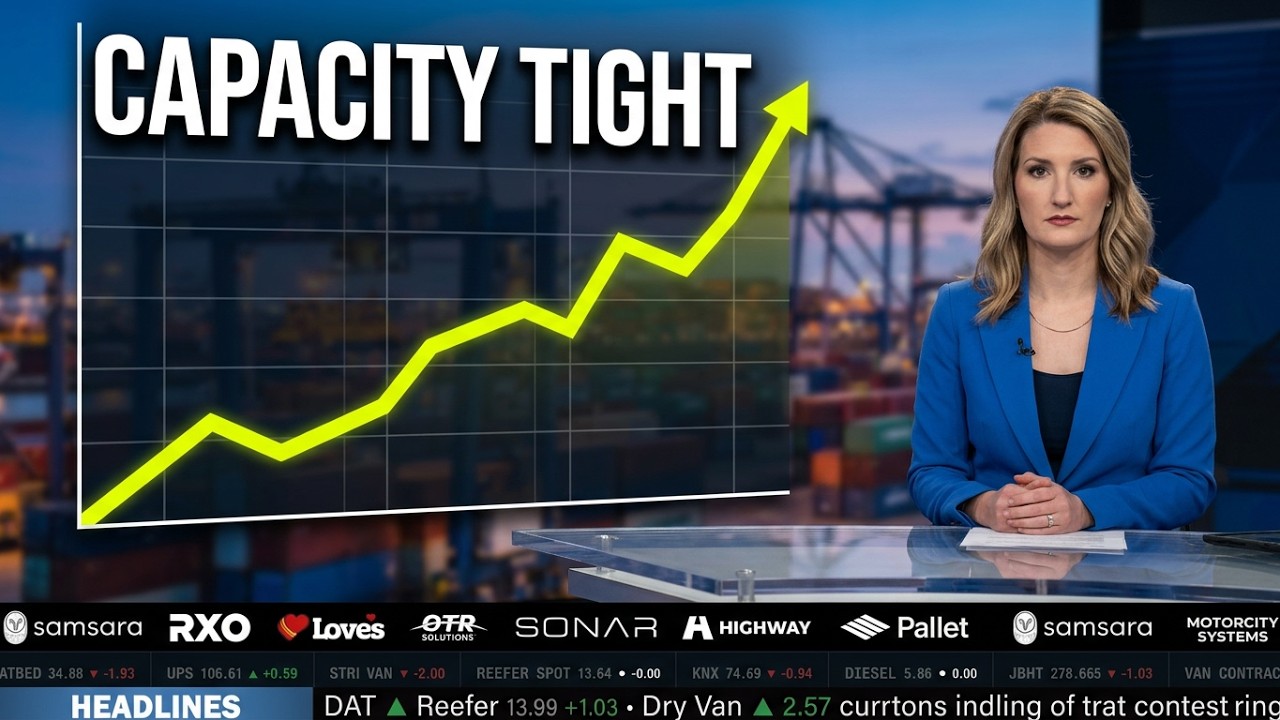
Regulatory crackdowns and new court rulings have triggered a seismic shakeup in US trucking, slashing capacity, sending rates sky-high, and handing market power to industry giants.
What to know
- By mid-2026, over 200,000 carriers exited the market as stricter English proficiency and licensing rules tightened trucking capacity by 5-10%, driving spot rates up 40% year-over-year.
- Hefty compliance and insurance costs are accelerating consolidation, with major players like Landstar and J.B. Hunt scooping up market share and reporting double-digit revenue growth.
- Despite booming freight rates, carriers are feeling the pinch from soaring insurance claims and equipment costs, forcing a focus on efficiency and driving shippers toward large, asset-based fleets.
Regulations Reshape Capacity
Strict licensing and English proficiency rules are purging underqualified drivers and small operators, raising industry standards but shrinking the driver pool and accelerating brokerage consolidation.
By mid-2026, enforcement actions targeting non-domiciled commercial driver’s licenses and English language proficiency requirements have catalyzed a structural tightening of US truckload capacity, moving beyond typical cyclical fluctuations. This shift is underscored by the Montgomery ruling, which has effectively purged 'bad capacity'—notably drivers from so-called 'truck driver mill schools' lacking adequate skills—from the market, thereby raising industry standards and reducing the pool of qualified drivers.
These regulatory changes are not only shrinking capacity but also accelerating consolidation within the freight brokerage sector, as heightened compliance costs and liability concerns increasingly favor larger, scaled operators. As industry insiders observe, this dynamic acts as an 'accelerator' for brokerage consolidation, reshaping competitive landscapes and raising barriers to entry for smaller players.
The structural capacity tightening driven by these regulations is expected to prolong market cycles, sustaining elevated freight rates and tight capacity conditions for extended periods. While this poses challenges for shippers, the higher standards are anticipated to enhance overall safety by reducing accidents and fatalities, which in turn influences insurance and operational costs—factors that further emphasize the importance of scale for both carriers and brokers.


Spot Rates Defy Gravity
Spot truckload rates have surged over 40% despite flat freight volumes, as regulatory crackdowns and driver shortages create a supply-led market with persistent capacity constraints.
By mid-2026, regulatory shifts such as the Montgomery Supreme Court ruling increasing broker liability and the Department of Transportation's crackdown on English-language proficiency for non-domiciled drivers have structurally tightened trucking capacity by 5 to 10%, exacerbating an already critical driver shortage. This supply-side squeeze has driven truckload spot rates up by over 40% year-over-year in June 2026, with spot rates surpassing contract rates for the first time since early 2022, as highlighted by the DAT Truckload Volume Index. Despite flat or declining freight volumes, these capacity constraints have created a supply-led market dynamic, pushing spot rates above $3 per mile and fundamentally reshaping carrier economics.
The enforcement of higher driver standards, including eliminating underqualified drivers and raising language proficiency requirements, has improved road safety but further reduced available capacity. As Peter Latta, CEO of A. Duie Pyle, emphasizes, carriers support these regulatory crackdowns as they uphold operational integrity and reduce accidents, even though they contribute to prolonged market cycles with extended highs and lows in freight rates. This regulatory environment is also increasing insurance and operational costs, making scale a critical factor for carriers and brokers to maintain profitability amid tightening capacity.
The capacity tightening driven by regulatory enforcement and driver shortages is sustaining elevated freight rates despite falling diesel prices, as evidenced by Knight-Swift's 69% year-over-year increase in truckload operating income. Tender rejection rates remain historically high—Sonar's Truckload Rejection Index at 14.36% with flatbed and reefer rejections nearing 23% and 19.46%, respectively—signaling persistent capacity constraints that limit freight availability and push pricing upward. Meanwhile, structural capacity losses from CDL school closures and ELD provider exits are removing shadow capacity and raising barriers to driver entry, intensifying the supply crunch.
Safety and liability concerns amid rising nuclear verdict exposure are prompting shippers to favor large, asset-based carriers with dedicated fleets, such as Werner and J.B. Hunt, reshaping freight market dynamics and carrier economics. This shift benefits well-established carriers by concentrating freight with operators who can better manage risk and compliance costs, reinforcing the market's move away from smaller or less compliant players. Concurrently, the surge in Class 8 truck orders—up 36% year-over-year—reflects carriers’ investments in replacement and utilization strategies to navigate the tight capacity environment, though analysts warn this could eventually temper rate growth.
Consolidation Favors the Giants
The Montgomery ruling and rising compliance costs are forcing out smaller carriers and brokers, allowing scaled players like Landstar to capture market share through safety focus and technology.
The Montgomery case has acted as a catalyst accelerating consolidation and capacity exits within the trucking and brokerage sectors by sharply increasing compliance costs and liability risks, disproportionately impacting smaller operators and eliminating many 'bad actors.' This structural tightening is further reinforced by enhanced regulatory standards such as English language proficiency and stricter driver qualifications, which, while reducing overall capacity, are improving safety and market competitiveness by weeding out lower-quality capacity.
As regulatory and insurance costs escalate, scale has become a critical competitive advantage, favoring larger, well-positioned companies like Landstar. The company has strategically streamlined its approved carrier list, secured favorable insurance renewals, and expanded its agent network, including signing one of its largest new agents in over 15 years, enabling it to attract smaller brokers and grow capacity amid a tightening truckload market. Landstar’s business capacity owners experienced a 22% year-over-year revenue increase in Q2, with trucks rising sequentially and improved utilization metrics, underscoring its ability to capitalize on industry consolidation.
Landstar’s strategic focus on safety, rigorous carrier vetting, and technology investments is positioning it for long-term success despite margin pressures from rising insurance claims linked to increased legal scrutiny and regulatory volatility. CEO Frank Lonegro emphasized that prioritizing safety, security, and service is essential in this environment, with the company deploying AI tools and digital applications to enhance agent productivity and compliance. This approach is attracting agents seeking protection amid heightened insurance risks, while agents are increasingly prioritizing direct business with beneficial cargo owners (BCOs), benefiting Landstar’s operational scale and recruitment strategy.
The broader truckload industry is experiencing a fundamental shift as capacity rationalization driven by carrier failures, market exits, and intensified regulatory enforcement creates a structurally tighter capacity environment. This shift is altering market perceptions, with shippers moving away from viewing capacity tightening as a temporary phenomenon, as noted by J.B. Hunt’s EVP Spencer Frazier. Leading carriers like Landstar are leveraging this environment to achieve pricing power and revenue growth that defy typical seasonal patterns, exemplified by a 5.6% year-over-year increase in revenue per load and a 13% rise above 2025 levels in April.
Efficiency Over Expansion
Driver shortages and years of cost-cutting have left carriers cautious, prioritizing operational efficiency and selectivity over fleet growth—even as rates climb and demand rebounds.
By mid-2026, the chronic driver shortage has forced carriers like Nightwift to prioritize operational efficiency over fleet expansion, evidenced by their 300 basis point improvement in operating ratio despite a 30% tender rejection rate—double the industry average—highlighting their selectivity amid scarce driver availability. This cautious stance is underscored by carriers’ reluctance to reinvest in equipment without clear returns, even as spot and contract rates rise, reflecting a broader industry hesitation to grow capacity without assured profitability.
The driver market tightening has been exacerbated by third-party capacity constraints that initially absorbed available drivers, creating a ripple effect that intensified turnover as drivers capitalize on more competitive opportunities. This dynamic, coupled with a 'silent competitor' absorbing capacity at varying margins, complicates recruitment and retention efforts, pushing carriers to focus on maximizing efficiency rather than expanding fleets, especially in specialized sectors like flatbed where economic pressures on independent carriers—such as fuel surcharges—further erode driver availability.
Years of aggressive cost-cutting to survive previous market downturns have left some carriers with diminished operational 'muscle,' potentially hampering their ability to scale rapidly when demand rebounds. This structural fragility means that even as market conditions improve, the legacy of lean operations may delay capacity growth, reinforcing the current trend of cautious, efficiency-driven strategies over rapid fleet expansion.
Supply Crunch Drives Pricing
Massive regulatory-driven capacity exits, not demand growth, are fueling record spot rates and historic tender rejections, fundamentally altering freight market cycles and favoring large carriers.
The current tightness in the U.S. freight market and the surge in trucking rates are fundamentally driven by structural supply constraints rather than traditional demand cycles. Regulatory changes, particularly the March 2026 enforcement of English proficiency and non-domicile carrier rules, have removed over 200,000 carriers from the market, significantly tightening capacity and elongating the boom-and-bust freight cycles with higher peaks and deeper troughs, as Lee Glasco of Bloomberg Intelligence observes. This supply-driven environment is further reinforced by ongoing enforcement actions by the FMCSA, which reportedly places as many as 600 drivers out of service weekly for language deficiencies, creating a persistent capacity shortage that pushes spot rates above contract rates for the first time since 2022.
Despite stable or only modestly improving freight demand, the trucking industry is experiencing unprecedented rate increases, with spot rates rising as much as 60% year over year and contract rates forecasted to grow 15-17% for 2027. Executives from major carriers like J.B. Hunt and Knight-Swift emphasize that this is not a demand-driven recovery but a supply-driven one, fueled by capacity reductions stemming from regulatory pressures, carrier failures, and capacity rationalization. Shippers are also adapting by shifting freight to large, asset-based carriers to mitigate liability risks amid rising nuclear verdict exposure, further concentrating capacity and supporting elevated pricing levels.
Fuel cost volatility, influenced by geopolitical tensions such as the U.S.-Iran conflict, has tempered owner-operator optimism as diesel prices surged to highs near $115 per barrel, squeezing already razor-thin margins. However, recent data show trucking spot rates and diesel prices moving in opposite directions—with spot rates holding firm even as diesel prices have declined—highlighting that pricing momentum is sustained by structural supply tightness rather than fuel cost inflation. Elevated tender rejection rates across all freight modes, including flatbed rejections near 23%, underscore persistent capacity shortages that are unlikely to ease soon.
The freight market's structural shift is also reflected in the elongation of freight cycles and the resetting of contract rates to higher floors, as outdated routing guides struggle to keep pace with current market realities. Industry analysts and executives alike note that the capacity correction—driven by regulatory enforcement, carrier exits, and training school closures—is not a temporary disruption but a lasting transformation reshaping profitability and supply chain dynamics. Knight-Swift's 69% year-over-year increase in truckload operating income exemplifies how carriers are capitalizing on this new supply-constrained environment.

Profit Squeeze Amid High Rates
Rising insurance, equipment, and compliance costs are eroding carrier margins—even as revenues soar—forcing investments in technology and scale to offset financial and legal headwinds.
By mid-2026, trucking companies are grappling with mounting financial pressures despite a favorable rate environment, as rising operational costs—including insurance premiums, equipment expenses, and regulatory compliance—erode profitability and constrain investment capacity. The imminent Lonnox emission standards are poised to further inflate equipment costs, compounding challenges already intensified by depleted back-office and recruiting resources amid a tight driver market, forcing carriers to cut corners just to stay afloat.
Landstar’s Q2 2026 results exemplify the tension between robust freight demand and escalating cost pressures, with revenues surging 18.1% year-over-year to $1.43 billion but profitability hampered by $10.5 million in unfavorable insurance claim adjustments linked to specific incidents. CEO Frank Lonegro highlighted the impact of a volatile legal and regulatory landscape—particularly post-Montgomery legal shifts—that drive higher insurance costs and operational scrutiny, underscoring the persistent margin squeeze even as freight volumes remain strong.
In response to these financial headwinds, Landstar is strategically investing in technology and agent recruitment to bolster operational efficiency and risk management. The company’s deployment of AI tools and digital applications aims to enhance agent workflow and safety, while the signing of an $18 million Midwestern broker agent reflects a focus on scale and quality. This approach aligns with management’s view that scale and strong safety records are increasingly critical for brokerages to mitigate insurance risk, making Landstar’s model more attractive amid tighter carrier vetting and federal standards.
Elevated supply chain fraud and capacity constraints are shifting agent priorities toward direct business with beneficial cargo owners (BCOs) over traditional brokerage volumes, as CFO James Todd noted, reflecting a broader industry recalibration under financial and regulatory pressures. This trend, coupled with intensified carrier vetting and reduced carrier counts, underscores how regulatory and cost pressures are reshaping operational strategies and volume dynamics within the trucking sector.
