Venezuela bets on dollarization, oil reforms to lure investors
The gist
Venezuela is rolling the dice on sweeping dollarization and oil reforms to lure wary U.S. investors—but legal and political risks still cast a long shadow.
What to know
- Despite a Trump administration push for $100 billion in U.S. oil investment, major companies like Exxon remain hesitant, citing political instability and break-even prices near $80 per barrel.
- After Maduro’s ouster in January 2026, Venezuela eased PDVSA’s control and embraced dollarization to fight hyperinflation nearing 400%, but investors want stronger property rights and legal guarantees.
- Stablecoins like USDT are already powering Venezuela’s dollarizing economy, even as the government eyes full dollar adoption and subsoil privatization to boost growth.
Big Oil’s Reluctant Gamble
Despite U.S. pressure and Venezuela’s vast reserves, oil majors balk at investing due to sky-high extraction costs, unstable politics, and a legacy of failed ventures.
By early 2026, the Trump administration launched an assertive campaign urging U.S. oil giants to invest heavily in Venezuela’s vast oil reserves, aiming to inject at least $100 billion in private capital. This strategic push was designed not only to wrest control of Venezuela’s oil from geopolitical rivals like China and Russia but also to flood the market and drive down global oil prices to around $50 a barrel, thereby easing domestic gasoline costs and undermining Venezuela’s illicit oil trade networks.
Despite the administration’s high-profile appeals, major U.S. oil companies such as Exxon, whose CEO Darren Woods bluntly labeled Venezuelan oil 'uninvestable,' remained deeply hesitant. Their reluctance stemmed from a combination of Venezuela’s political instability, legal uncertainties, and the technical challenges posed by its heavy, tar-like crude, which demands costly processing and infrastructure upgrades. Past losses and the prospect of a decades-long, high-risk investment further dampened enthusiasm, with industry insiders describing the country as 'more trouble than it's worth.'
Economic realities compounded these concerns: although Venezuela holds an estimated trillion barrels of oil, proven reserves are closer to 300 billion, and the break-even cost for extraction hovers around $80 per barrel—well above the prevailing Brent crude price near $60. This unfavorable cost structure, combined with the crude’s challenging physical properties, rendered new projects financially unattractive, discouraging the very investment the Trump administration sought to catalyze.
Adding to the investment hesitancy was the unpredictable political landscape both in Venezuela and the U.S. Companies privately voiced doubts about the longevity of supportive policies, fearing that shifts in U.S. administrations could abruptly alter the strategic calculus. This uncertainty over regulatory continuity and Venezuela’s fragile governance created a high-risk environment for multi-year commitments, leaving many firms unwilling to stake their capital on a volatile future.


Political Shifts, Cautious Capital
Venezuela’s post-Maduro reforms and relaxed oil rules spark investor interest, but lingering doubts about political stability and legal guarantees keep foreign capital on edge.
By early 2026, Venezuela's medium-term investment prospects were tightly linked to the lifting of U.S. sanctions and the political stabilization following Nicolás Maduro's removal. Although the new government had enacted meaningful structural reforms and appeared stable, investors remained cautious given the short three-month window since Maduro's ousting and the daunting task of reintegrating Venezuela's banking system after nearly three decades of economic and political repression.
The political transition does not require an immediate full democracy to attract foreign capital; however, a two-year roadmap to democratic elections, as outlined by Secretary Rubio, is expected to enhance investor confidence. This nuanced stance reflects investors’ pragmatic approach, balancing the need for political progress with the urgency to tap into Venezuela’s vast oil potential without waiting for complete democratic consolidation.
Following Maduro's removal in January 2026, companies like Apertura Energy shifted strategies to capitalize on the evolving landscape, with CEO Greig Gilbert emphasizing that 'the time is now' for investing in Venezuela's oil sector. Reforms under acting President Delcy Rodríguez, such as relaxing PDVSA's majority stake requirement in joint ventures, have empowered private firms to operate fields directly and retain larger profit shares, making the market more attractive to foreign investors.
Despite this cautious optimism, significant risks persist, including Venezuela's decaying infrastructure, political uncertainties, and the aftermath of June’s devastating earthquake, which continue to temper enthusiasm. Yet, investors like Gilbert stress a narrow window of opportunity to leverage easing sanctions and political reforms, underscoring a delicate balance between seizing Venezuela’s oil wealth and navigating its complex, evolving risks.


Dollarization’s High-Stakes Bet
With the bolívar in freefall and hyperinflation raging, Venezuela’s push to fully dollarize aims to restore economic order but risks surrendering monetary control.
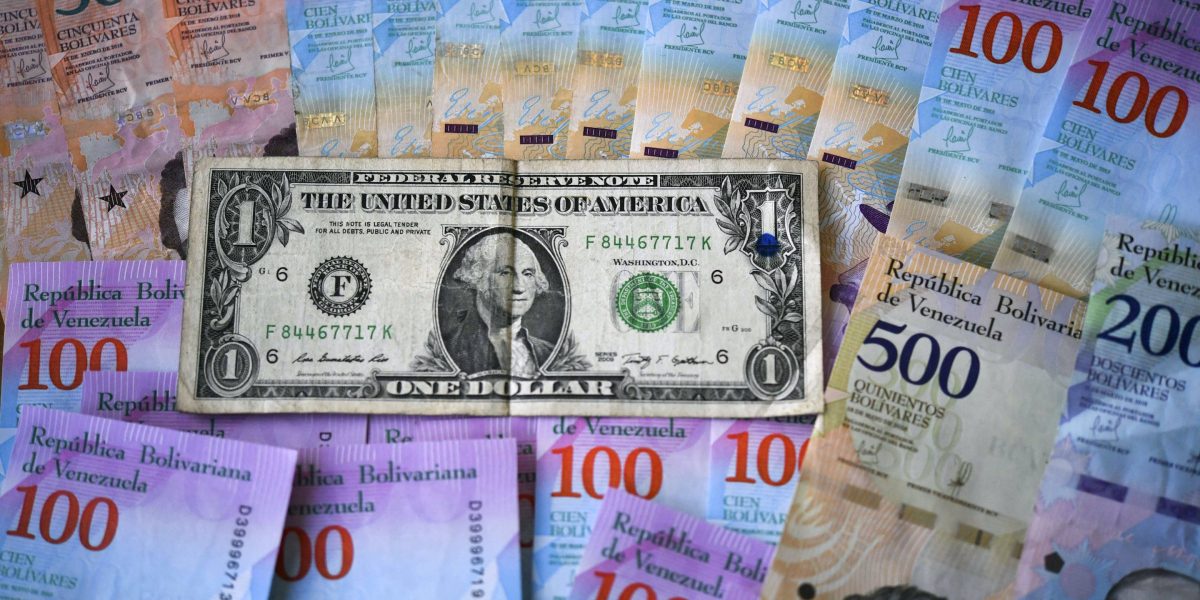
By early 2026, Venezuela's economy was already experiencing a de facto dollarization, with most non-governmental transactions conducted in U.S. dollars due to the bolívar's collapse—losing 78% of its value against the greenback in the past year. This spontaneous dollarization, driven by hyperinflation nearing 400% annually and the bolívar’s rapid devaluation, has created strong incentives for formal adoption of the U.S. dollar to stabilize prices and restore economic confidence.
Economist Steve Hanke has been a leading advocate for formal dollarization, proposing legislation to abolish the bolívar and Venezuela’s central bank, aiming to eliminate the government’s ability to print money and thus tame hyperinflation. He argues that dollarization would not only stabilize prices but also unlock Venezuela’s vast economic potential by attracting foreign investment, especially into the oil sector, which is currently hampered by high extraction costs and political uncertainty. Hanke estimates a 50% to 80% chance that the National Assembly will approve this historic currency switch, which would be the largest since the euro’s introduction in 1999.
The economic rationale for dollarization is reinforced by historical precedents in Latin America, where countries like Ecuador and Panama successfully reduced inflation and achieved monetary stability by adopting the U.S. dollar and abolishing their central banks. Experts emphasize that formal dollarization would provide Venezuela with a strong, stable currency, minimal currency risk for investors, and lower interest rates, fostering increased borrowing and domestic investment. However, this comes at the cost of losing monetary sovereignty and reliance on the U.S. Federal Reserve, a trade-off that remains politically contentious.
Despite the clear economic benefits, formal dollarization faces significant political resistance rooted in constitutional protections for the bolívar and the central bank’s monopoly over monetary policy. Proponents like National Assembly member Antonio Ecarri have faced investigations, illustrating the entrenched opposition from Chavista-aligned institutions. Yet, voices like Daniel Raisbeck counter common criticisms by highlighting that dollarization protects purchasing power, reduces inflation, and supports economic stability without triggering high unemployment or loss of competitiveness, as evidenced by Panama’s robust growth.



Crypto and Privatization Collide
Stablecoins power everyday transactions as Venezuela eyes U.S.-style subsoil privatization and dollarization, but legal uncertainty still clouds the investment horizon.
By mid-2026, Venezuela’s push for full dollarization, championed by economist Steve Hanke, emerged as a linchpin for economic stabilization, aiming to eliminate hyperinflation and currency risk by abolishing the bolivar and the central bank. This monetary reform, coupled with subsoil privatization inspired by the American model of private mineral rights, promises to decentralize economic and political power, making the oil sector more attractive and less prone to corruption. Together, these reforms are poised to enhance investor confidence by providing a stable currency environment and a more transparent, investment-friendly oil industry, crucial for unlocking foreign capital amid Venezuela’s fragile political landscape.
Despite the optimistic outlook from dollarization and oil sector reforms, persistent challenges remain, notably the lack of robust legal protections for private property rights, which ExxonMobil CEO Darren Woods highlighted by deeming Venezuela uninvestable due to its history of expropriations. This legal uncertainty continues to dampen foreign investment enthusiasm, underscoring that monetary and structural reforms must be complemented by credible governance improvements to fully realize Venezuela’s economic revival.
The ongoing dollarization trend is already reshaping Venezuela’s financial landscape, where cryptocurrency—especially stablecoins like USDT—has become a vital lifeline amid economic turmoil, with retail crypto volumes hitting $17.9 billion in Q1 2026. While official dollarization may reduce crypto’s role as an inflation hedge, stablecoins’ speed, low remittance costs, and 24/7 availability suggest they will persist as a complementary digital-dollar infrastructure, reflecting a nuanced coexistence between traditional and digital currencies in Venezuela’s evolving economy.
Hanke projects that official dollarization will not only tame Venezuela’s hyperinflation but also catalyze a surge in foreign investment, particularly in the oil sector, which is critical for managing the country’s staggering $250 billion debt. By lowering interest rates and stimulating borrowing, dollarization could ignite the housing market and domestic investment, potentially transforming Venezuela’s economy from negative to positive growth within a year, signaling a rapid and profound turnaround if reforms are implemented promptly.