Virginia joins Apple wallet ID wave, rollout gaps persist
The gist
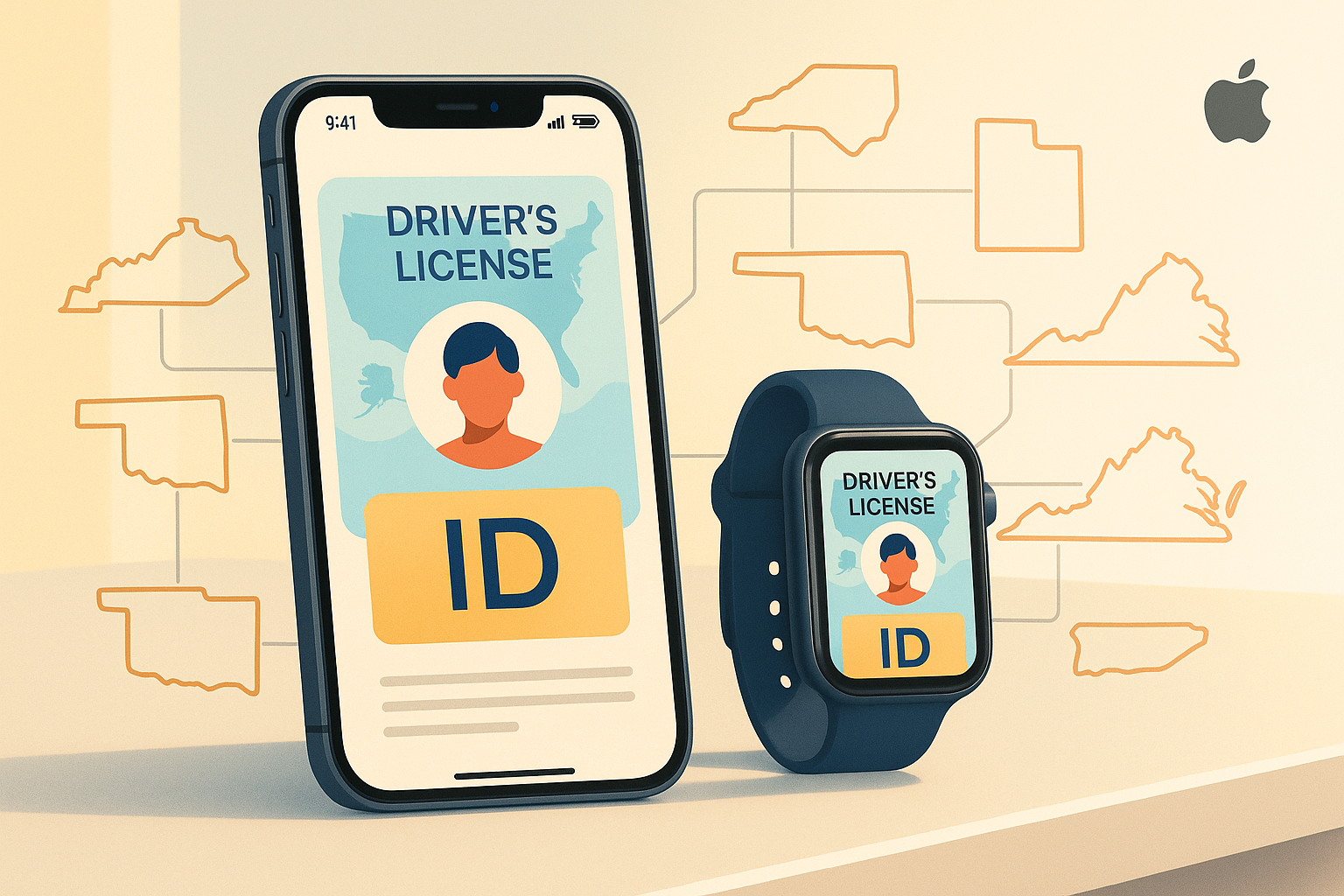
Virginia just hopped on the Apple Wallet ID train as the 15th state, but the journey to digital licenses is a slow, state-by-state sprint—with no finish line in sight.
What to know
- Virginia joined 14 other states rolling out Apple Wallet driver's licenses, while smaller states like Montana and North Dakota led the charge early on.
- States such as North Carolina and Kentucky are taking it slow with phased launches—NC's own app lands in December 2026, Apple Wallet support comes early 2027.
- No federal push means every state sets its own rules, so while TSA accepts digital IDs at 250+ checkpoints, your plastic license is still a must-have for most situations.
Small States, Big Lead
Montana and North Dakota outpaced larger states in digital ID rollouts, revealing how nimble governance and less bureaucracy drive faster adoption than sheer population size.
Virginia's recent adoption of Apple Wallet digital driver's licenses as the 15th state marks a notable milestone in the geographic expansion of digital IDs, underscoring growing momentum across the U.S. This progress is uneven, however, with smaller states like Montana, North Dakota, and West Virginia having launched digital IDs more swiftly than larger, more bureaucratic states such as New York and Texas, illustrating how state size and administrative complexity shape rollout timelines.
Several states, including North Carolina, Kentucky, Oklahoma, Utah, Connecticut, and Mississippi, are actively preparing to integrate Apple Wallet digital driver's licenses, each following distinct, staggered timelines. North Carolina exemplifies this cautious approach with a phased rollout beginning with its own NC Wallet app in December 2026, followed by Apple Wallet support in early 2027, highlighting how states balance technical readiness with policy considerations in this evolving landscape.
Despite the growing number of states supporting Apple Wallet digital IDs, real-world acceptance remains inconsistent and limited to specific venues such as TSA checkpoints at over 250 U.S. airports and select businesses. This patchwork acceptance, coupled with the continued necessity of physical licenses for law enforcement interactions, reveals a hybrid transitional phase where digital IDs supplement but do not yet replace traditional credentials nationwide.
Biometrics Power Security
Apple Wallet digital IDs use biometric checks and NFC tech to keep your data secure and private, but your plastic license remains essential for most interactions.
The biometric verification process is a cornerstone of Apple Wallet's digital ID security, requiring users to scan both sides of their physical license followed by a face scan or similar biometric check to confirm identity ownership before adding the credential. This step-by-step validation ensures that only the legitimate cardholder can create a digital version, reinforcing trust in the system's integrity.
Apple Wallet digital IDs leverage NFC technology combined with biometric authentication methods such as Face ID or Touch ID to enable contactless, secure transmission of only the requested identity information without unlocking the device. This interaction, supported at over 250 TSA checkpoints and select private venues across North America, allows users to authorize data release selectively, enhancing privacy and convenience while maintaining robust security standards.
While digital IDs in Apple Wallet provide a streamlined and secure alternative for identity confirmation at TSA checkpoints and participating businesses, they currently serve as a complement rather than a replacement for physical licenses. Users are still advised to carry their physical cards for law enforcement traffic stops and other scenarios where digital acceptance is limited, underscoring the phased and state-specific nature of this technological transition.
Legislation Slows the Shift
State-by-state laws and complex DMV systems—not technology—are the main roadblocks to nationwide Apple Wallet ID adoption, leading to patchwork timelines and cautious phased launches.
The rollout of Apple Wallet digital driver's licenses across the U.S. is significantly hampered by the necessity for enabling legislation and state-specific agreements with Apple. Each state operates its own DMV infrastructure and legal framework, requiring tailored backend integrations and bilateral negotiations that slow progress despite the technology being ready. For example, Oklahoma only passed enabling legislation in March 2026, years after being named an initial partner, but still lacks Apple Wallet support due to incompatible proprietary systems.
Without any federal mandate or incentive, states move at their own pace based on legislative priorities, budget constraints, and vendor capabilities. The REAL ID Act does not compel digital wallet integration, leaving adoption timelines uneven and dependent on local political will and resources. This decentralized approach means that while smaller states like Montana and North Dakota have launched Apple Wallet IDs swiftly, larger states with more complex bureaucracies face prolonged delays.
Many states adopt a cautious, phased approach by first launching proprietary digital ID apps before integrating with Apple Wallet, further extending timelines. North Carolina exemplifies this strategy, with its DMV planning a December 2026 launch of the NC Wallet app followed by Apple Wallet support only in early 2027. This incremental rollout reflects states’ desire to manage technical risks and legislative hurdles methodically rather than rushing into full Apple Wallet integration.