Voters revolt as billionaire cash floods 2026 races
The gist
Billionaire cash is flooding the 2026 elections, igniting a full-blown voter backlash against dark money and super-sized political influence.
What to know
- Reid Hoffman's $500,000 Super PAC donation in Kentucky's 6th triggered ad spending to spike sevenfold in just one week.
- By March, the 50 top billionaire families had already poured $344.3 million—79% of it—to Republican campaigns and conservative groups.
- Voter revolt is real: 69% cite corruption fears and Maine just passed a corporate-spending curb by a landslide 75%.
Cash Chases Out Voters
As fundraising becomes a nonstop arms race, candidates increasingly turn to wealthy donors, sidelining ordinary citizens and fueling accusations of 'dirty money' in high-stakes races.
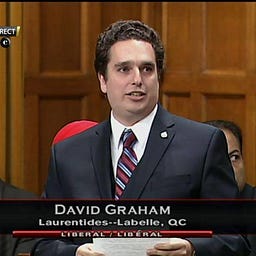
What changed in 2026 was not simply that money remained central to politics, but that the financing system’s logic became harder to ignore as spending surged through outside vehicles. As David Graham wrote in The Atlantic, fundraising is a permanent condition — “Once elected, the fundraising does not end” — and that endless chase for cash intensifies scrutiny of corruption and dark-money dynamics because candidates must keep returning to people with resources, not ordinary voters, for the means to stay politically viable.
That incentive shift was visible at ground level and in marquee races alike: Graham recalled door-knocking encounters with “people that gave me $100 bills and told me to fill out the forms for their whole family,” while poorer couples could only afford a single membership, a small-scale picture of unequal political leverage. By October, the pattern had scaled up dramatically when Reid Hoffman’s $500,000 Super PAC contribution in Kentucky’s 6th became a flashpoint, with opponents branding it “dirty” money as FCC records showed the PAC’s weekly TV ad orders jumping more than sevenfold, from $14,650 to $109,990.
Billionaire Money Sets the Rules
Skyrocketing campaign costs and opaque mega-donations force politicians to serve a handful of ultra-wealthy backers, warping priorities and drowning out public interests.
The mechanism is structural dependence, not isolated corruption: on All-In, senators said “billionaires can give 50 million, 100 million, 200 million… there’s way too much money in politics,” and candidates who cannot match that scale get buried. One senator described a race that reached $500 million and said, “We couldn’t keep up,” while recalling “My race was 330 million” and warning, “This is going to look like quaint,” showing how escalating costs push politicians to rely on wealthy patrons rather than broad public priorities in the 2026 midterm money flow.
That dependence is reinforced by concentration and opacity in the funding system itself: an ATF analysis of Federal Election Commission data found that by March 1, “the 50 biggest-spending billionaire families had funneled $344.3 million, or about 79%, to Republican candidates and conservative organizations.” More broadly, “about $2.8 billion has been raised by various campaigns and super PACs,” and “the top 20 of the biggest mega donors… already account for over one third of that 2.8 billion,” while senators said “Collectively, $300 million were spent to destroy our reputations,” showing how weakly constrained sums can shape narratives instead of public goods.



Backlash Breeds Unlikely Alliances
Widespread public disgust with political corruption is driving bipartisan support for spending limits and even prompting major donors to switch parties in protest.
Public anger at money in politics is no longer a niche reform cause; it is becoming a broad democratic grievance. This Week in Tech said limits on corporate political spending are “hugely popular among left and right,” pointing to a Maine referendum that passed with 75% of the vote to curb corporate spending in politics, while also stressing that “most of what’s being spent is dark money that we don’t know where it’s coming from” — a sign that opacity itself is driving anti-dark-money demands.
By late October, distrust had hardened into a top-tier voter concern and begun to reshape political behavior. The Financial Times found 69% of all registered voters and almost 50% of 2024 Trump voters were very or somewhat concerned about “corruption, self dealing or conflicts of interest,” while independents were even higher; that mood is feeding unusual realignments, as shown when a Texas lawyer who donated more than $600,000 to Republican Ken Paxton in the primary switched to backing Democrat James Talarico.