Warsh channels greenspan: Fed chair slashes transparency, revives old-school policy playbook
The gist
Fed Chair Kevin Warsh is ditching Powell-era transparency for a Greenspan-inspired, old-school playbook—slashing forward guidance, tightening the Fed’s lips, and betting on market discipline in the AI age.
What to know
- Warsh aims to curtail public economic forecasts, reduce press conferences, and limit use of the Fed's dot plot, signaling a sharp break from Jerome Powell’s transparency-heavy leadership.
- He’s reviving Alan Greenspan’s legacy by holding rates steady amid productivity-driven growth and favoring less conventional inflation metrics like the trimmed mean and private sector data.
- Warsh’s communication overhaul is designed to restore policy flexibility, encourage real FOMC debate, and reduce the risk of markets relying too heavily on Fed signals.
Warsh’s Transparency Rebellion
Kevin Warsh is dismantling Powell-era Fed openness, betting that less public guidance and more behind-the-scenes debate will restore policy flexibility—even as critics question if secrecy is possible in the digital age.
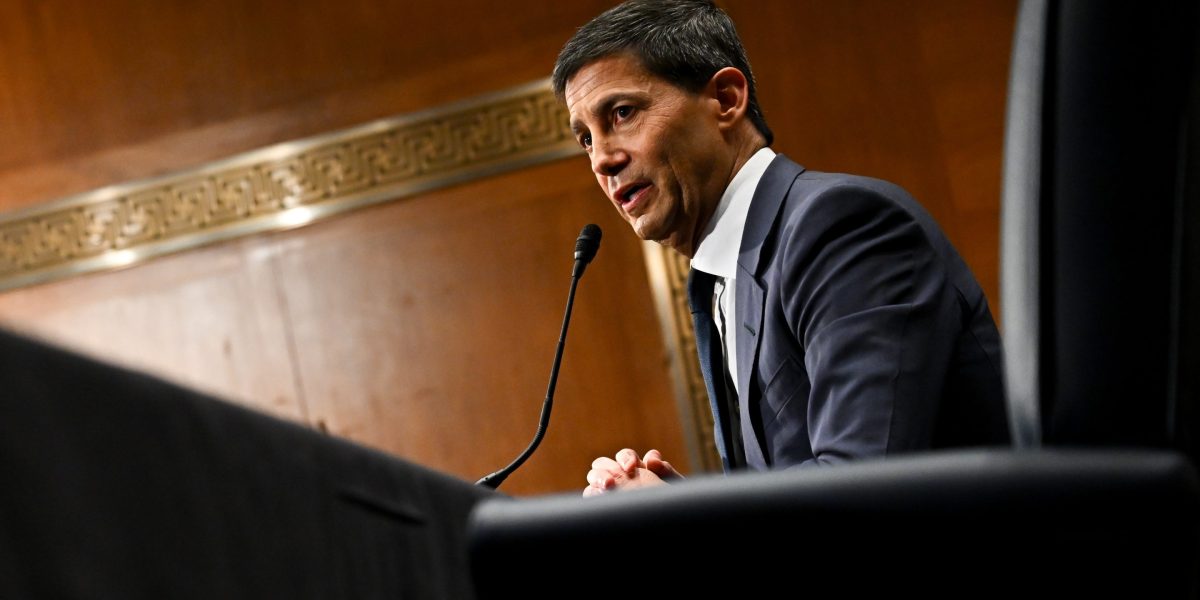
During his April 2026 Senate confirmation hearings, Kevin Warsh openly challenged the Federal Reserve's established transparency norms under Jerome Powell, particularly criticizing the use of forward guidance and the infamous dot plot. Warsh argued that the Fed and markets alike place excessive reliance on these tools, which can constrain policy flexibility and lead to errors, signaling a clear intent to reduce the frequency and detail of public economic forecasts. His desire to 'corral Fed speak' and limit informal communications marks a deliberate pivot from Powell's open communication style, though commentators remain skeptical about the feasibility of such restrictions in an era dominated by social media and instant information flow.
Warsh also proposed a more nuanced approach to economic measurement and data sourcing, expressing skepticism about current inflation metrics and advocating for alternative measures like the trimmed mean inflation rate, which excludes extreme outliers to provide a clearer picture. He emphasized the importance of incorporating private sector data, such as Harvard's Billion Prices Project, into the Fed's analytical toolkit, suggesting a shift toward less conventional and potentially less transparent communication of economic conditions. This approach aligns with his broader vision of reducing the Fed's public signaling and moving toward a more deliberative, less telegraphed policy process.
Further underscoring his commitment to a less transparent Fed, Warsh pledged to cut back on the frequency of press conferences and public remarks, advocating for the Fed to 'work without applause.' By signaling a move away from the regular quarterly economic projections and frequent public commentary, Warsh aims to foster a policy environment where decisions are less influenced by market expectations and media cycles. While he hinted at introducing a 'new framework' and 'new tools' to support this shift, he refrained from detailing specifics, leaving markets to anticipate a significant recalibration of Fed communication strategy once his four-year term officially begins.



Dot Plot Disruption
By sidelining the dot plot and limiting press access, Warsh is pushing the Fed toward fewer signals and more internal debate, risking market uncertainty but aiming for sharper policy decisions.
From the outset of his tenure in mid-2026, Fed Chair Kevin Warsh signaled a deliberate pivot away from the communication-heavy strategies of his predecessors like Ben Bernanke and Jerome Powell. Emphasizing a return to less frequent and more substantive messaging, Warsh advocated for quarterly press conferences only when new information warranted, rejecting repetitive statements and detailed forward guidance that he believed constrained the Fed's nimbleness. This approach included skepticism toward traditional inflation metrics like the core PCE, favoring median or trimmed mean inflation measures that avoid arbitrary exclusions and better capture underlying trends, reflecting his preference for more agnostic and accurate policy signals.
Warsh’s initial Federal Open Market Committee (FOMC) meetings underscored his commitment to streamlined decision-making and communication discipline. At his first meeting, the committee unanimously considered a single rate cut proposal with limited debate, illustrating a focused and efficient policy process. Warsh explicitly limited his public remarks to the official statement, eschewing improvisation to reduce market speculation and 'Fed speak.' Simultaneously, he fostered robust internal deliberations by forming diverse task forces comprising top Fed and Reserve Bank experts, encouraging a 'good family fight' to surface varied perspectives without diluting the committee’s collective responsibility.
Challenging the post-1990s norm of extensive Fed transparency, Warsh expressed reservations about tools like the Summary of Economic Projections (SEP) and the infamous dot plot, fearing they suppress genuine committee dissent and create a bias toward maintaining consensus views even as economic conditions evolve. While he considered withholding his own SEP forecasts to avoid reinforcing groupthink, he recognized that such a move could undermine transparency and credibility amid rising inflation and internal divisions. Instead, Warsh advocated for either reforming or potentially winding down these communication tools with committee support, aiming to balance openness with flexibility and encourage authentic debate around monetary policy.
Aware that his communication overhaul might unsettle markets accustomed to detailed Fed guidance, Warsh acknowledged the initial unpredictability in financial reactions but underscored the primacy of the Fed’s commitment to price stability over short-term market moves. By reducing the Fed’s verbal footprint and focusing on clear, concise statements, he aimed to recalibrate market expectations and restore policy agility, signaling a strategic evolution that revives aspects of Greenspan’s legacy while adapting to contemporary economic complexities.





Back to Greenspan Basics
Warsh’s leadership revives Greenspan’s disciplined, market-driven approach, shunning post-crisis activism in favor of steady rates and minimal signaling—even as AI-driven growth tests old playbooks.
Kevin Warsh’s appointment as Federal Reserve Chairman in May 2026 marked a deliberate return to the orthodox monetary principles that defined Alan Greenspan’s nearly two-decade tenure. Warsh pledged to lead 'with energy and purpose just the way Chairman Greenspan did,' signaling a shift away from the unorthodox policies like quantitative easing that had dominated the Fed since the financial crisis. This revival is underscored by the poignant timing of Warsh’s swearing-in at the White House—the first such ceremony there since Greenspan’s own in 1987—and Greenspan’s passing shortly thereafter at age 100, which prompted widespread reflection on his legacy of disciplined, market-driven risk valuation.
Warsh’s policy approach closely mirrors Greenspan’s orthodox stance, particularly in his decision to hold interest rates steady amid economic expansions fueled by productivity gains, such as those driven by AI today. Emulating Greenspan’s 1990s strategy during the technology boom, Warsh resists premature tightening, trusting that productivity improvements will contain inflationary pressures. This intellectual continuity extends to Warsh’s communication style, as he notably declined to submit rate projections to the Fed’s dot plot at his first FOMC meeting, reviving Greenspan’s tradition of more measured and less telegraphed Fed guidance.
Beyond policy mechanics, Warsh is recalibrating the Fed’s communication ethos to recapture the balance Greenspan struck between transparency and market autonomy. While Greenspan pioneered greater Fed openness, subsequent chairs arguably over-communicated, potentially distorting market signals. Warsh aims to reverse this trend by reducing the Fed’s excessive signaling, thereby allowing markets to more authentically assess monetary policy—a move that experts like Jim Caron see as a return to the pre-Bernanke era where the Fed’s role was to guide without micromanaging expectations.



Greenspan’s Paradoxical Legacy
Warsh must navigate Greenspan’s dual reputation as both a crisis manager and an architect of bubbles, balancing intellectual rigor with the risk of repeating past excesses.
Alan Greenspan's tenure as Federal Reserve Chair from 1987 to 2006 is widely recognized for its intellectual rigor and adept crisis management, successfully steering the economy through shocks like the 1987 stock market crash and the 2001 downturn without a single quarter of GDP contraction, as noted by John Micklethwaite. His hands-on approach, engaging directly with business leaders and analyzing economic data personally, set a high standard for Fed leadership. However, this legacy is complicated by critiques that his policies fostered moral hazard and contributed to economic bubbles, particularly in housing, with deregulation and prolonged low interest rates from 2003 to 2004 fueling an 80% rise in national home prices before the 2008 crisis, illustrating the nuanced challenges Kevin Warsh faces in reviving Greenspan’s influence.
Greenspan revolutionized Federal Reserve communication by pioneering greater transparency and expanding the analytical framework beyond traditional money supply metrics to include GDP growth, labor market conditions, and inflation anchoring—a shift that Jim Caron describes as 'monumental and groundbreaking.' His carefully crafted 'Fedspeak,' characterized by deliberate ambiguity to manage market expectations without revealing policy intentions, became a hallmark of his tenure. This communication style influenced successors like Bernanke, Yellen, and Powell, though some argue their more detailed disclosures risk over-directing markets, prompting Warsh to advocate a return to Greenspan’s less interventionist, market-autonomy approach reminiscent of the 1990s.
Greenspan’s legacy embodies a profound contradiction between his early Objectivist stance against monetary inflation and his later role as the architect of expansive monetary policies that facilitated what critics call 'the largest carnival of phony prosperity.' Initially a disciple of Ayn Rand’s Austrian economic principles, he evolved into the central figure enabling increased government spending and borrowing, epitomized by the 'Greenspan put'—a policy framework established after Black Monday in 1987 that backstopped market downside risk and arguably encouraged financial speculation. This dual reputation as both an intellectual giant and a facilitator of deregulation and market distortions underscores the complexity Warsh must navigate in seeking to revive Greenspan’s legacy.
Underlying Greenspan’s policy approach was his belief in immutable human nature and 'animal spirits,' which he argued drive boom-bust cycles that defy precise economic modeling. This philosophical view informed his tolerance for market fluctuations and skepticism toward heavy-handed regulation, shaping a Fed policy that balanced crisis intervention with deference to market forces. Yet, this stance also contributed to systemic risks, as deregulation and low interest rates during his tenure laid groundwork for the 2008 financial crisis and even the emergence of alternatives like Bitcoin, which some analysts credit to the financial architecture Greenspan helped build.


Fed’s New Era of Uncertainty
Warsh’s radical overhaul of Fed communication and policy signals sets up a historic experiment in central bank secrecy, with markets bracing for a future where less is said—and more is at stake.
Warsh’s radical overhaul of Fed communication and policy signals sets up a historic experiment in central bank secrecy, with markets bracing for a future where less is said—and more is at stake.