WeRide’s RHD robotaxi rolls out in hong kong, steering autonomous ambitions into uncharted markets
The gist
WeRide and partners have unleashed the world’s first purpose-built right-hand-drive robotaxi in Hong Kong, steering autonomous vehicles into lucrative new markets where left-side traffic rules the road.
What to know
- WeRide, Geely Farizon, and Kwoon Chung rolled out a ground-up RHD robotaxi fleet in Hong Kong, targeting regions like the UK, Japan, Singapore, and Australia.
- This isn’t just a steering swap—vehicle architecture, sensors, and algorithms are all reengineered for RHD traffic systems.
- With plans for 2,600 autonomous vehicles by 2026 and CN¥6.7 billion revenue by 2029, WeRide is betting on global expansion but faces stiff regulatory and investor challenges.
RHD Robotaxi: Built for Purpose
WeRide’s RHD robotaxi is a full-scale engineering overhaul—architecture, sensors, and algorithms rebuilt from scratch—to meet the demands of right-hand-drive markets and set a new autonomous industry benchmark.
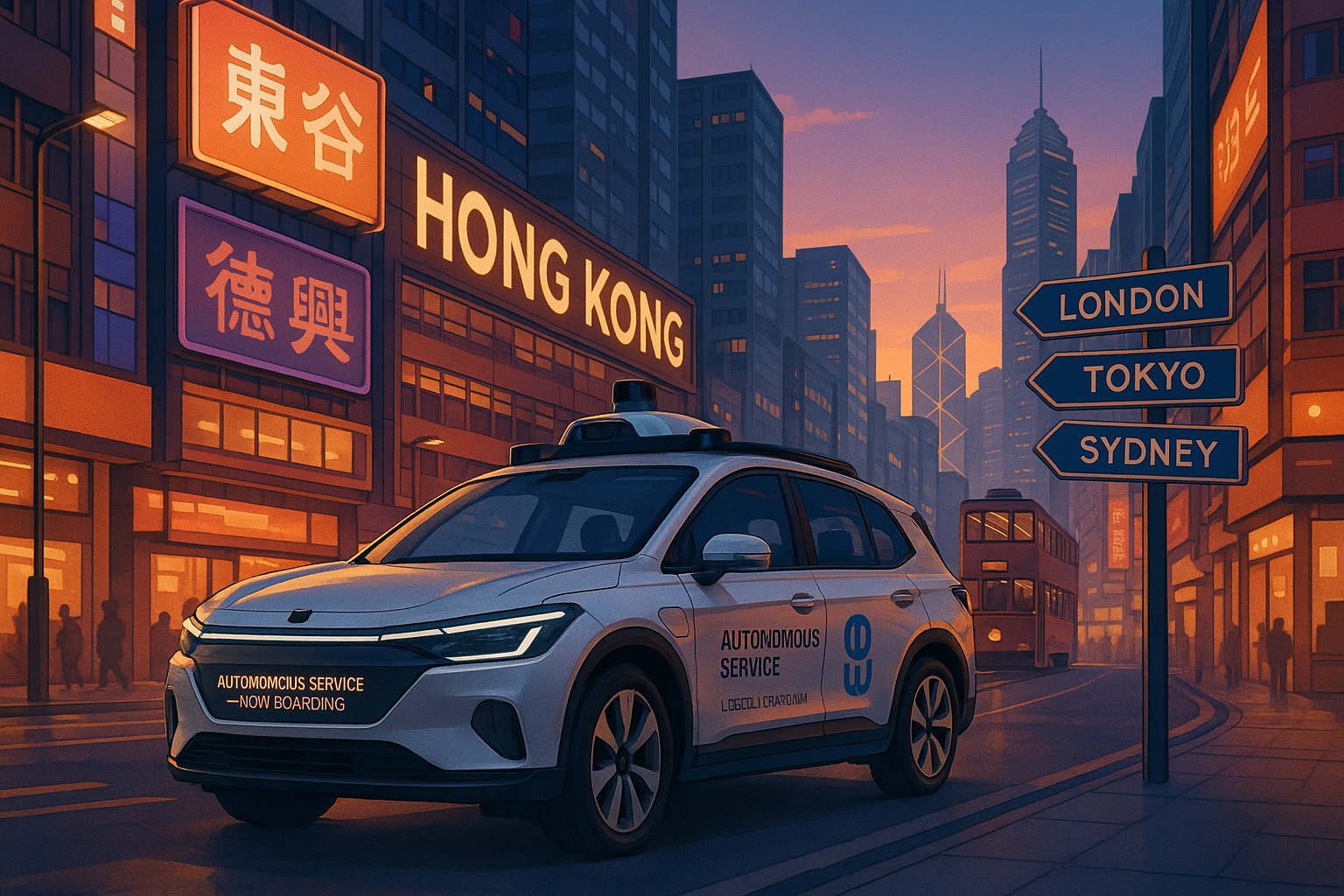
In a groundbreaking collaboration, WeRide, Geely Farizon, and Kwoon Chung have unveiled the world’s first ground-up right-hand-drive (RHD) robotaxi, purpose-built rather than retrofitted from left-hand-drive models. This vehicle, developed on the GXR platform, represents a comprehensive redesign encompassing vehicle architecture, autonomous driving systems, and user interaction logic to meet the unique demands of RHD markets, signaling a pivotal industry shift towards truly global autonomous mobility solutions.
Hong Kong was strategically selected as the initial deployment site for this RHD robotaxi fleet due to its dense, complex traffic environment and status as a critical gateway to other RHD regions such as Singapore, Japan, the UK, and Australia. Leveraging Hong Kong’s mature transit infrastructure and challenging urban conditions, the launch serves both as a rigorous real-world testbed and a scalable model for expanding autonomous mobility across diverse right-hand-drive markets.
Hong Kong: The Global Gateway
By using Hong Kong’s dense urban landscape as a testbed, WeRide is crafting a replicable launch model and leveraging deep industry partnerships to tackle regulatory and operational hurdles across RHD markets worldwide.
WeRide, in partnership with Geely Farizon and Kwoon Chung Motors Group, has strategically chosen Hong Kong as the launchpad for its native right-hand-drive (RHD) robotaxi service, leveraging the city’s dense, complex traffic environment and mature public transit system as an ideal proving ground. This initial deployment aims to establish a scalable 'Hong Kong model' that can be adapted and replicated across other key RHD markets such as the UK, Japan, Singapore, and Australia, effectively using Hong Kong as a strategic gateway for broader global expansion.
Beyond simply repositioning the steering wheel, the development of the RHD robotaxi involves a comprehensive redesign encompassing vehicle architecture, sensor placement, decision-making algorithms, and user interaction systems to meet the unique demands of RHD traffic configurations. This deep engineering effort underscores WeRide’s commitment to delivering tailored autonomous mobility solutions that can seamlessly operate across diverse traffic systems, thereby broadening its global footprint and competitive moat in the autonomous vehicle industry.
WeRide’s expansion strategy into RHD markets is bolstered by a robust network of collaborations, including partnerships with Geely Farizon, Kwoon Chung, and Uber, alongside regulatory groundwork evidenced by autonomous driving licenses secured in eight countries. Coupled with an asset-light rollout model tested in Zurich, these alliances and operational tactics position WeRide to efficiently scale its robotaxi services city-by-city across complex regulatory landscapes while aiming to overcome challenges such as high R&D costs and regulatory hurdles.
The RHD robotaxi initiative aligns closely with China’s five-year development plan for intelligent new energy vehicles and supports WeRide’s ambitious goal to scale its global autonomous fleet to 2,600 vehicles by the end of 2026. However, the success of this strategic expansion hinges on securing regulatory approvals, achieving high utilization rates, and improving unit economics through consistent ride volumes, making the Hong Kong launch a critical near-term catalyst that could redefine WeRide’s global autonomous mobility narrative.

Scaling Ambitions, Investor Skepticism
WeRide’s aggressive global expansion and asset-light strategy are shadowed by steep R&D costs and regulatory obstacles, fueling investor doubts as shares lag far behind ambitious revenue targets.
WeRide's launch of the world's first ground-up right-hand-drive robotaxi, developed in partnership with Geely Farizon and Kwoon Chung, marks a pivotal step in its global autonomous mobility ambitions by unlocking key RHD markets such as Hong Kong, the UK, Japan, Singapore, and Australia. This initiative complements WeRide’s broader strategy of deploying both L4 robotaxis and L2+ ADAS systems across multiple vehicle lines, enabling efficient reuse of software and data to optimize R&D spending and improve unit economics, thereby strengthening its competitive positioning in the autonomous mobility sector.
Strategic collaborations with local partners like Uber in Zurich and Kwoon Chung in Hong Kong exemplify WeRide’s asset-light rollout model, which is critical for validating sustainable ride volumes and revenue density in highly regulated, high-fare markets. Success in these pilot cities could materially influence investor sentiment by demonstrating scalable commercial deployments, directly feeding into WeRide’s ambitious projections of CN¥6.7 billion revenue and CN¥358 million earnings by 2029, though these remain contingent on regulatory approvals and rider adoption.
Despite the strategic promise of the right-hand-drive robotaxi initiative, WeRide faces significant headwinds including heavy R&D expenditures, regulatory uncertainties across multiple jurisdictions, and the challenge of narrowing persistent net losses. These risks contribute to investor skepticism, reflected in the stock trading at $6.35—well below the $15.22 fair value estimate that assumes aggressive growth and margin improvements—highlighting that the path to realizing WeRide’s optimistic financial narrative remains fraught with execution and market adoption challenges.