West africa ramps up food security with bold agri investments
The gist
West Africa is betting big on homegrown food security with a wave of multi-million dollar agri-investments aimed at slashing imports and powering up local producers.
What to know
- Nigeria is partnering with Hillview Ranch to import 60,000 high-yield dairy cattle, targeting 229.5 million litres of milk annually to cut a $1.5 billion import bill.
- Major funding from the African Development Bank, World Bank, and EBID is fueling climate-smart infrastructure, from hillside dams in Cameroon to a fivefold poultry boom in The Gambia.
- Olam Agri and partners are doubling wheat milling in Senegal and rolling out gender-forward, climate-resilient farming programs across the region by 2026.
Nigeria Bets Big on Dairy
A government-backed cattle import plan aims to overhaul Nigeria's dairy sector, prioritizing jobs and sustainable growth through rigorous public-private vetting.
In a strategic move to overhaul Nigeria's dairy industry, the Federal Government, led by Minister Idi Mukhtar Maiha, is actively pursuing public-private partnerships to reduce the country's hefty $1.5 billion annual milk import bill by boosting domestic production. Central to this initiative is Hillview Ranch Enterprises' ambitious proposal to import 60,000 high-yield dairy cattle in phased stages, targeting an impressive annual milk output of 229.5 million litres. This collaboration underscores a commitment to not only enhance local productivity and sustainability but also to generate employment opportunities, with the proposal currently undergoing meticulous technical evaluations to ensure robust planning and financing frameworks.
Climate Resilience Gets Funded
Major multilateral investments are reshaping agro-industrial infrastructure in Cameroon and Congo, with a dual focus on water management and inclusive value chains for women and youth.
In mid-2026, the African Development Bank committed €81.2 million to northern Cameroon’s agro-industrial sector, focusing on climate-resilient water infrastructure such as multipurpose hillside dams designed to extend growing seasons and stabilize incomes. This strategic investment also incorporates hydrometeorological monitoring and reforestation efforts to bolster environmental sustainability amid escalating climate pressures, aiming to attract private capital, reduce food imports, and catalyze economic transformation through strengthened agricultural value chains and inclusive growth.
Shortly after, the World Bank injected $60 million into Congo’s poultry and aquaculture sectors, targeting climate-resilient infrastructure and value chain enhancements to boost local food production and economic resilience. This initiative uniquely blends public investment with private sector engagement and policy reforms to improve financing access, focusing on Protected Agricultural Zones and emphasizing inclusive benefits for women and youth across the entire value chain—from producers to traders—thereby fostering a diversified and climate-adaptive agro-industrial ecosystem.
Empowering Women, Building Resilience
Olam Agri and IDH are scaling climate-smart, gender-forward farming programs that target smallholder empowerment and regenerative agriculture across West Africa.
By August 2026, Olam Agri and IDH significantly expanded their sustainable agriculture partnership across West Africa, aiming to empower smallholders through climate-smart farming and tailored country-specific action plans that enhance food supply chain resilience. Central to this effort is the Women in Sourcing and Enterprise (WISE) program in Ghana, which not only supports SMEs but also strengthens drought-resilient wheat cultivation and uplifts women bakers, illustrating a targeted approach to both gender empowerment and agricultural sustainability. Beyond Ghana and Nigeria, the partnership ambitiously seeks to scale its impact by promoting regenerative agriculture, eliminating deforestation, and improving local processing and market access, thereby fostering a more climate-resilient and inclusive agro-industrial landscape across the region.
Wheat and Rice: Scaling Up
Senegal’s wheat milling surge and a pan-African rice initiative spotlight mechanisation and integrated support as critical levers for closing food production gaps and boosting farmer incomes.
By mid-2026, Olam Agri's strategic doubling of its wheat milling capacity to over 360,000 tonnes annually at the Diamniadio facility in Senegal marked a significant stride in reducing the country's dependence on wheat imports. This expansion not only aligns with Senegal’s broader ambitions for food security and industrialization but also fosters economic development through job creation—supporting around 800 jobs—and technology transfer, as underscored by the presence of key government and industry stakeholders at the facility's inauguration.
In parallel, AfricaRice and the African Agricultural Technology Foundation (AATF) launched a five-year partnership in 2026 aimed at closing Africa’s substantial rice production gap, where annual output of 27.6 million tonnes falls far short of the 45.3 million tonnes consumed. Recognizing that improved seed varieties alone are insufficient, the collaboration emphasizes an integrated approach combining mechanisation, affordable finance, extension services, infrastructure, and market access to boost productivity sustainably and enhance farmer incomes.
Mechanisation emerges as a cornerstone of the AfricaRice-AATF initiative, targeting labor-intensive stages such as land preparation and post-harvest processing to improve efficiency and product quality while reducing drudgery. However, as AfricaRice Director General Baboucarr Manneh highlights, success hinges on ensuring smallholders can access affordable financing, maintenance services, and shared-use machinery models, thereby making mechanisation viable and inclusive.
Beyond closing the import gap, boosting domestic rice production promises to catalyze local agro-industrial ecosystems—spanning seed systems, milling, packaging, storage, and logistics—that retain value within rural economies and generate employment beyond farming. This is increasingly urgent given that Africa’s per capita rice consumption is projected to rise from 26 kilograms in 2023 to nearly 30 kilograms by 2035, driven by population growth and urbanization. Yet, these productivity gains must be climate-resilient, supported by locally adapted seeds, water management, extension, and risk finance to withstand droughts, floods, and heat stress, ensuring lasting food security.
Gambia’s Poultry Revolution
EBID’s multimillion-dollar push to quintuple poultry output hinges on transparent milestones and sustainable supply chains to drive regional food security and economic empowerment.
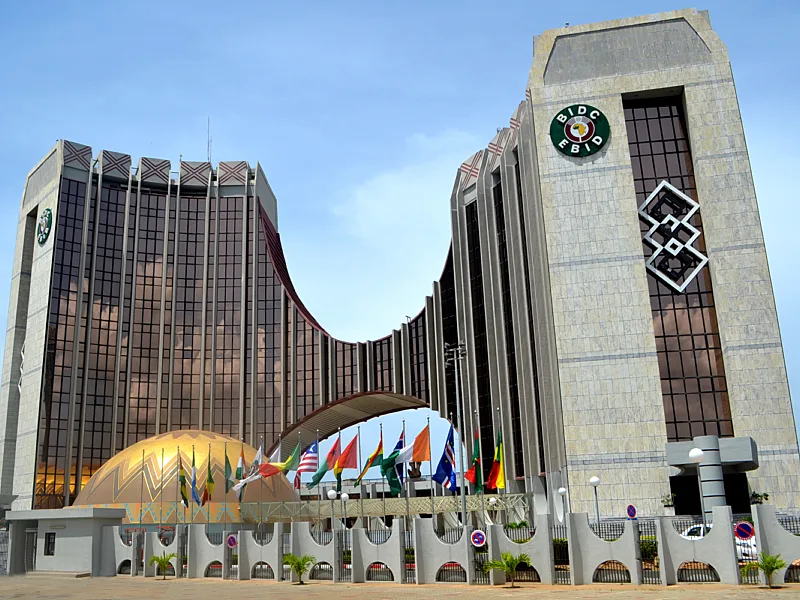
EBID’s $10.04 million investment in G Farms Limited represents a strategic push to transform The Gambia’s poultry, dairy, and feed sectors by 2035, aiming to quintuple laying hens to 500,000, quintuple broiler production to over 3.2 million birds annually, and expand dairy cattle from 110 to 2,500. This ambitious scaling is designed not only to bolster regional food security and reduce reliance on imports but also to foster a sustainable agro-industrial ecosystem that supports local grain growers and small poultry enterprises through dependable input supply chains.
While the investment underscores sustainability and local economic empowerment, EBID President George Agyekum Donkor emphasizes that its success hinges on transparent, phased reporting of production milestones, environmental safeguards, and animal health management. By openly publishing progress on capacity expansion, supplier engagement, and pricing impacts, EBID and G Farms can ensure accountable growth that balances increased output with environmental responsibility and meaningful job creation, thereby maximizing the long-term food security benefits for The Gambia and the wider region.