Wisconsin upset sparks debate over polls and prediction markets
The gist
Wisconsin’s Democratic primary shocker—where David Crowley toppled poll and prediction market darling Francesca Hong—exposes how election forecasting tools keep missing the mark when late-deciding voters strike.
What to know
- Polls showed Francesca Hong up 20 points just a week before the vote, but David Crowley won by a razor-thin margin after moderates swung late.
- Prediction markets like Kalshi and Polymarket gave Hong a 95%+ chance, but replicated the same polling blind spots and got blindsided by the upset.
- Media partnerships with prediction markets risk amplifying false certainty, as big blocks of undecided voters can still flip outcomes at the last minute.
Polling’s Blind Spots Exposed
Wisconsin's polling meltdown reveals how late momentum shifts and overlooked controversies can upend even the most lopsided forecasts.
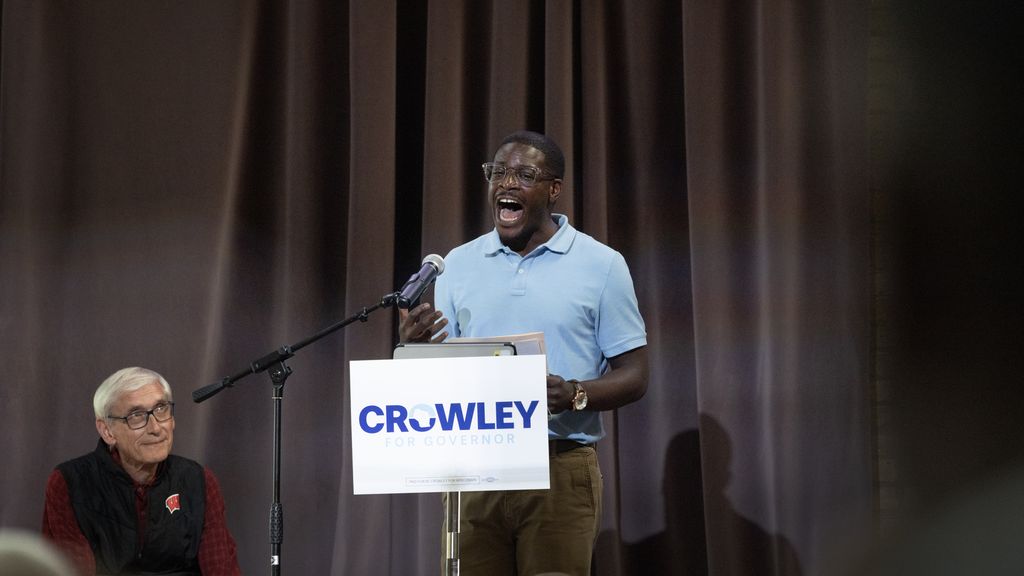
Traditional polling in the Wisconsin Democratic gubernatorial primary dramatically underestimated David Crowley's late surge against Francesca Hong, with polls taken just a week before the election showing Hong ahead by about 20 points, yet Crowley ultimately won by half a percentage point. This discrepancy highlights how polling snapshots, as former Obama strategist David Axelrod observed, are limited by timing—many polls were conducted too early to capture the volatile momentum shifts caused by last-minute campaign events, candidate dropouts, and controversies such as Hong's 'cancel Thanksgiving' remark.
A critical factor that polling missed was the decisive swing of late-deciding moderate voters who gravitated toward Crowley amid strategic campaign maneuvers and establishment endorsements. Crowley's visible alliance with Governor Tony Evers helped cast doubts on Hong's electability, swaying even some attendees at Hong's own events who remained undecided as the primary neared. This dynamic underscores how rapidly evolving voter sentiment, influenced by targeted messaging and high-profile support, can elude traditional polling methods that fail to track these late-breaking shifts.

Prediction Markets’ False Certainty
Prediction markets, touted as sophisticated alternatives, often echo polling errors and mislead both media and the public with their misplaced confidence.
Prediction markets like Kalshi and Polymarket notably failed to predict the Wisconsin Democratic primary outcome, heavily favoring Francesca Hong with about a 95% chance of victory while David Crowley narrowly won. This mispricing echoes a broader pattern where these markets replicate polling errors rather than outperform them, as seen in previous races such as Spencer Pratt’s and Thomas Massie’s unexpected losses despite high market probabilities. Such failures reveal that prediction markets often dress up conventional polling inaccuracies in the guise of sophisticated probabilities, creating a misleading sense of certainty.
The media’s embrace of prediction markets, exemplified by CNN’s partnership with Kalshi and Polymarket’s now-deleted tweet boasting a 96% chance for Hong, risks amplifying public overconfidence in these forecasts. Critics warn that this 'Santa washing' lends undue legitimacy to markets that are far from infallible, potentially misleading audiences into viewing their probabilities as definitive rather than probabilistic estimates. This amplification can backfire, damaging reputations when unexpected outcomes occur.
Despite the Wisconsin upset, Kalshi’s founders and experts like Nate Silver urge caution in interpreting prediction market probabilities as certainties. Kalshi founder Luana Lopes Lara emphasized that a 5% chance is not zero, underscoring that low-probability outcomes remain plausible. Meanwhile, Silver acknowledged the appeal of prediction markets but stressed they should complement rather than replace traditional polls or forecasting models, highlighting their limitations and the need for nuanced interpretation.


The Power of Late Deciders
Late-breaking moderate voters repeatedly defy pollsters and prediction markets, swinging tight races and exposing systemic flaws in election forecasting.
Late-deciding moderate Democratic voters have emerged as a pivotal yet elusive force in recent primaries, notably in Wisconsin's 2026 gubernatorial race where Francesca Hong's early polling lead in the low 40s narrowed as David Crowley consolidated undecided and late-deciding voters, ultimately securing a comeback despite polls showing Hong ahead by as much as 20 points. This phenomenon underscores the challenge pollsters face in capturing rapid shifts in voter sentiment, as former Obama strategist David Axelrod noted that many polls were conducted too early to reflect these late movements, which often occur only in the voting booth, as Ipsos Public Affairs president Clifford Young observed.
The difficulty in polling late-deciding moderates extends beyond individual races, contributing to broader inaccuracies in election forecasting and prediction markets, especially in tightly contested Democratic primaries between moderates and progressives in states like Michigan and Wisconsin. These voters’ tendency to withhold their choice until the last moment complicates the predictive power of polls and has ripple effects on markets that depend on polling data, illustrating a systemic challenge in capturing true voter intent amid a volatile electorate.
This late-deciding voter dynamic is not unique to Democratic primaries but echoes a recurring pattern in U.S. elections where a substantial share of undecided voters breaks late, often disproportionately favoring Republican candidates, as seen in the 2016, 2020, and 2024 presidential elections with Donald Trump. Analysts caution that misinterpretations of polling leads—focusing on headline numbers rather than accounting for large undecided blocs—have historically led to overconfidence in forecasts, as Clinton’s 2016 polling averages failed to account for nearly 100 percent voter intent due to undecideds who ultimately swung the election.


Media Amplifies Misleading Odds
By spotlighting polling and prediction market 'locks,' the media magnifies public overconfidence—ignoring undecided voters who routinely flip expected outcomes.
The media's embrace of prediction markets, exemplified by CNN's partnership with Kalshi, has lent these platforms an aura of authority that belies their actual predictive power. Kalshi's 95% forecast for Francesca Hong in the 2026 Wisconsin Democratic primary starkly contrasted with the outcome, where David Crowley won, illustrating how prediction markets often mirror polling errors rather than surpass them. Critics argue that this 'Santa washing' of prediction markets dresses up flawed data as sophisticated probabilities, misleading the public into overestimating their reliability.
Media coverage tends to fixate on polling leads without adequately accounting for the sizable undecided voter segments that can decisively alter election results. In Wisconsin's 2026 primary, despite Francesca Hong's 20-point lead in polls, her 39.4% vote share aligned with polling averages but was insufficient to secure victory due to a large undecided pool that swung toward Crowley. This pattern echoes the 2016 presidential election, where Clinton's polling averages in battleground states like Pennsylvania and Wisconsin did not sum to 100%, leaving room for late-deciding voters who ultimately favored Trump.
The public and media often misinterpret polling 'misses' as errors when election outcomes diverge because undecided voters break late in favor of one candidate, a dynamic highlighted by Nate Silver's analysis of the 2016, 2020, and 2024 elections. This overemphasis on polling leads fosters false confidence in predicted landslides, obscuring the inherent uncertainty and electoral math nuances that make such forecasts precarious. Silver's caution in 2016—that Clinton's polling averages were less robust than Obama's 2012 numbers and that a landslide was never guaranteed—remains a critical reminder of the limits of election forecasting.