XPO delivers big on AI margins, investors debate lofty valuation
The gist
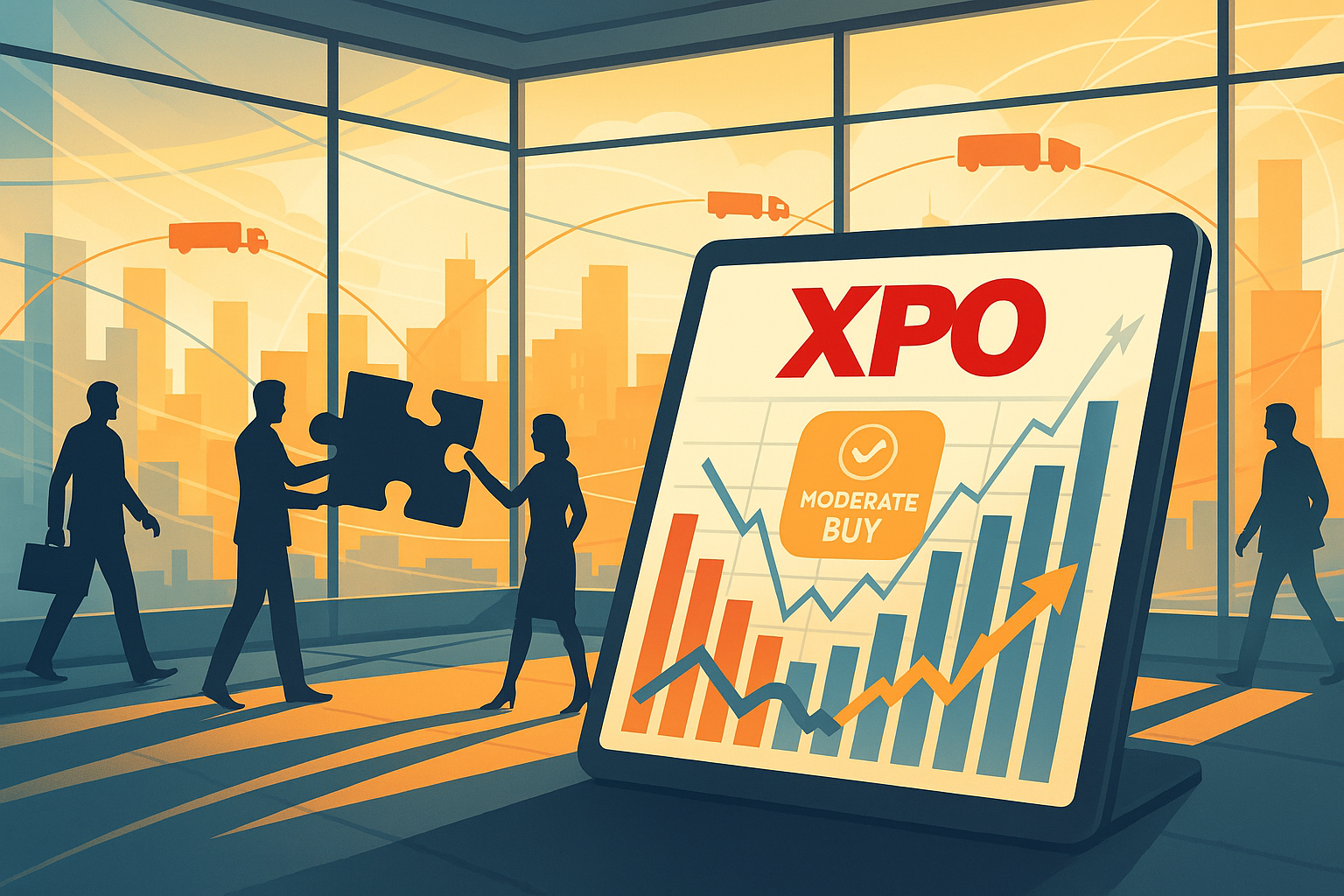
XPO’s AI-fueled margin surge has Wall Street split, as soaring profits and bullish analyst upgrades battle with valuation jitters and shifting investor bets.
What to know
- Q2 revenue jumped 13.2% to $2.36B and margins hit 11.5% thanks to AI-driven operational boosts and tight cost control.
- Big names like Bank of New York Mellon bought in, but insiders and Hawk Ridge trimmed stakes, revealing mixed institutional conviction.
- Despite a 69% annual return and analyst price targets up to $257, XPO trades at a sky-high 58x P/E, fueling fierce debate over whether the rally can last.
AI Powers Margin Breakthroughs
XPO’s pragmatic AI rollout—boosting trailer loading, slashing damages, and driving an 800-basis-point margin swing—translates tech hype into real, scalable profits.
XPO demonstrated robust financial performance in Q2 CY2026, with revenue climbing 13.2% year-over-year to $2.36 billion and adjusted operating income surging 36% on a 15% revenue increase, underscoring the scalability and operating leverage of its network as highlighted by CEO Mario Harik. This growth was complemented by disciplined margin management, with operating margins expanding from 9.5% to 11.5%, and CFO Kyle Wismans projecting more than a doubling of free cash flow for 2026 through stringent capital expenditure control and productivity initiatives.
A cornerstone of XPO's operational efficiency gains lies in its strategic deployment of AI-driven technologies, which have materially enhanced productivity and margin expansion. Innovations such as AI-based trailer loading and route optimization have improved load quality by over 40% and halved damages at pilot sites, while workforce productivity exceeded targets by 1 point, collectively driving an 800 basis points margin improvement through the downturn. This pragmatic application of AI, focusing on tangible operational improvements rather than hype, has been pivotal in sustaining profitability and service excellence.
XPO’s sustained margin improvements are further supported by strategic investments in its less-than-truckload (LTL) network and disciplined pricing strategies. Since 2021, the company expanded its trailer fleet by over 30% and increased network door capacity by 15%, while contract renewal pricing accelerated into the mid- to high single-digit range, driving yield gains above market averages. These efforts have led to a significant 300 basis points improvement in the LTL operating ratio to 79.9%, nearing management’s long-term target in the low 70s, with CEO Harik expressing confidence in achieving this goal, which could substantially boost operating income and share price.
Beyond operational enhancements, XPO’s diversified revenue streams, including increased freight from small and midsize businesses with accessorial and premium service charges, provide multiple levers for outperformance amid normalizing freight volumes. This revenue diversification, combined with strong free cash flow generation—$207 million in Q2 alongside $200 million year-to-date debt reduction and $70 million in share buybacks—reflects a balanced approach to growth and capital discipline, reinforcing the company’s solid financial footing and market positioning.


Institutions Split on XPO’s Future
Big-name funds are piling into XPO even as insiders and some hedge funds cash out, revealing a sharp divide in conviction despite near-total institutional ownership.
Institutional investor activity in XPO stock reveals a dynamic and somewhat polarized landscape, with notable buying from entities such as Entropy Technologies and Rice Hall James, who increased their stakes following strong Q1 earnings and analyst target hikes. Meanwhile, Hawk Ridge significantly reduced its position by 53%, illustrating a cautious stance amid mixed signals in the market.
The second quarter saw substantial new investments from heavyweight institutions, including Bank of New York Mellon Corp, which acquired approximately 739,431 shares valued at $151.8 million, and Nicholas Investment Partners LP, which added 63,583 shares worth $13.05 million. This influx of capital was complemented by major stakes initiated or expanded by BlackRock Inc., MFN Partners Management LP, Invesco Ltd., Durable Capital Partners LP, and Orbis Allan Gray Ltd., underscoring broad institutional confidence and active engagement in XPO's growth trajectory.
Despite the robust institutional buying, there is a discernible undercurrent of selling pressure, both from certain institutional players like Castleark Management LLC and insiders including Director Allison Landry and CAO Christopher Michael Brown, who collectively sold 7,400 shares worth approximately $1.53 million in recent quarters. This juxtaposition of heavy institutional ownership—dominating 97.73% of XPO's stock—and insider selling injects a layer of complexity into the investment narrative, suggesting nuanced sentiment within company leadership and among some investors.
Smaller institutional investors such as Elyxium Wealth LLC, Torren Management LLC, Horizon Investments LLC, International Assets Investment Management LLC, and EverSource Wealth Advisors LLC have also demonstrated varied but meaningful engagement by initiating or increasing positions ranging from $28,000 to $42,000. This broad-based participation across the institutional spectrum highlights a widespread, if heterogeneous, interest in XPO's market potential amid evolving operational and financial dynamics.
Valuation Tug-of-War Intensifies
Analysts and investors are locked in a fierce debate as XPO’s sky-high P/E and diverging price targets highlight deep uncertainty over whether margin gains can justify the premium.
Analyst upgrades and bullish revisions from major brokerages such as JPMorgan Chase, Goldman Sachs, UBS, and TD Cowen have fostered a generally optimistic market sentiment around XPO’s stock, with price targets climbing into the $210 to $257 range and a consensus 'Moderate Buy' rating reflecting confidence in the company’s growth trajectory. This positive outlook is underpinned by strong earnings beats, including a $1.70 EPS that surpassed estimates by $0.22 and 13.2% year-over-year revenue growth to $2.35 billion, which have helped the stock maintain resilience near the mid-to-high end of its 12-month trading range between $121.48 and $232.05.
Despite the upbeat earnings momentum and margin expansion driven by AI and network growth—highlighted by a record LTL operating ratio of 79.9% and a 310 basis point margin increase—XPO’s stock price has exhibited muted movement post-earnings, rising less than 1%, signaling market caution amid debates over valuation. Trading at a lofty P/E ratio above 58x, well beyond the industry average near 33x, investors grapple with whether this premium fairly compensates for slower revenue growth and elevated leverage, reflecting a tension between optimism on margin gains and skepticism about sustainability.
Valuation discussions around XPO remain polarized, with bearish analysts pegging fair value at $156.57—implying the stock is overvalued by 28% at recent prices near $201—while discounted cash flow models and some bullish forecasts suggest the stock could be undervalued by approximately 9%, with fair value estimates reaching $221 or higher. This wide divergence in price targets, ranging from $156.57 to $228.43, underscores uncertainty about the durability of earnings growth, margin expansion, and risks such as muted freight demand and margin pressure from rising wages and driver shortages.
The mixed but generally positive market sentiment is further complicated by short-term stock price declines over 7- and 90-day periods despite strong long-term shareholder returns exceeding 69% over one year and nearly 300% over five years, illustrating a market wrestling with near-term risks against a backdrop of robust operational performance. Institutional investor activity, including a significant $151.8 million investment by Bank of New York Mellon, signals confidence in XPO’s strategic positioning even as valuation debates persist.
