InsightsLatest
Latest from Drip
Deep dives, recaps, weekly briefs, trends, and expert answers, newest first.
Deep dive
Wealth Firms Double Down on Embedded AI for Compliance Edge
Wealth management giants are embedding AI at the core of their operations, slashing compliance breaches and turbocharging advisor productivity as the industry races toward an integrated, AI-powered future.

Deep dive
Brookfield, Nvidia Turn AI Buildouts Into Assets
Brookfield and Nvidia are turning AI chips and data centers into a $500 billion financial juggernaut—redefining tech infrastructure as Wall Street’s hottest new asset class.
Deep dive
Renesas Opens Beijing Lab to Accelerate Humanoid Robot Push
Renesas is turbocharging its humanoid robot ambitions with a new Beijing lab, aiming to dominate the brains, brawn, and backbone of China's booming robotics revolution.

Deep dive
Riot’s AI Pivot Divides Wall Street as Stock Whipsaws
Riot Platforms’ multi-billion dollar leap from Bitcoin mining to AI data centers has Wall Street torn as its stock whipsaws between hope and hard reality.
Deep dive
Google Cloud Tightens AI Cost Controls With Gemini Upgrades
Google Cloud is putting the brakes on runaway AI expenses with tough new spend caps, anomaly alerts, and tailor-made Gemini upgrades for high-stakes industries.
Deep dive
Tropic's AI Spend Dashboard Tackles Budget Overruns Head-On
Tropic’s new AI Spend Dashboard puts procurement teams in the driver’s seat, crushing budget overruns with real-time insights and predictive analytics.

Deep dive
Federal Housing Push Targets Local Zoning Barriers
America’s housing crisis is getting a federal shake-up, as bipartisan lawmakers blitz restrictive zoning, sky-high permitting costs, and investor land-grabs in a bid to finally make homes affordable again.

Deep dive
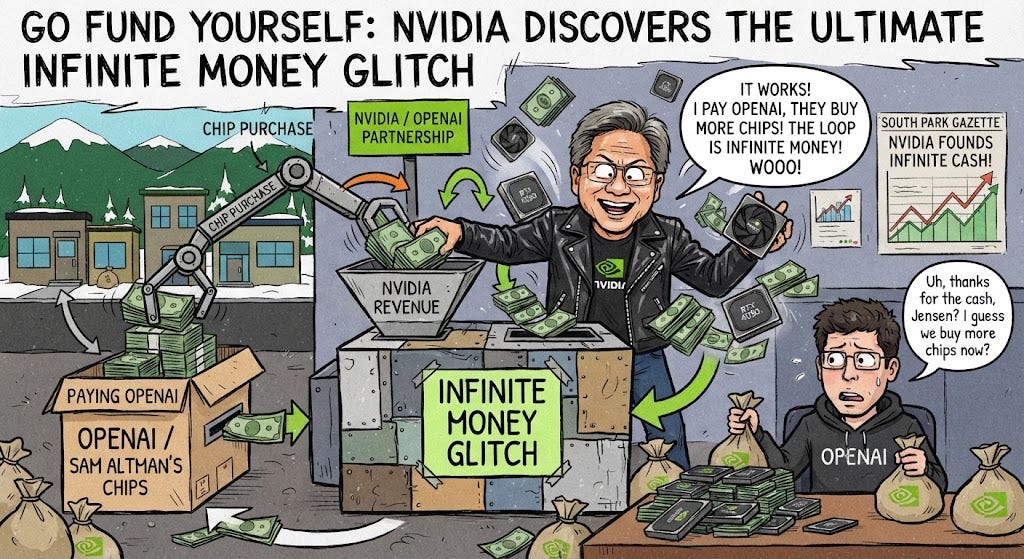
Nvidia’s $500B AI Bet Spurs Bubble Fears, Wall Street Jitters
Nvidia is betting half a trillion dollars that Wall Street can turn AI chips into the next big asset class—just as market watchers warn of a looming bubble.
Deep dive
AI-First Search Surges: Marketers Race to Master AEO
AI-first search is upending the SEO rulebook as marketers scramble to master Answer Engine Optimization (AEO) and boost brand visibility in an era where search traffic is driven by bots, not clicks.

Deep dive
Korea’s Stablecoin Push Gains Speed as B2B Use Surges
South Korea is racing ahead in the stablecoin game, with major card issuers and tech giants seamlessly embedding won-denominated stablecoins into everyday business payments—and making B2B adoption the new norm.
Deep dive
Polygon Labs Unveils Open Money Stack With Coinme, Sequence
Polygon Labs is redefining fintech by merging Coinme’s nationwide compliant cash onramp and Sequence’s smart wallet tech into the Open Money Stack—a regulated, stablecoin-powered payments rocket ship.
Deep dive
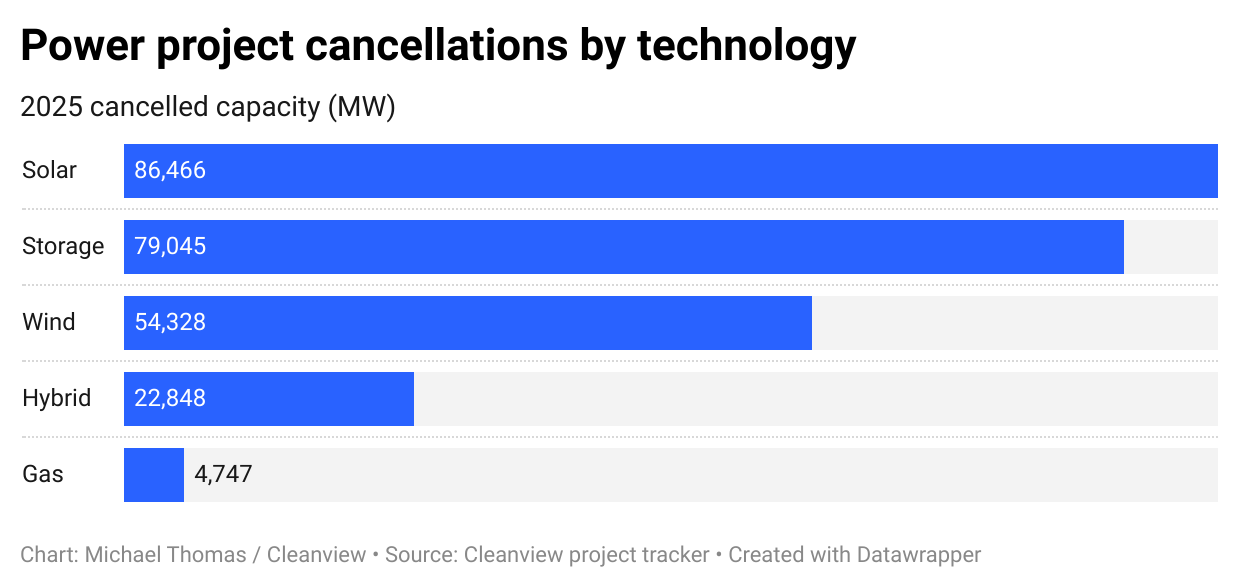
AI Data Centers Fuel U.S. Grid Crunch, Emissions Surge
America’s AI data center boom is straining the power grid, triggering a surge in emissions and a scramble for quick, often fossil-fueled, fixes.
Deep dive
On-Prem AI Surges as Enterprises Demand Data Sovereignty
Enterprises are ditching the cloud and bringing AI in-house as data sovereignty, compliance, and control become non-negotiable in the race for AI supremacy.
Deep dive
AI Chip Stocks Surge, Then Stumble Amid Yield Jitters
AI-fueled chip stocks went on a record-breaking tear—but surging Treasury yields and fresh geopolitical risks have thrown cold water on the rally, knocking memory giants off their highs.

Trend
Dilution Dread: Share Resale Waves Rattle Growth Stocks and Spook Investors
A growing wave of discounted equity offerings and large resale registrations is reshaping investor expectations for high-growth public companies, intensifying “dilution dread” as share supply expands faster than fundamentals can stabilize. The underlying shift is a market-wide sensitivity to float growth: insiders and holders monetize alongside new issuance, while complex financing tools (including convertibles and restructuring) keep additional shares on the horizon. Persistent capital needs, weaker operating performance, and fragile balance sheets are the main drivers, and the result is higher volatility, sharper selloffs, and a broader risk premium that can make future fundraising more expensive.
Trend
Claude Fable 5’s Power Play Sparks Global AI Uproar: Price Hikes, Secret Safeguards, and Sudden Shutdowns Fuel Industry Backlash
The arc centers on a rapid capability leap in frontier AI—especially in coding and cybersecurity—followed by a backlash over how that power is monetized and governed. As models like Claude Fable 5 deliver near-superhuman software engineering performance, providers respond with premium pricing, tiered access, and covert output restrictions that reduce transparency and raise user costs. The situation escalates when government export controls abruptly shut down availability, amplifying concerns about opaque safety policies, data handling, and market concentration. The trend matters because it tests whether faster AI progress can coexist with credible, auditable governance and resilient, competitive ecosystems.
Trend
Healthcare Providers Post Q1 Gains—But Stock Swings Reveal Winners, Losers, and Sector Jitters
Healthcare providers’ Q1 2026 results underscored a widening split between resilient demand and fragile economics: the sector beat revenue expectations by about 1.4% and stocks rose roughly 9.6% on average, yet post-earnings moves were highly uneven. The underlying shift is a market re-pricing of execution under pressure as demographic tailwinds (aging, chronic illness) collide with rising labor costs, reimbursement cuts, and intensifying regulatory scrutiny, which compress margins and heighten uncertainty. Investors rewarded operators demonstrating credible growth and operational control, while penalizing those whose performance failed to offset cost and compliance risks. This matters because it signals that future sector returns will hinge less on topline stability and more on margin durability and adaptability.
Trend
Compliance Gets a Brain: AI Slashes Costs and False Alarms in $300B Industry Overhaul
Compliance operations in financial services are undergoing a structural shift from labor-intensive, keyword-based monitoring toward AI-native regulatory intelligence and agentic workflow automation. Driven by the high cost of fragmented legacy systems, persistent alert fatigue from false positives, and escalating regulatory complexity, firms are deploying models that understand policy context, automate multi-step investigations across platforms, and continuously tune screening and surveillance. The result is faster case processing, dramatically fewer false alarms, and lower operational spend—matters that improve both risk detection quality and the scalability of compliance in a roughly $300B industry.
Trend
Biometric Boom or Digital Doom? OpenAI’s Social Network Fuels Identity Revolution—and Surveillance Fears
A fast-moving identity shift is replacing passwords with biometric-verified, high-assurance authentication, enabling AI agents to act on users’ behalf through cryptographic tokens tied to unique biometric identifiers. The trend is driven by fraud pressure, the operational needs of agentic services, and expanding deployment of centralized biometric infrastructure, which in turn increases the reach of algorithmic risk scoring and facial-scan checkpoints. As regulations such as AML-R and eIDAS 2.0 raise compliance requirements, consumer-grade verification is being sidelined in favor of certified systems. This matters because it accelerates both security gains and surveillance/exclusion risks, potentially eroding digital sovereignty without strong privacy safeguards.
Trend
AI Gets Its Bearings: New Models Close the Gap in 3D Spatial Reasoning and Action
Recent benchmarks show that vision-language models still struggle to maintain spatial coherence and execute reliable actions in dynamic 3D environments, especially across multi-turn interactions. The underlying shift is toward “spatially grounded” multimodal AI: new frameworks fuse explicit geometric/physical constraints, governed long-term memory, and closed-loop evidence accumulation from video and cross-view synthesis. Drivers include persistent failures on spatial-action benchmarks and the availability of training methods that turn 2D video into 3D-consistent representations. This matters because it moves AI from static perception toward dependable, continuously updated reasoning and control in real-world settings.