InsightsLatest
Latest from Drip
Deep dives, recaps, weekly briefs, trends, and expert answers, newest first.
Deep dive
Cochlear’s 70% Plunge Sparks ‘Once-in-a-Decade’ Bargain Buzz Amid Sector Selloff
Cochlear’s jaw-dropping 70% share price plunge has investors wondering if a battered healthcare giant now offers a once-in-a-decade bargain—or just more pain ahead.
Deep dive
Healthcare Stocks Under the Microscope: Investors Sour as Profits Fade, AI Picks Winners
Healthcare stocks are under siege as profits fade, investors grow wary, and only AI-powered tools seem able to separate the winners from the walking wounded.
Deep dive
Human Agency Takes Center Stage in Next-Gen AI Workflows
Human agency is reclaiming the spotlight in next-gen AI workflows, as organizations blend machine autonomy with hands-on oversight to keep people in control.
Deep dive
SphereNet Sets Compliance Bar for AI-Driven Payments
Deutsche Telekom and Sphere Labs are setting a new gold standard for compliant, privacy-preserving AI-driven payments with the launch of SphereNet.

Trend
Crypto Crossroads: Bipartisan Surge Pushes CLARITY Act to Senate Showdown as Election, Ethics, and Industry Forces Collide
The throughline is a shift from prolonged partisan gridlock to a fast-moving, bipartisan push for federal crypto regulation as the CLARITY Act advances toward a Senate floor showdown. The bill’s momentum is driven by a convergence of market pressure for stablecoin and market-structure clarity, a rising crypto-influenced electorate, and election-year urgency, while ethics provisions and high-profile conflicts of interest force lawmakers to recalibrate alliances. It matters because the outcome will determine whether U.S. crypto oversight becomes predictable and bank-integrated—or remains fragmented, leaving compliance and liquidity risks to persist.
Trend
Factories Plug In AI, But Downtime Persists—Experts Say It’s Not the Tech, It’s the Playbook
Factories are rapidly adopting AI for maintenance—by early 2026, about 58% report using it—but the expected reduction in downtime has not materialized, with roughly 79% seeing no improvement. Experts attribute the gap less to model capability than to implementation playbooks: weak integration into existing maintenance workflows, insufficient data foundations, and limited operational discipline. Compounding this, AI maintenance contracts often blur accountability, shifting financial risk to manufacturers when predictions fail. The trend matters because it shows that industrial AI value depends on governance, measurable ownership, and end-to-end execution, not just deployment.
Trend
Wall Street Goes On-Chain: Institutional Stampede Fuels $30B Tokenization Boom in 2026
The throughline of 2026’s tokenization boom is Wall Street’s shift from blockchain experimentation to institutional-grade, on-chain market infrastructure. Regulatory breakthroughs—especially the Clarity Act—reduced legal uncertainty, while rapid growth in real-world asset tokenization (from under $2B to nearly $30B by early 2026) demonstrated demand for faster settlement, lower minimums, and more efficient capital deployment. This momentum is further accelerated by AI-enabled trading tools and multi-chain protocols that support compliant, 24/7 markets, making tokenized assets increasingly central to how traditional finance operates.
Trend
AI Digital Twins Turbocharge Market Research: Fairgen, Candor, and n8n Redefine Speed, Precision, and Personalization in 2026
AI digital twins and synthetic personas are reshaping market research from slow, survey-heavy studies into continuously updated, workflow-embedded simulations that deliver faster, more precise, and more personalized insights. The underlying shift is the move toward AI-run “avatar” experiments and agentic research pipelines, driven by advances in generative modeling, automation/orchestration, and the ability to validate outputs through iterative human review. This matters because it compresses research cycles, improves segmentation quality, and lowers the cost of high-fidelity decision-making—enabling teams to test product and messaging hypotheses in near real time across markets.
Trend
AI’s Dirty Secret: Data Centers Now Rival Airlines in Emissions, Forcing Tech Giants to Rethink Green Promises
AI’s rapid expansion has exposed a hidden resource drain: data centers powering training and inference are now generating greenhouse-gas emissions on par with the airline industry, while also straining electricity and water supplies. The underlying shift is a move from “software-only” AI value creation to infrastructure-heavy compute demand, driven by surging investment in large-scale models and the need for always-on, high-throughput processing. This matters because grid capacity and water availability are becoming binding constraints, raising the risk of power shortfalls and widening energy inequities. In response, the sector is accelerating energy-efficiency upgrades, real-time carbon accounting, and cleaner power procurement, but progress is racing against continued growth.
Trend
Oil Shock and AI Boom: Markets Juggle Inflation Jitters, Tech Turbulence, and Geopolitical Volatility
Geopolitical tensions between the U.S. and Iran have triggered sharp oil price spikes, lifting gasoline costs and pushing inflation expectations higher, which in turn injects volatility into equity markets and complicates the Federal Reserve’s policy outlook. At the same time, the AI boom is reshaping tech performance: cloud demand tied to AI accelerates revenue for some firms, while others face investor backlash over rapidly rising capital expenditures and concerns about overheating. Despite large early drawdowns, persistent “buy-the-dip” behavior and AI optimism keep risk appetite alive, but the market’s throughline is a tug-of-war between inflation jitters, tech spending scrutiny, and ongoing geopolitical uncertainty.
Trend
Fuel Shock, Merger Block: How Spirit’s ‘Racecar’ Model Skidded Into Bankruptcy
The arc traces how a single geopolitical fuel shock—the Hormuz crisis—turned Spirit Airlines’ ultra-low-cost “racecar” model from a razor-thin advantage into a structurally unprofitable operation. Jet fuel prices doubled to about $4.51 per gallon, overwhelming a cost structure already eroded by competitive fare convergence (including legacy carriers’ Basic Economy) and operational setbacks such as a major engine recall that grounded much of the fleet. As financial lifelines failed—bondholders blocked a rescue and regulators prevented a large merger—Spirit’s attempted restructuring proved insufficient, underscoring a broader industry lesson: when margins are engineered to be minimal, supply volatility and operational fragility can quickly become existential.
Trend
Jet Fuel Shock Grounds Spirit Airlines as Iran War Turbulence Upends Global Aviation
A renewed Iran war and Strait of Hormuz disruptions have triggered a jet-fuel shock, pushing fuel prices to roughly $108 per barrel and forcing airlines to cut capacity, reprice fares, and reconfigure routes under heightened airspace restrictions. The underlying shift is a move from cost-optimized, high-frequency commercial flying toward risk- and fuel-cost–managed operations, driven by geopolitical risk premiums, supply-chain bottlenecks, and engine/airframe delivery disruptions. Budget travel is hit hardest as low-cost capacity contracts, while aerospace manufacturers face production delays and quality/sourcing problems. The broader market impact is a sustained drag on civil aviation demand and employment, with capital increasingly flowing toward defense as governments expand war budgets.
Trend
Marvell’s AI Power Play: Acquisitions, Google Deal, and Stock Soar as Optical Arms Race Heats Up
The arc centers on a market-wide shift from conventional electrical interconnects to ultra-high-speed optical and co-packaged optics for AI data centers, driven by exploding bandwidth needs and the race to reduce latency and power in next-generation GPU clusters. This transition is accelerating through targeted acquisitions that expand capabilities in optical engines, plasmonics, and multi-terabit interconnects, alongside hyperscaler demand for custom silicon. A high-profile partnership for custom AI NPUs reflects a broader move toward specialized, multi-vendor AI chip ecosystems that can reshape hyperscaler supply chains. The trend matters because it determines who can supply the critical “plumbing” for scaling AI workloads, not just the compute.
Trend
Private Markets Go Mainstream: Secondaries Surge, Credit Risks Mount, and GPs Double Down on Operational Edge
Secondary markets and private credit have moved from niche liquidity tools to mainstream pillars of private-market investing as IPOs and M&A exits remain slow and uncertain. Driven by LP demand for earlier liquidity, GP-led portfolio rebalancing, and the need to manage long-duration capital, secondaries have surged to roughly $240B globally by late 2025, while private credit has grown about 3.5x—bringing new risks. Concentration, refinancing pressure, and heightened regulatory scrutiny of bank exposure are forcing investors to demand tighter transparency and risk controls. In response, general partners are shifting from financial engineering toward operational, often AI-enabled value creation to sustain targeted earnings growth and improve execution discipline.
Trend
Labour in Meltdown: Farage’s Reform and Greens Shatter UK’s Political Center, Markets Rattle
The 2026 UK local elections exposed a structural realignment in British politics, with Labour losing both its traditional northern base to Nigel Farage’s Reform UK and parts of its urban coalition to the Greens. Driven by dissatisfaction over immigration, perceived governance failures, and intensifying populist appeal, the collapse of long-standing left-right voting blocs has fractured the center and triggered a leadership crisis within Labour. As internal mutiny and credibility concerns spread, investors have responded by pushing UK bond yields to multi-decade highs and weakening the pound, underscoring how political fragmentation is now directly translating into market risk ahead of the next general election.
Trend
Despite Happy Employees, Leadership Gaps Fuel Mass Exodus Threat—2026 Retention Crisis Spurs Radical Rethink
A growing retention crisis is emerging despite high employee satisfaction: 58% of workers say they plan to leave, pointing to an underlying shift from “engagement” to “leadership effectiveness” as the primary driver of loyalty. The market is responding to evidence that weak manager performance is costing organizations an estimated $438 billion in productivity, accelerating demand for compassionate, human-centric leadership and tighter executive-to-frontline alignment. In parallel, companies are redesigning talent systems—expanding fractional HR, hiring for cultural fit, and creating credible non-manager career paths—to reduce turnover risk and stabilize workforce performance in 2026.
Trend
AI Arms Race Redraws Fraud Battle Lines as Stripe, Visa, and Fintechs Double Down on Real-Time Security
An ongoing shift is underway in digital payments fraud defense: AI is moving the industry from slower, rules-based detection toward real-time, transparent, adaptive risk assessment embedded across the transaction stack. The drivers are accelerating fraud attempts—especially as embedded finance expands—and the need to meet evolving regulatory and compliance expectations without sacrificing user experience. Stripe, Visa, and other fintechs are cutting decision latency to near-instant levels and using behavioral analytics to predict and block attacks before they complete. This matters because it redraws fraud battle lines from post-incident remediation to continuous, compliance-aware prevention at scale.
Deep dive
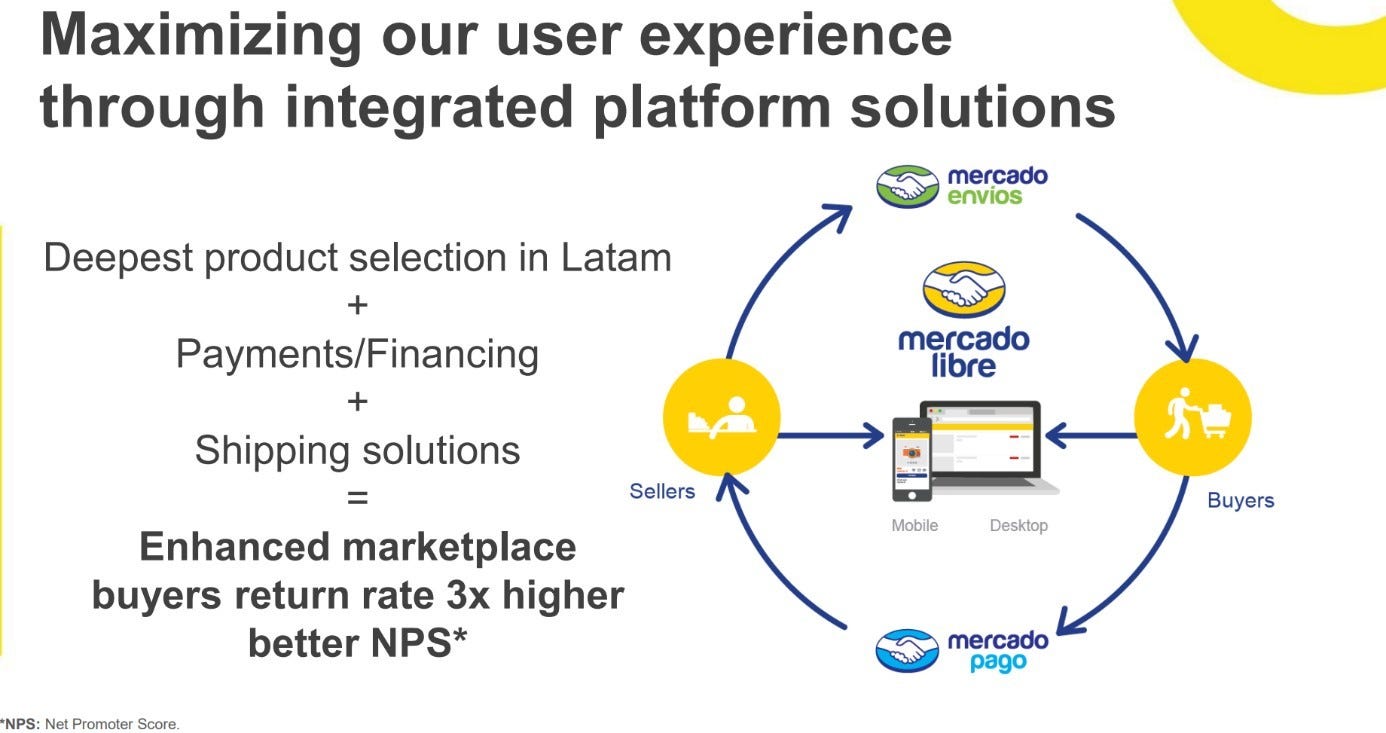
MercadoLibre Doubles Down: Logistics, Fintech, and Ads Supercharge Latin America’s E-Commerce Titan
MercadoLibre is turbocharging Latin America's digital economy by fusing e-commerce, fintech, and advertising into one high-powered, growth-fueled ecosystem.
Deep dive
Gene Therapy’s Next Act: New Vectors, Big Funding, and a Race to the Brain
Gene therapy for the brain is entering a new era with next-gen vectors, major funding, and a race to deliver breakthrough treatments for neurological diseases.

Deep dive
Factories Plug In AI, But Downtime Persists—Experts Say It’s Not the Tech, It’s the Playbook
AI is flooding factory floors, but most manufacturers are still stuck with the same old downtime—because the real problem isn’t the tech, it’s how they use it.