InsightsLatest
Latest from Drip
Deep dives, recaps, weekly briefs, trends, and expert answers, newest first.
Deep dive
Hybrid AI Takes Center Stage as Soaring Memory Costs Push Enterprises Beyond the Cloud
Hybrid AI is taking over as sky-high memory costs and chip shortages force enterprises to ditch cloud-first strategies and reinvent their AI infrastructure.
Deep dive
AI Herds Ahead: Halter’s $2B Leap Spurs AgTech Gold Rush Amid Farm Labor Crunch
Halter’s $2B leap with solar-powered AI collars is electrifying the AgTech world and fueling a global rush to automate cattle ranching as farm labor dries up.

Deep dive
Halter’s Satellite AI Push Expands Farm Automation
AI-powered satellites, smart tractors, and precision pig-tracking are shaking up Big Beef, promising a $2 billion agtech revolution—but not without regulatory heat and global chip wars.

Deep dive
Virtual Fences, Real Profits: Halter’s Starlink Collars Shake Up Cattle Country
Satellite-powered smart collars are colliding with old-school sales in a high-tech stampede that's reshaping the future—and the profits—of cattle country.

Deep dive
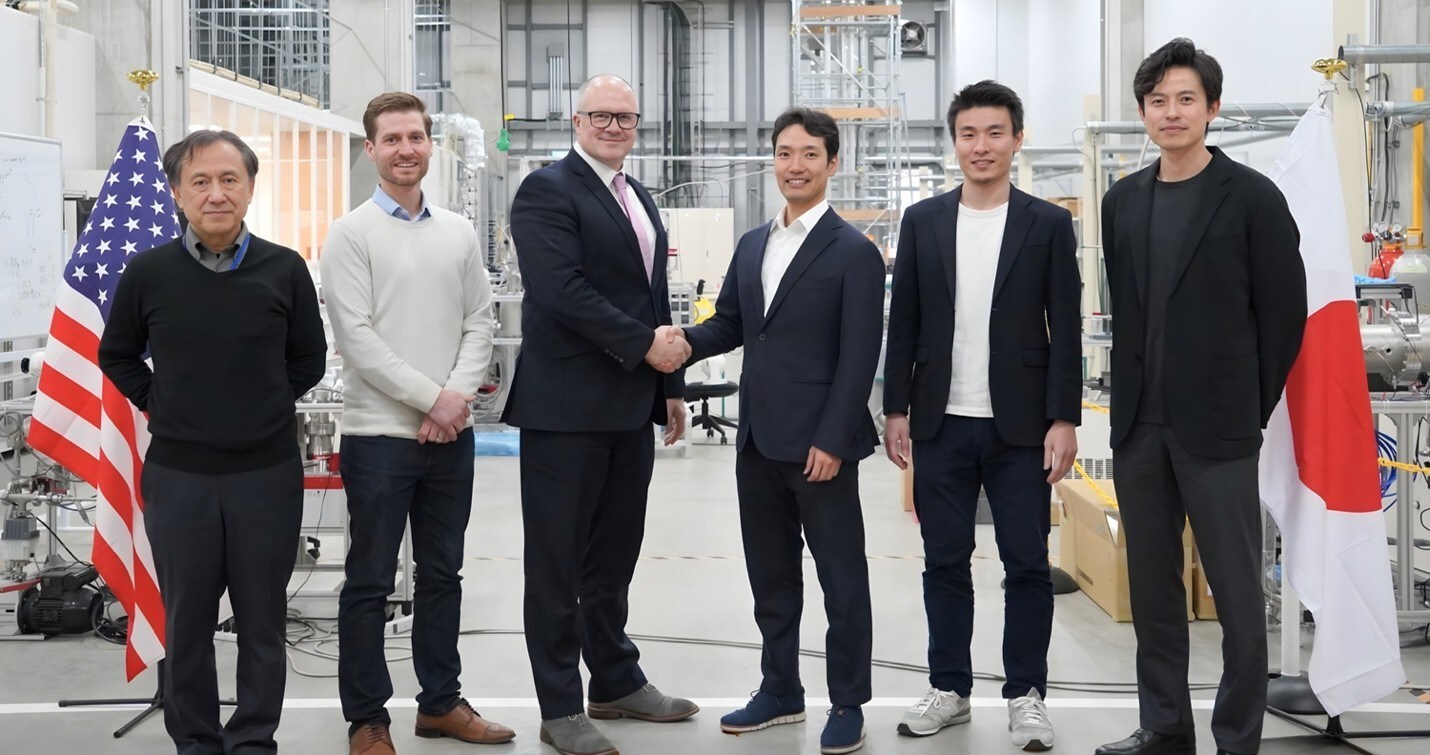
Fusion Frenzy: Global Alliances, Funding Jitters, and Data Centers Ignite Race to Commercial Power
A global fusion power race is heating up as breakthroughs, big-money alliances, and data-hungry customers push the industry from the lab toward real-world energy markets.
Deep dive
Fusion Funding Frenzy: Breakthroughs, Billions, and the AI Energy Arms Race
Fusion energy is breaking out of the lab and into the boardroom, as billions in private investment and breakthrough reactor designs push Germany—and the world—toward a high-tech, AI-powered clean energy future.

Deep dive
Mind-Reading Tech Surges—Sparking Hopes and Privacy Fears
Mind-reading tech is leaping from the lab to real life, promising breakthrough communication but igniting fierce battles over who gets to read your thoughts—and why.

Deep dive
Global Youth Social Media Bans Face Uphill Battle
As governments worldwide rush to restrict youth social media, enforcement gaps, digital workarounds, and privacy dilemmas put the dream of an 'offline childhood' on shaky ground.

Trend
AI Shops, Humans Decide: Trust Gap Stalls Agentic Commerce Revolution
Retail’s agentic commerce push is shifting from “AI can complete the transaction” to “AI can assist, while humans decide,” as a trust gap stalls full automation. The underlying driver is an emerging AI paradox: shoppers increasingly use AI for product research, but they resist letting bots handle emotionally charged or high-stakes actions like checkout, citing security, privacy, and the need for real-person support. This matters because it forces the market toward hybrid shopping journeys—simpler policies, stronger identity and payment safeguards, and fast “undo” mechanisms—while brands compete on reliability and human escalation rather than pure automation.
Trend
Debt, Deceit, and Democracy on the Brink: Trump’s Authoritarian Surge Sparks Grassroots Uprising
A bipartisan pattern of corruption, fiscal mismanagement, and runaway mandatory spending is driving the U.S. toward a debt-driven austerity trap while widening inequality. At the same time, an authoritarian turn in governance—marked by politicized appointments, institutional weaponization, and election-rule manipulation—has weakened democratic norms and eroded public trust through disinformation and coercive enforcement. These pressures are fueling a market- and institution-level shift toward centralized control and militarized administration, prompting a countervailing surge of grassroots legal and civic mobilization. The stakes are high: without accountability and electoral safeguards, democratic backsliding and fiscal instability reinforce each other, reshaping how power, resources, and legitimacy are distributed.
Trend
AI Hits Trust Ceiling: Consumers Demand Human Touch and Transparency in Customer Service
Across customer service and shopping, the arc is shifting from “AI-first convenience” to a trust-and-accountability ceiling that consumers are actively enforcing. Despite early promises of seamless automation, skepticism, emotional fatigue, and repeated failures in complex or sensitive cases are driving a return to human agents, with AI confined to routine triage and information gathering. The key drivers are low trust in AI recommendations, rising expectations for explanations, and demands to disclose where AI data comes from. This matters because it forces the industry to redesign workflows, metrics, and governance so AI behaves transparently and humans remain accountable for outcomes.
Trend
Trump’s Holy War Backfires: Papal Feud Fractures GOP and Ignites Security Scare
An escalating public feud between President Trump and Pope Leo XIV signals a broader shift in U.S. political communication: the weaponization of religious symbolism is colliding with institutional moral authority, fracturing faith-based coalitions. Driven by provocative social-media rhetoric and retaliatory theological messaging, the clash has moved from culture-war theater to tangible security concerns, including threats against the Pope’s family. At the industry and market level, the episode underscores how polarization accelerates reputational risk, intensifies media amplification, and increases the likelihood that political branding spills into real-world harm.
Trend
Ransomware Goes Corporate: Startup Tactics, State Actors, and Sky-High Demands Redefine Cybercrime in 2026
Ransomware has shifted from opportunistic extortion into a professional, corporate-style cybercrime model, even as 2025 saw record-low payment rates. The underlying change is professionalization: gangs now run “startup-like” operations with branding, support functions, and affiliate management, while AI-driven evasion and targeting increase pressure on defenders and complicate attribution. This arc is driven by cryptocurrency-enabled logistics, the growing role of cyber insurance (which shapes attacker incentives and coverage gaps), and the blurring of lines between state-backed espionage and profit-seeking attacks as nation-state actors “moonlight.” The result matters because sky-high demands and costly recovery act as a hidden tax on businesses, accelerating an arms race that strains budgets and slows innovation.
Trend
Gen Z Homebuyers Face Triple Threat: Soaring Costs, Debt, and DIY Survival—With Parents as Lifelines
A growing affordability squeeze is reshaping Gen Z’s path to homeownership, driven by soaring housing costs, persistent student debt, and a chronic down-payment gap. As a result, many young renters and would-be buyers are forced into cutbacks, delayed life milestones, and greater reliance on assistance programs—often without fully understanding the total cost of buying. The most consequential shift is the mainstreaming of “family-backed” financing, with parents increasingly acting as a de facto source of down payments and closing support, which matters because it ties access to homeownership more tightly to household wealth than to income alone.
Trend
DeFi’s Existential Crisis: KelpDAO Hack Exposes AI-Fueled, Nation-State-Backed Systemic Fault Lines
DeFi’s existential crisis is crystallizing around a shift from “smart-contract risk” to “systemic, cross-chain and governance risk,” exposed when a LayerZero bridge flaw let attackers mint unbacked rsETH and trigger a $236M liquidity shock that cascaded into $6.2B of withdrawals across major lending markets. The incident was amplified by AI-enabled tooling and state-backed capabilities, turning protocol weaknesses into scalable, geopolitically funded attacks. Because DeFi’s composability and layered collateral propagate errors quickly, slow emergency governance and bridge-centric architecture have become key drivers of contagion. The result is a market-wide push toward bridgeless designs, faster circuit breakers, and more traditional financial safeguards to restore resilience.
Trend
Trump-Xi Summit Gambles on Trade Truce as Tech, Taiwan, and Alliances Fray
The arc centers on a proposed US-China trade truce that is increasingly undermined by a faster-moving geopolitical and technological rivalry. While the mid-May summit in Beijing is meant to stabilize capital flows and reset trade frictions, debates over US-China oversight boards risk entrenching favoritism and slowing growth. In parallel, AI and semiconductor competition is shifting the rules: China’s ability to stack chips and fuse civilian and military capabilities is blunting unilateral export controls, accelerating an AI arms race. Meanwhile, Taiwan’s escalating defense posture and alliance uncertainty raise the likelihood that economic cooperation will be crowded out by deterrence, crisis management, and shifting diplomatic alignments.
Trend
Amazon’s $200B AI Power Play Squeezes Nvidia, Redraws Cloud Chip Wars
A major shift is underway in AI cloud infrastructure economics as hyperscalers move from buying commodity GPU capacity to building vertically integrated, full-stack AI platforms. Driven by soaring demand, GPU shortages, energy and supply-chain constraints, and the economics of controlling performance-per-watt, Amazon’s $200B AI investment—anchored by its $20B Trainium chip effort—accelerates the replacement of Nvidia GPUs inside AWS AI services. This is squeezing Nvidia’s share by redirecting large volumes of spend toward in-house silicon and system-level optimization, reshaping competitive dynamics across the cloud chip wars.
Trend
LiteLLM Breach Exposes AI Supply Chain’s Achilles’ Heel—and Compliance’s Blind Spots
A March 2026 breach tied to LiteLLM exposed a structural shift in the AI software supply chain: attackers can now weaponize widely reused components and transitive dependencies to cascade compromise across major package ecosystems, reaching millions of developer machines. The drivers are rapid AI-driven cyber escalation, targeted manipulation of maintainers, and the growing use of AI agents and tools that interact with endpoints and APIs in ways traditional controls don’t model. This matters because compliance regimes like SOC2 have often emphasized financial and checklist-based assurance over real developer-workflow risk, leaving organizations blind to the new “endpoint + dependency” attack surface.
Trend
Oil Shock Supercharges Asia’s EV Race as BYD and Vinfast Leave Gas in the Dust
Soaring oil prices from Middle East tensions and chokepoint risks have accelerated Asia’s shift from gasoline to electric vehicles, with consumers and governments prioritizing energy security and lower operating costs. The trend is driven by geopolitical pressure to diversify supply, rapid battery innovation and cost declines—especially from China’s manufacturing scale—and intensified competition across Southeast Asian markets. As renewables and, in some cases, nuclear power are fast-tracked to reduce import dependence, EV adoption is rising quickly even amid supply-chain frictions and emerging political barriers. This matters because it is reshaping both transport and power infrastructure, tightening the link between clean-energy deployment and strategic resource control.
Trend
Claude Opus 4.7 Supercharges Enterprise AI—But Users Chafe at Token Costs, Adaptive Thinking, and Workflow Woes
The arc centers on a shift from “chat” toward enterprise-grade, agentic AI that can sustain longer reasoning chains and handle multimodal inputs, driven by rapid model improvements in coherence, visual understanding, and workflow automation. That progress is being pulled by two competing forces: rising compute and token consumption from architectural changes (including a new tokenizer and adaptive thinking) and tighter governance requirements for cybersecurity and safety. As a result, organizations gain more capable AI workflows but face higher operating costs, less predictable behavior, and integration friction that users experience as workflow “chafing.”