InsightsLatest
Latest from Drip
Deep dives, recaps, weekly briefs, trends, and expert answers, newest first.
Deep dive
AI Security Goes Mainstream: Insurance, Safety, and Smarter Cameras
AI-powered security is shaking up everything from insurance premiums to industrial safety, turning ordinary cameras into real-time risk-busting brains.
Deep dive
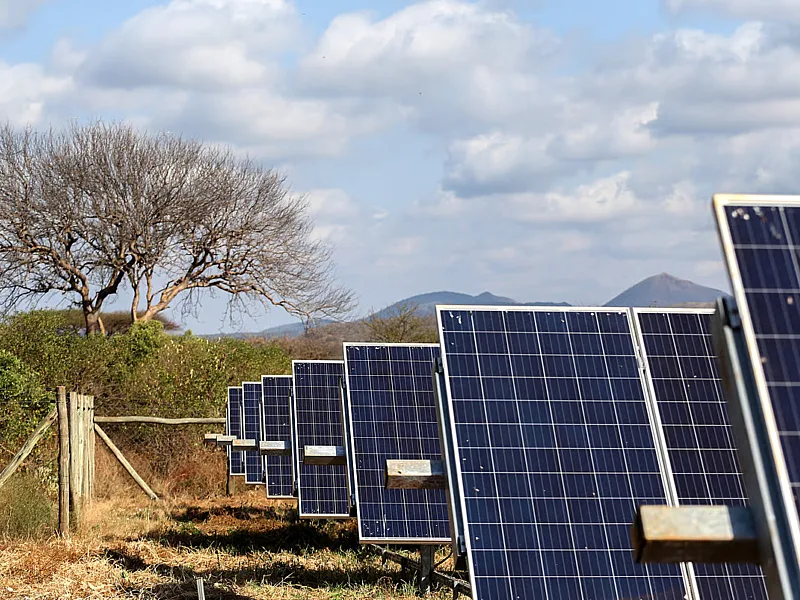
West Africa Bets Big on Solar, Storage, and Data-Driven Power
West Africa is turbocharging its clean energy future with big bets on solar, battery storage, and smart financing to bridge the region’s toughest power gaps.
Deep dive
Retirement Income Playbook: Dividends, Super, or Annuities?
Retirees face a high-stakes showdown between dividend shares, superannuation, and annuities as they hunt for dependable, inflation-proof monthly income.

Deep dive
AI Arms Race Heats Up in Narrative Detection Tech
The AI arms race to detect and shape emerging narratives is moving from tracking tweets to outsmarting entire influence campaigns—before they even break.
Deep dive
Drones Go Mainstream: Airspace, Offshore, and Ports Get Smarter
Drones are officially mainstream—revolutionizing everything from airspace logistics to offshore inspections and port safety with AI, autonomy, and real-time data.
Deep dive
Africa’s ESG Shift Demands Audit-Ready Data
Africa’s ESG race is no longer about glossy reports—companies now face urgent pressure to deliver audit-ready, finance-grade data as mandatory global standards loom.
Deep dive
XPeng’s Robot Spin-Off Draws Billions, But Doubts Linger
XPeng’s $900 million robotics spin-off wowed investors on paper, but the real test is whether Dogotix can mass-produce humanoid robots before XPeng’s razor-thin EV margins run out of road.
Trend
Lavazza Pushes Regenerative Coffee Into SKU-Level Proof
Regenerative coffee is crossing from narrative into verifiable product claims, and Lavazza’s SKU-level launch is a clear marker of that shift. As sustainability rules tighten, brands need auditable farm data, traceability, and MRV systems that can defend claims at the product level. The market is moving toward compliance-native infrastructure that turns regenerative practices into retailer- and regulator-ready proof.
Trend
Tessenderlo Takes a Minority Seat in FMC’s Crop-Input Governance
Tessenderlo’s investment in FMC signals a broader AgTech and crop-input shift toward minority governance as a strategic control mechanism. Rather than pursuing full mergers, firms are using board rights, preemptive protections, and ownership thresholds to influence portfolio access, channel priority, and capital allocation. That makes governance terms a new battleground for crop-input platforms and raises the value of balance-sheet-backed influence.
Trend
Milestone Stacking Becomes the New Financing Edge
Biotech capital is rotating toward companies that can deliver a series of near-term milestones, using each clinical or regulatory step to strengthen the next financing. Recent raises from Viking, ADARx, and Enveda show that investors are rewarding stacked proof points—such as Phase 3 initiation, enrollment completion, and durability data—more than late-stage labeling alone. The result is a financing model that favors execution velocity, catalyst density, and services that help programs reach the next value inflection faster.
Trend
AWS and Novo Nordisk Push AI From Platform to Production Workflow
Biotech AI is shifting from platform experimentation to operational deployment, with AWS and Novo Nordisk signaling demand for workflows that connect models directly to wet-lab and enterprise systems. The key value is no longer model novelty alone, but measurable gains in cycle time, cost, and reuse across R&D and manufacturing. That makes interoperability, APIs, and data harmonization central to vendor differentiation and future adoption.
Trend
SPS Commerce and CargoSense Extend Agentic Control to Exceptions and the Physical Edge
Supply chain software is evolving from visibility and exception detection into agentic control that can resolve issues inside execution workflows. SPS Commerce’s MAX and CargoSense’s edge telemetry show where the first measurable gains are appearing: faster compliance, fewer manual touches, and quicker recovery from operational disruptions. The next competitive advantage will go to platforms that combine data, workflow, partner connectivity, and AI agents into a system of action.
Trend
Hanwha’s Pine Bluff Plant Extends the Capacity Race Into Ammunition Components
Hanwha’s Pine Bluff Arsenal project signals that the munitions race is no longer just about adding assembly lines; it is about securing the upstream components that make large-scale production possible. By targeting shell components, propellant charges, and base-bleed units, the company is addressing the bottlenecks that limit 155mm output across the supply chain. That matters because defense advantage is increasingly defined by qualified throughput and resilient industrial depth, not just headline capacity announcements.
Trend
CCA Procurement Turns Into a Multi-Line Production Program
Collaborative Combat Aircraft procurement is evolving into a multi-line production model that buys air vehicles, mission autonomy software, and reusable control infrastructure in parallel. That shift matters because it moves CCA from one-off prototypes toward a scalable, standards-driven force architecture that can be integrated across platforms and domains. The winners will be vendors that own the autonomy stack, edge compute, and integration pathways rather than just the airframe.
Trend
NATO and the USAF Turn Autonomy Into a Procurement Standard
NATO and the USAF are converting autonomy from an experimental capability into a procurement baseline, reshaping how allied forces buy, integrate, and field unmanned systems. The shift favors vendors that can meet shared standards, support manned-unmanned teaming, and deliver at scale across allied formations. As procurement becomes doctrine-driven, the market will increasingly reward interoperable mission systems, resilient counter-UAS, and industrial capacity.
Trend
Crux AI’s $22 Billion TPU Financing Brings Accelerator Capacity Into Project Finance
Crux AI’s $22 billion TPU financing marks a shift from buying AI accelerators to financing them as infrastructure assets. That matters because it gives cloud builders a new way to fund scarce compute at scale, but it also forces lenders and operators to price utilization, demand durability, and resale assumptions like project-finance risks. The trend points toward a market where accelerator capacity is increasingly securitized, making capital structure as important as chip supply.
Trend
CoreWeave and Nebius Turn AI Capacity Into Financed Growth
CoreWeave and Nebius are showing that AI cloud capacity can be scaled like financed infrastructure: secure the chips, lock in long-duration contracts, and fund the physical buildout. Strong backlog growth and rising revenue confirm demand, but the real differentiator is access to capital and disciplined utilization. The trend points toward a more fragmented AI cloud market where financing, power, and accelerator control determine who can grow fastest.
Trend
Vaulted Deep and ADM Show Carbon Removal Can Be Financed Like Infrastructure
Carbon removal is moving from pilot funding to infrastructure-style finance, where lenders can underwrite contracted demand, verified credit issuance, and predictable operating cash flows. Vaulted Deep’s debt facility and ADM’s planned removal program show that industrial carbon removal can now be financed against real assets and long-term revenue, not just speculative climate demand. The next phase of competition will favor operators that can combine bankable contracts, low-variance execution, and scalable certification pathways.
Trend
Sungrow Turns Grid-Forming Proof Into a Commercial Benchmark
Grid-forming storage is moving from concept to commercial benchmark as vendors demonstrate real-world stability performance in operating projects. Sungrow’s Qinghai proof point shows buyers are increasingly looking for verified oscillation suppression, fast SCR detection, and weak-grid resilience before awarding large contracts. The market is heading toward a tighter procurement standard where validated controls, bankability, and deployment speed determine who wins utility-scale storage deals.
Trend
Grid Compliance Tightens Around Storage Delivery
Grid compliance is tightening around energy storage as projects move through environmental approval, market registration, and operational testing before they can be delivered. That shift is turning compliance into a central bottleneck for batteries and hybrid assets, especially where grid-forming capability, dispatchability, and technical standards determine whether projects can proceed on time. The trend points to a market where execution speed, controls sophistication, and regulatory readiness matter as much as installed capacity.