InsightsLatest
Latest from Drip
Deep dives, recaps, weekly briefs, trends, and expert answers, newest first.
Deep dive
AI's Pay-Per-Token Era: SaaS Abandons Subscriptions as Cost Pressures Mount
As AI compute costs skyrocket, SaaS giants are ditching subscriptions for pay-per-token pricing—forcing enterprises to rethink everything from budgets to vendor strategies.

Deep dive
AI Tax Titans Expand in Asia Pacific, But Human Oversight Remains the Golden Rule
AI-powered tax and compliance platforms are surging across Asia Pacific, but human experts are still the secret sauce that keeps high-stakes accounting error-free.

Deep dive
Ceasefire on a Knife-Edge: U.S.-Iran Standoff Teeters Toward Ground War as Hormuz Blockade Deepens Global Risks
The U.S.-Iran ceasefire is hanging by a thread as hardline posturing, a deepening Hormuz blockade, and a looming ground war threaten to send global markets and geopolitics into chaos.

Deep dive
Private Credit’s High-Wire Act: Surging Defaults, AI Disruption, and a $500B Bank Exposure Spark Regulatory Jitters
Private credit’s $500B exposure, AI-fueled upheaval, and surging defaults are rattling markets and regulators as liquidity cracks widen in 2026.

Deep dive
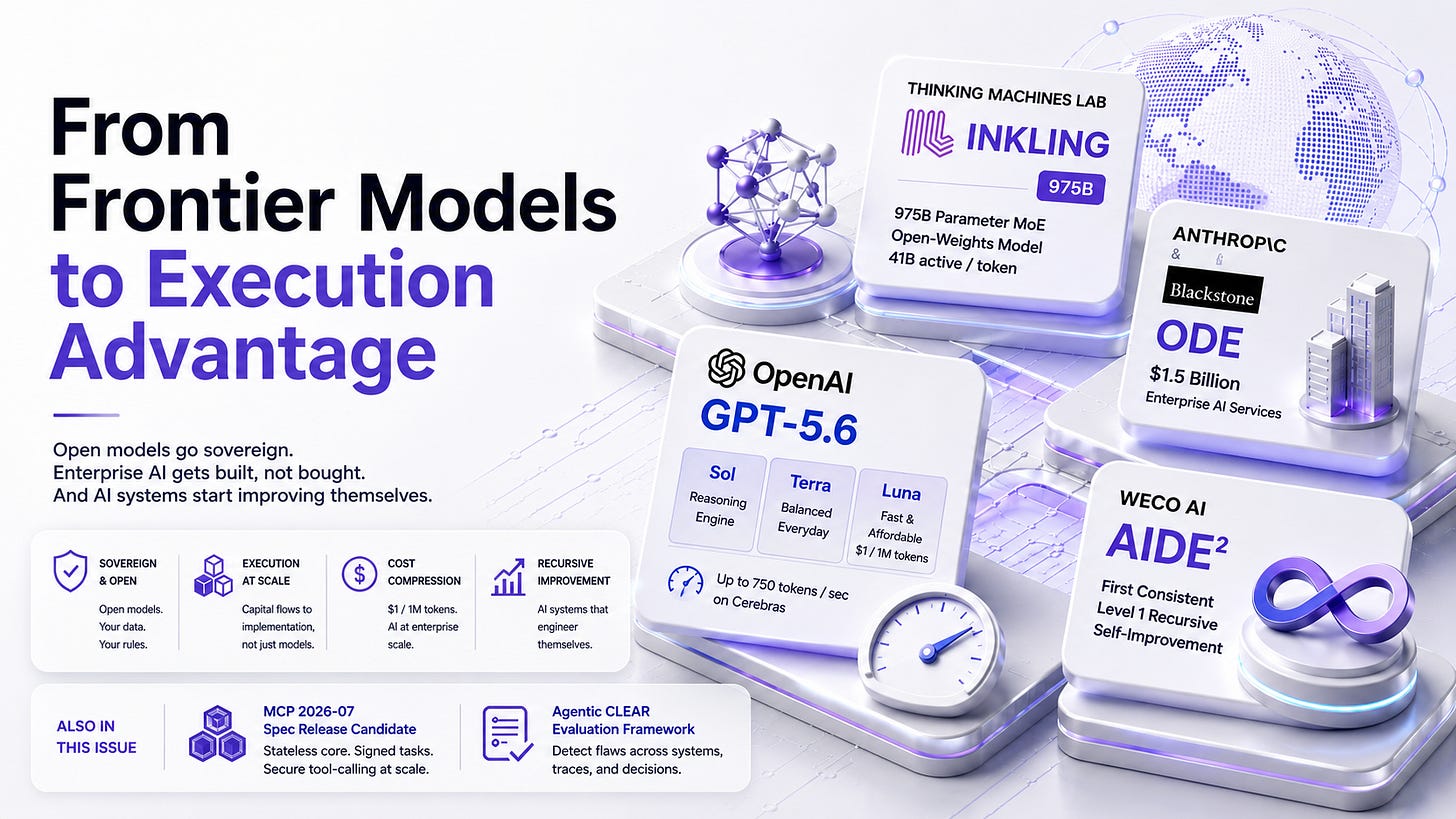
Inkling’s Open-Weight AI Model Shakes Up Global Competition
Thinking Machines Lab’s new 975-billion-parameter open-weight AI, Inkling, is shaking up the global AI race with radical transparency, developer freedom, and benchmark-beating performance.
Deep dive
Shadow AI Surge Exposes Gaps in Legal and Security Oversight
A surge in unsanctioned AI tools is slipping past legal and security teams, exposing enterprises to invisible threats that old-school policies can’t catch.

Deep dive
AI IPO Showdown: OpenAI, Anthropic, and SpaceX Ignite Trillion-Dollar Race—and Employee Wealth Dilemmas
The AI IPO arms race—featuring OpenAI, Anthropic, and SpaceX—has unleashed trillion-dollar valuations, wild new ways to spend tech equity, and a scramble for market dominance that could reshape wealth and risk for years to come.

Deep dive
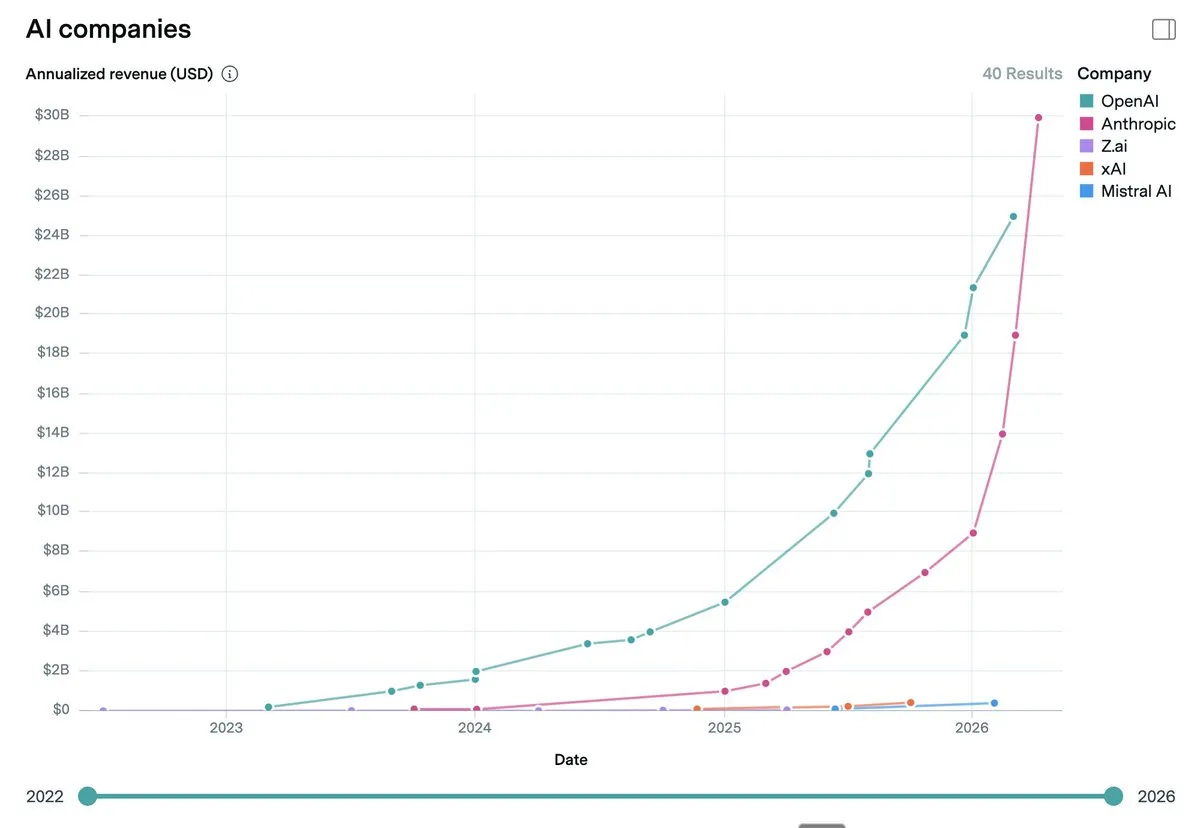
Anthropic’s $30B Surge Hits a Compute Ceiling, Forcing Tough Choices Amid OpenAI Rivalry
Anthropic’s meteoric $30B revenue surge has outpaced OpenAI and its own compute capacity, forcing strategic choices as enterprise demand explodes.
Deep dive
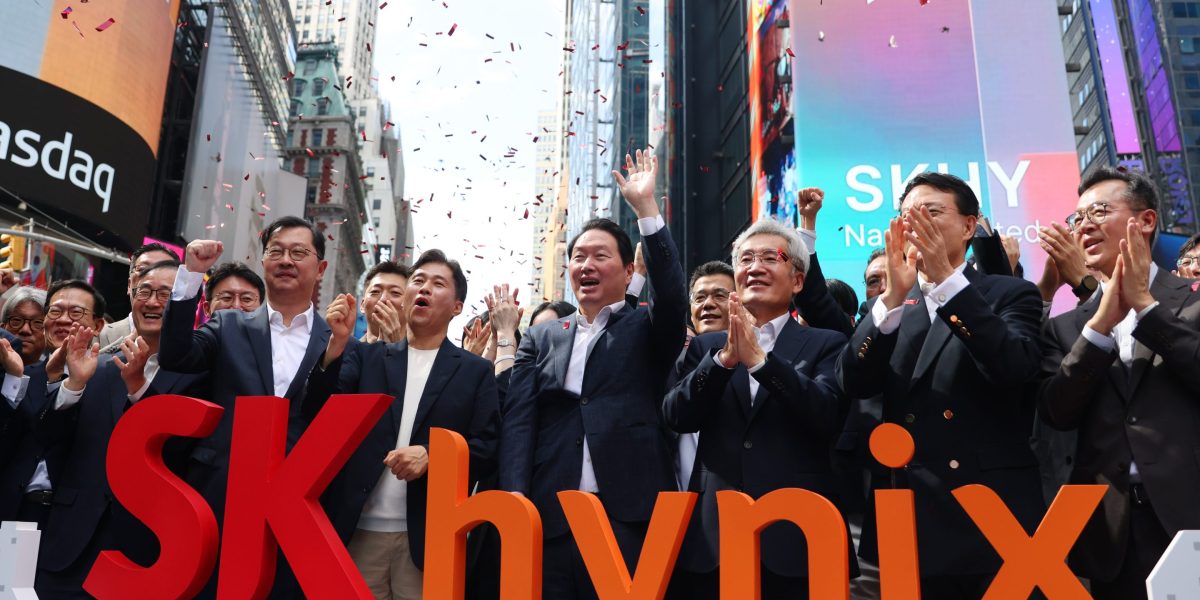
AI Memory Arms Race Heats Up: Samsung, SK Hynix, and Micron Battle Bottlenecks and Billion-Dollar Bets
Samsung, SK Hynix, and Micron are pouring billions into high-bandwidth memory as AI demand triggers a supply squeeze and reshapes the global chip power balance.
Deep dive
Cotiviti’s AI Platform Pushes Healthcare ROI Forward
Clinicians and cutting-edge AI platforms are teaming up to slash healthcare waste, turbocharge care coordination, and put patients back in the driver’s seat.

Deep dive
AI Eases Doctor Burnout—But Clinician Trust and Skill Fears Cloud Healthcare’s Digital Leap
AI is turbocharging clinician efficiency and slashing burnout, but trust issues and fears of skill erosion threaten to stall healthcare’s digital leap.

Deep dive
Claude Code Turns Memory Into Infrastructure as Users Trust It With Longer Runs
Claude Code is evolving from a disposable chat assistant into a persistent project brain—one that remembers people, decisions, mistakes, and context across sessions so longer runs actually get smarter instead of starting over.

Trend
Traceability Shifts from Compliance Tool to Market-Access Infrastructure
Traceability is shifting from a compliance afterthought to market-access infrastructure as regulators demand granular, machine-readable proof of origin, legality, and chain of custody. The EU Deforestation Regulation and U.S. FSMA 204 are forcing companies to embed provenance data into core supply-chain workflows, raising the bar for suppliers and software vendors alike. The winners will be platforms that can serve as the system of record for regulatory-grade evidence across sourcing, production, and logistics.
Trend
Mexico’s Tariff Pivot Extends the Routing War
Mexico’s tariff pivot is extending the routing war by making corridor choice a compliance decision as much as a cost decision. With U.S. pressure on transshipment and renewed USMCA uncertainty, operators must manage origin proof, customs clearance, and rerouting across ocean, truck, and nearshoring networks. The market is shifting toward software-enabled logistics and compliance infrastructure that can preserve capacity access and keep supply chains moving as trade controls tighten.
Trend
Takt Raises the Stakes on Real-Time Execution Proof
Warehouse automation is moving from orchestration to real-time execution proof, where platforms verify work, correct errors, and reallocate resources as operations change. Takt’s expansion signals demand for software that sits above existing automation and turns WMS, robotics, and material-handling systems into a closed-loop execution layer. The next competitive edge will come from vendors that can prove outcomes, not just coordinate tasks.
Trend
AGCO and Deere Push Automation Into Factory Defaults and Retrofit Grain Cart Workflows
AGCO and Deere are pushing agricultural automation from pilot projects into default equipment architecture. Deere is embedding precision capabilities at the factory level, while AGCO is monetizing the installed base with retrofit autonomy that can be deployed on existing tractors. The immediate payoff is in workflow automation like grain cart operations, and the broader direction is toward standardized, interoperable systems that can scale across fleets.
Trend
Input Savings Are Becoming Precision Ag’s Buying Trigger
Precision ag is increasingly being bought for measurable input savings rather than for autonomy as a standalone feature. Vendors are packaging sensing, spot application, and automation into workflows that can prove reductions in herbicide use, labor costs, and payback time. The next phase of adoption will favor systems that can consistently show economics across crops, conditions, and equipment channels.
Trend
Split-Territory Licensing Is Becoming the New China-Origin Deal Template
Split-territory licensing is becoming the default monetization template for China-origin biotech assets. By separating mainland China rights from ex-China development and commercialization, companies can preserve domestic upside while giving global buyers a cleaner, faster path to de-risked assets. The model is expanding beyond oncology into broader therapeutic areas, signaling a more mature and exportable China biotech deal market.
Trend
Chai, insitro, and ElevateBio Turn the Reusability Thesis Into Mega-Rounds
Biotech capital is increasingly flowing to reusable platform companies that can produce multiple programs, not just a single therapeutic candidate. Mega-round financings for Chai, insitro, and ElevateBio, along with large pharma collaborations, show investors and partners are underwriting scalable discovery engines with measurable output. The next phase of the market will favor platforms that can prove faster timelines, lower costs, and repeatable asset generation across programs.
Trend
Enzene’s $80 Million Plant Puts Continuous Manufacturing on the Cost Curve
Enzene’s $80 million EnzeneX facility signals that continuous manufacturing is becoming a practical cost-curve advantage in biologics, not just a future-state concept. By combining intensified perfusion, multi-column chromatography, and modular bioreactors, the plant aims to deliver materially higher productivity in a much smaller footprint than conventional facilities. That matters because the competitive question is shifting from whether capacity exists to whether it can be run economically across volatile demand and complex tech transfers.