InsightsLatest
Latest from Drip
Deep dives, recaps, weekly briefs, trends, and expert answers, newest first.
Deep dive
AI Agents Take the Trading Floor: Retail Platforms Race to Balance Automation with Oversight
AI agents have stormed the retail trading floor, forcing platforms to juggle explosive automation demand with a brand new playbook for security and oversight.

Deep dive
Context Is King: Unified Layers Redefine Enterprise AI’s Competitive Edge
Unified context layers have overtaken flashy AI models as the must-have secret sauce for enterprises, driving massive leaps in accuracy, scalability, and operational trust.

Deep dive
NVIDIA’s Agentic AI Toolkit Sparks Industry Shakeup—But BioNeMo’s Lab Invasion Faces Adoption Hurdles
NVIDIA's Agentic AI Toolkit has unleashed a new era of intent-driven automation across industries, but its bold push into life sciences with BioNeMo is running headlong into adoption hurdles.

Deep dive
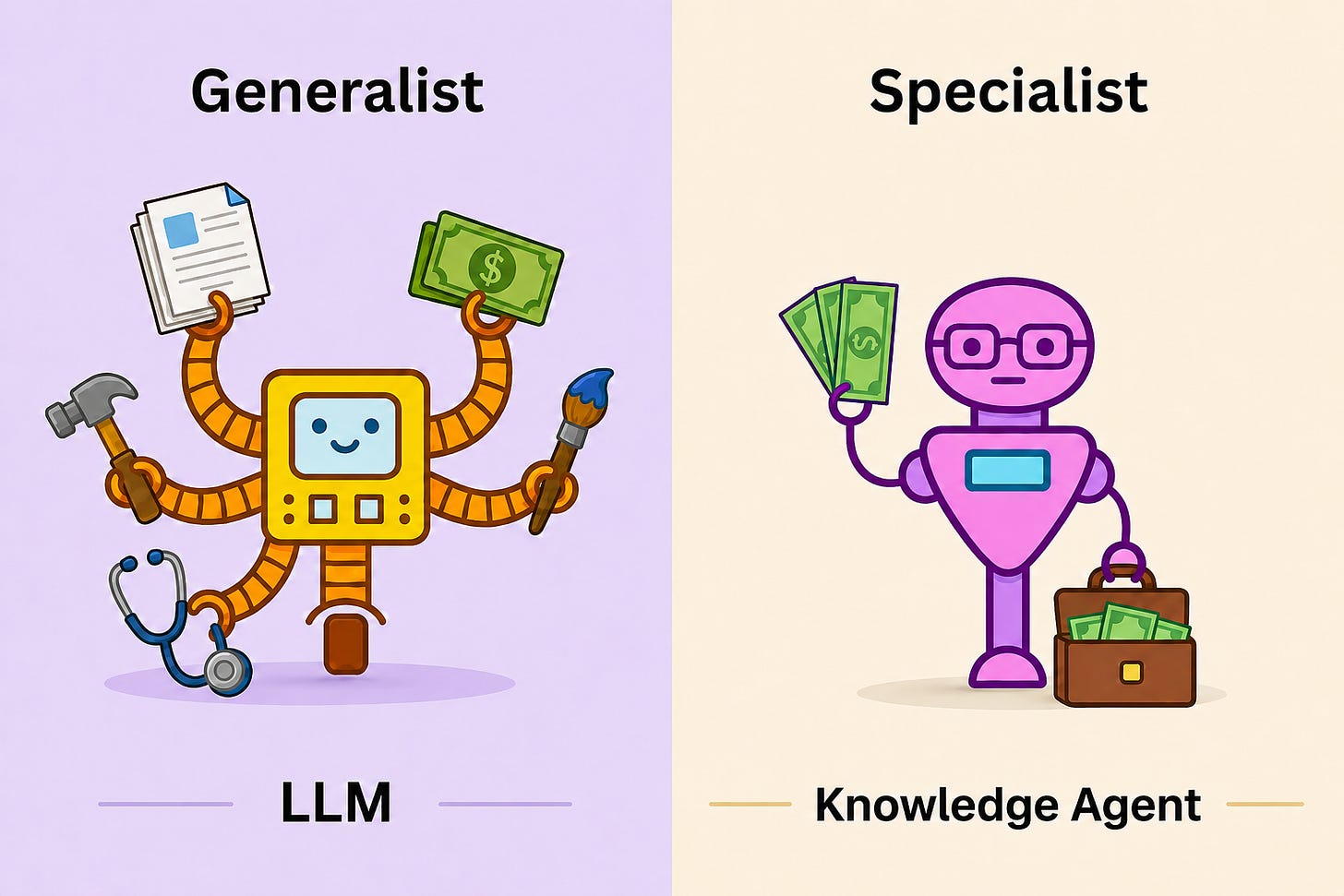
AI Agents Double Output, Shift Developers to Oversight
AI agents like Claude Code and Cursor have doubled developer productivity by turning coders into strategic conductors of autonomous software workflows—but the real battle in 2026 is over oversight, governance, and who controls the new agentic frontier.
Deep dive
Telecom’s AI Revolution: From Whitepapers to Real-World Autonomy, Industry Races Toward Self-Driving Networks
Telecom giants are hurtling from AI-powered theory to real-world, self-driving networks—slashing rollout times, crushing outages, and racing to own the future of connectivity.

Deep dive
AI Agents Flood Enterprises, But Governance Struggles to Keep Afloat—Industry Races to Plug Security Gaps
AI agents are flooding enterprises faster than security teams can build guardrails—leaving critical gaps in governance, trust, and risk management.

Deep dive
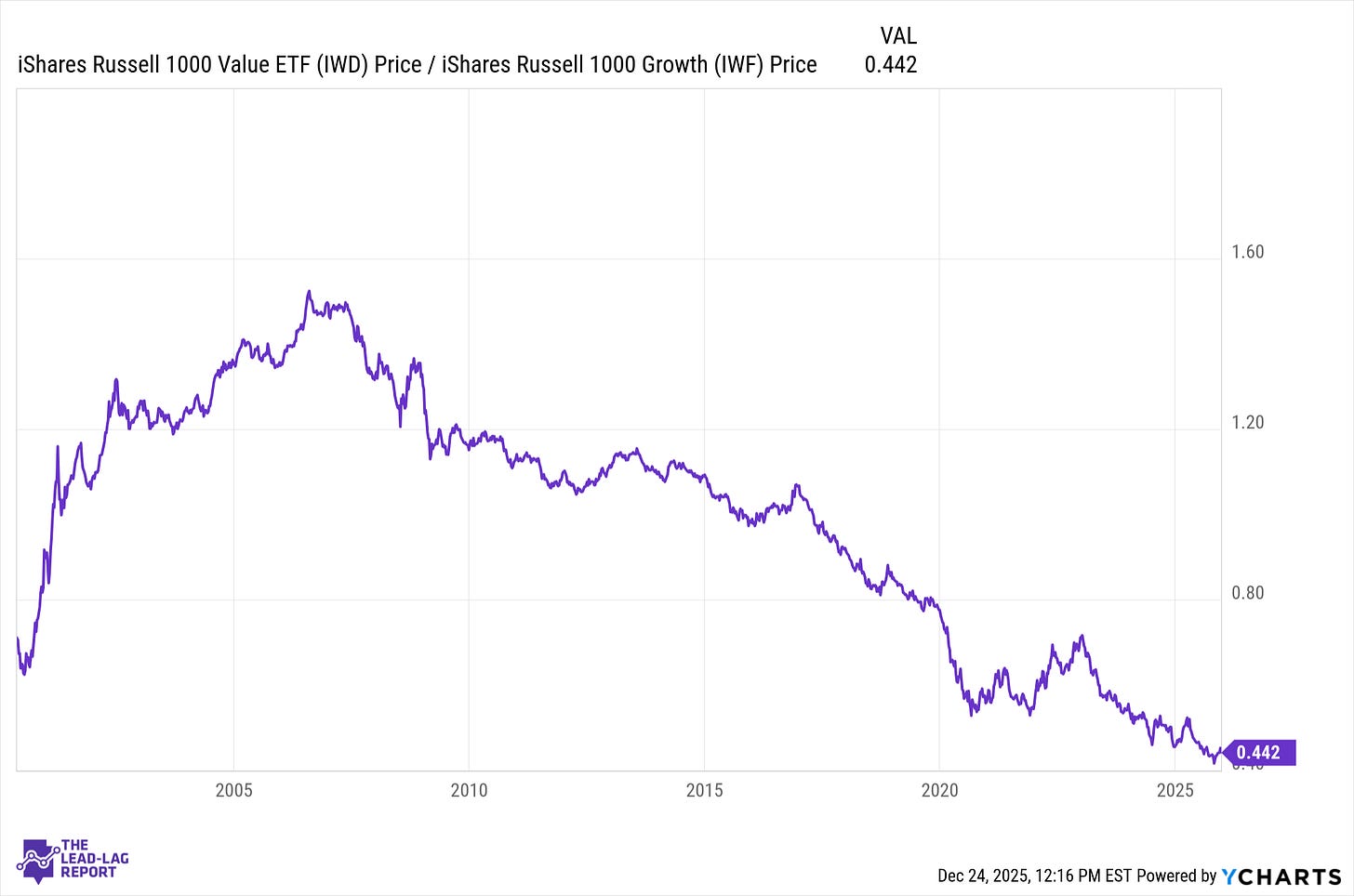
Healthcare Leads as Tech Rotation Deepens
Global markets are flipping the script, as investor money floods out of tech and AI giants and into defensive sectors like healthcare, utilities, and financials amid mounting geopolitical and inflation worries.
Deep dive
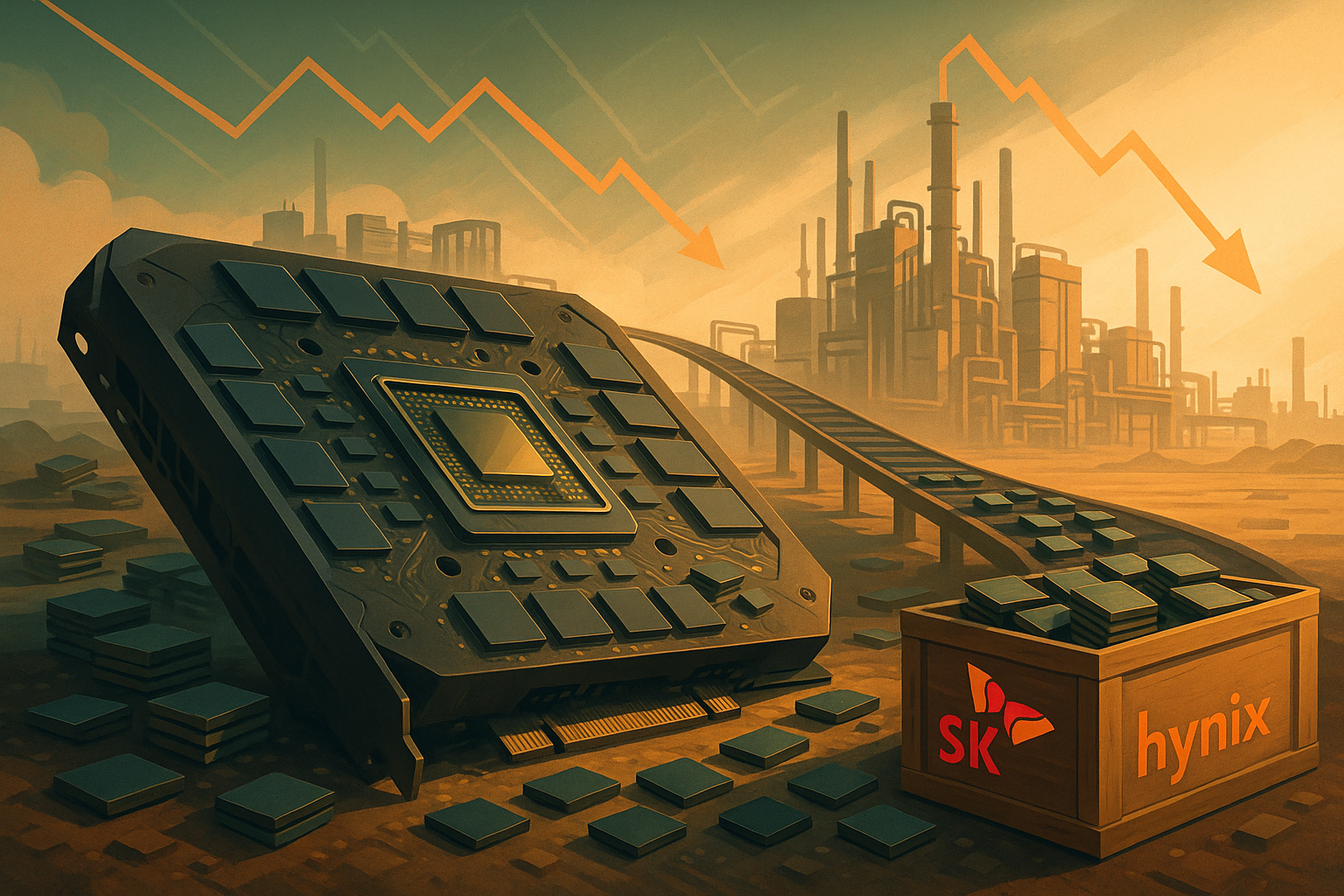
Nvidia Cuts Rubin Ultra Memory as HBM Soars
Nvidia is slashing planned memory on its next-gen Rubin Ultra GPUs—down from a massive 1TB to just 192GB per chip—as skyrocketing demand and supply chaos send high-bandwidth memory prices through the roof.
Trend
SpaceX’s $1.75 Trillion IPO: Sky-High Hype, Super-Voting Power, and a Passive Buying Frenzy Stir Investor Jitters
SpaceX’s $1.75 trillion IPO crystallizes a broader market shift toward “vision-first” valuation, where investors price ambitious AI- and space-enabled platforms far beyond near-term fundamentals. The offering is driven by AI-fueled late-cycle risk appetite, but also by structural mechanics: rapid index inclusion forces passive funds to buy large blocks quickly, tightening liquidity and amplifying volatility. At the same time, a super-voting share structure concentrates control, weakening typical governance checks while retail participation rises. Together, these dynamics matter because they test whether markets can absorb extreme pricing and forced flows without destabilizing investor confidence.
Trend
Wearables Go AI: Smartwatches and Rings Battle for Your Wrist—and Your Subscription
The ongoing arc is a market-wide shift from wearables as passive trackers to wearables as AI-driven health coaches, with smartwatches and smart rings competing to become the user’s primary wellness interface. The change is driven by advances in on-device and cloud AI, improved biometric sensing, and platform-level data integration that enables personalized guidance across devices. It matters because consumers now face a tradeoff between feature-rich, subscription-supported ecosystems and minimalist, lower-cost devices that emphasize simplicity and battery life. As a result, the industry is redefining value around ongoing coaching versus one-time hardware utility.
Trend
Industrial Stocks Ride Oil Price Plunge and Geopolitical Thaw, But Cautious Guidance Tempers Rally
Industrial stocks have been riding a macro-driven rebound as a sharp oil price plunge—linked to eased US-Iran tensions and a Trump–Xi deal to keep the Strait of Hormuz open—reduced both energy costs and geopolitical risk premiums. That tailwind has been reinforced by generally strong first-quarter earnings and ongoing demand for filtration and water infrastructure, supported by environmental regulation and targeted capacity expansion. However, the rally’s throughline is tempered by investor skepticism: cautious profit guidance, tariff uncertainty, and lingering geopolitical volatility have repeatedly turned earnings beats into mixed or negative reactions. The result is a market-level rotation into industrials that remains fragile, reflecting a shift from pure growth optimism toward risk-adjusted, guidance-sensitive positioning.
Trend
Healthcare Winners and Wallflowers: ResMed Shines as Select Medical and Biogen Stumble
The ongoing arc is a widening profitability divide in healthcare, where investors increasingly reward capital efficiency and durable earnings rather than top-line growth alone. The underlying shift is a move toward operational and digital execution—exemplified by leaders expanding product ecosystems, improving supply chains, and sustaining margins despite cost pressures—while laggards are constrained by high debt, limited flexibility, and margin compression. Drivers include rising input costs, slower conversion of revenue into shareholder returns, and tighter capital-market scrutiny. This matters because it reshapes which business models can fund innovation and withstand volatility.
Trend
Sticker Shock Lingers: Home Insurance Costs Plateau, But Wallets Still Feel the Burn
After years of steep, double-digit premium growth, U.S. homeowners insurance pricing is beginning to plateau as rate hikes cool, suggesting early market stabilization. Yet affordability remains strained because premiums are still at record levels—now consuming about 9% of the average mortgage payment, far above 2019—and they are rising faster than household income and inflation. The underlying drivers include persistent high loss costs and tighter underwriting, which have also reduced coverage value, widening the protection gap. In parallel, escrow shortages tied to higher insurance and property taxes add roughly $180 per month for most borrowers, keeping the “sticker shock” felt even as headline rate growth slows.
Trend
Turbulence and Triumph: Qantas and Virgin Fly High on Dividends, While Webjet Hits Market Turbulence
Australia’s airline market is entering a dividend-and-resilience phase as carriers rebound from recurring turbulence driven by volatile fuel prices, geopolitical risk, and shifting distribution economics. The underlying shift is a move toward shareholder-return strategies—higher dividend yields and buybacks—supported by stronger cost control, loyalty-driven demand, and more sophisticated fuel hedging that dampens earnings swings. At the same time, competitive pressure is reshaping third-party sales and commissions, creating knock-on volatility for online travel intermediaries. This matters because it rewards balance-sheet discipline and risk management, while making cash-flow stability a key differentiator for investors.
Trend
Johnny Dee’s Daily Strands Guides Help Players Crack Puzzles and Keep Streaks Alive Worldwide
A new, ongoing “daily expert guide” model is reshaping how players engage with NYT’s Strands word game as puzzles grow more complex and release across time zones. Driven by the game’s escalating difficulty and the social pressure of maintaining streaks, creators like Johnny Dee provide rapid, structured hinting—covering current and prior puzzles, spangram analysis, and answer breakdowns—to reduce friction for global audiences. This matters because it turns solitary daily play into a coordinated, worldwide learning loop, accelerating community mastery and making Strands a mainstream competitor in the daily puzzle ecosystem.
Trend
India Turns Up the Heat on Chip Self-Reliance After Iran Crisis Sparks Semiconductor Surge
The arc centers on India’s pivot from importing and assembling chips toward semiconductor sovereignty after the 2026 Iran crisis exposed how geopolitical tech disruptions can cripple critical industries. In response, India is accelerating both manufacturing capacity—through multi-billion-dollar fab and display investments and global partnerships—and design capability via Semiconductor Mission 2.0 ecosystem-building and incentives. The shift is driven by demand from AI, automotive, and energy sectors and by a strategic preference for resilient alliances over isolation. Its main constraint is a severe shortage of advanced chip designers, which could bottleneck progress even as startup funding surges to develop AI- and power-efficient proprietary IP.
Trend
SpaceX IPO: Musk’s Iron Grip Sparks Investor Jitters Over ‘Unfireable’ CEO and Governance Gaps
The arc centers on a shift from traditional, shareholder-protective public-company governance toward founder-supremacy structures enabled by dual-class voting and regulatory fast-tracking. As exchanges and index-driven capital flows accelerate mega-cap IPOs, investors increasingly accept reduced oversight—particularly when insiders hold outsized voting power that can make leadership removal effectively impossible. This entrenchment is further amplified by related-party financial ties that blur transparency and raise concerns about hidden liabilities. The market-level impact is a growing governance gap: public investors bear more risk while formal accountability mechanisms weaken.
Trend
Pope’s AI Manifesto Ignites Global Reckoning Over Tech Power and Human Dignity
Pope Leo XIV’s encyclical, *Magnifica Humanitas*, reframes AI as a civilizational moral reckoning, arguing that unchecked deployment is eroding human dignity and widening inequality while exposing regulatory blind spots. The underlying shift is a move from treating AI primarily as an engineering race to treating it as a governance and safety problem, driven by fears of misalignment, public distrust, and the mismatch between fast-moving capabilities and slow, fragmented laws. This matters because it is accelerating global pressure for transparent, participatory oversight and democratic control over AI’s infrastructure and societal impacts.
Trend
Trump’s $1.8B Immunity Fund and Billion-Dollar Trades Ignite Historic Corruption Firestorm
The arc centers on a shift from traditional political fundraising and influence to a profit-driven model of governance in which public office is treated as an operating platform for private enrichment. Driven by opaque financial networks—high-frequency stock trading, government-contract capture, and cross-border crypto ventures that can bypass sanctions—this model is amplified by an unprecedented use of legal and institutional mechanisms, including a secretive $1.8B DOJ/IRS settlement fund that limits tax and regulatory scrutiny for Trump and allies. At the market and industry level, the resulting erosion of conflict-of-interest norms and enforcement credibility threatens investor confidence, distorts compliance incentives, and intensifies bipartisan pressure for structural oversight.
Trend
EU's Age-Check Crackdown Stumbles as Kids Outsmart AI and Regulators Double Down
The EU’s push to embed privacy-first, AI-based age verification into national digital identity systems marks a shift from voluntary platform checks toward enforceable, identity-linked compliance. Its drivers are rising concern over minors’ exposure to harmful content and the belief that digital ID can make age gating more reliable. However, widespread circumvention—often aided by parents and simple “offline” tricks—has exposed technical and behavioral gaps, while legal battles and new rules like the GUARD Act intensify a regulatory arms race. This matters because it tests whether identity infrastructure can realistically protect children without triggering new security risks or stifling innovation.