InsightsLatest
Latest from Drip
Deep dives, recaps, weekly briefs, trends, and expert answers, newest first.
Deep dive
AI Benchmark Chaos Spurs Shift to Dynamic, Private Testing
AI’s public benchmarks are cracking under pressure, forcing the industry to ditch static leaderboards for dynamic, private, and domain-specific tests.

Deep dive
Local AI Goes Mainstream as Token Costs Spark Shift
Soaring cloud token bills and compliance headaches are driving enterprises to bet big on local AI stacks, as vendors like Dell and NVIDIA roll out powerful on-prem solutions promising massive savings.
Deep dive
AI Upends Travel: China’s Boom, Marketers Scramble to Catch Up
AI is racing ahead in travel, with China’s tourism boom going structural—and the industry scrambling to keep up with tech-savvy travelers already planning trips with bots.

Deep dive
Voice AI Breaks Free From Screens—But Privacy Fears Surge
Voice AI is breaking out of your phone and into the real world—but the price for always-on convenience is a privacy minefield no one has defused.

Deep dive
Apple’s HomeView Debut Met With Skepticism and Sticker Shock
Apple’s long-delayed HomeView smart display finally hits shelves at $299—but critics are already calling it a late, pricey, and possibly unnecessary entrant to a crowded market.

Deep dive
Cadre’s Backlog Boom Fails to Sway Skeptical Investors
Cadre’s surging backlog and revenues aren’t winning over investors as shrinking margins and a falling stock price fuel a fierce debate over whether growth can actually deliver profits.
Deep dive
Programmable World Models Redefine AI Simulation Standards
Programmable world models are shattering old AI simulation standards by splitting memory from rendering—and delivering stateful, verifiable environments that finally keep up with reality.

Deep dive
AI Data Centers Ditch the Grid as Bottlenecks Bite
AI data centers are unplugging from the grid at breakneck speed, as slow connections and soaring demand force operators to build their own power plants.

Deep dive
CommonSpirit Fast-Tracks Hospital Sales in Turnaround Blitz
CommonSpirit is racing to unload hospitals, slash overhead, and overhaul its entire operating playbook as it confronts a $6 billion deficit and sector-wide financial headwinds.
Deep dive
Tablet Buyers Trade Up as Budget Models Vanish in India
India’s tablet market is flipping the script as memory chip inflation wipes out budget models, pushing buyers to snap up premium devices at deep festival discounts.
Deep dive
AI-Powered Blood Tests Hit FDA Fast Track, Fuel Funding Surge
AI-powered multi-cancer blood tests just scored FDA Breakthrough status, vaulting liquid biopsy from hype to high-stakes investment—and real-world impact.
Deep dive
Therapeutics Stocks Surge as Earnings Trump Pipeline Hype
Therapeutics stocks are surging as real earnings—and not just pipeline buzz—push sector valuations to new highs.
Deep dive
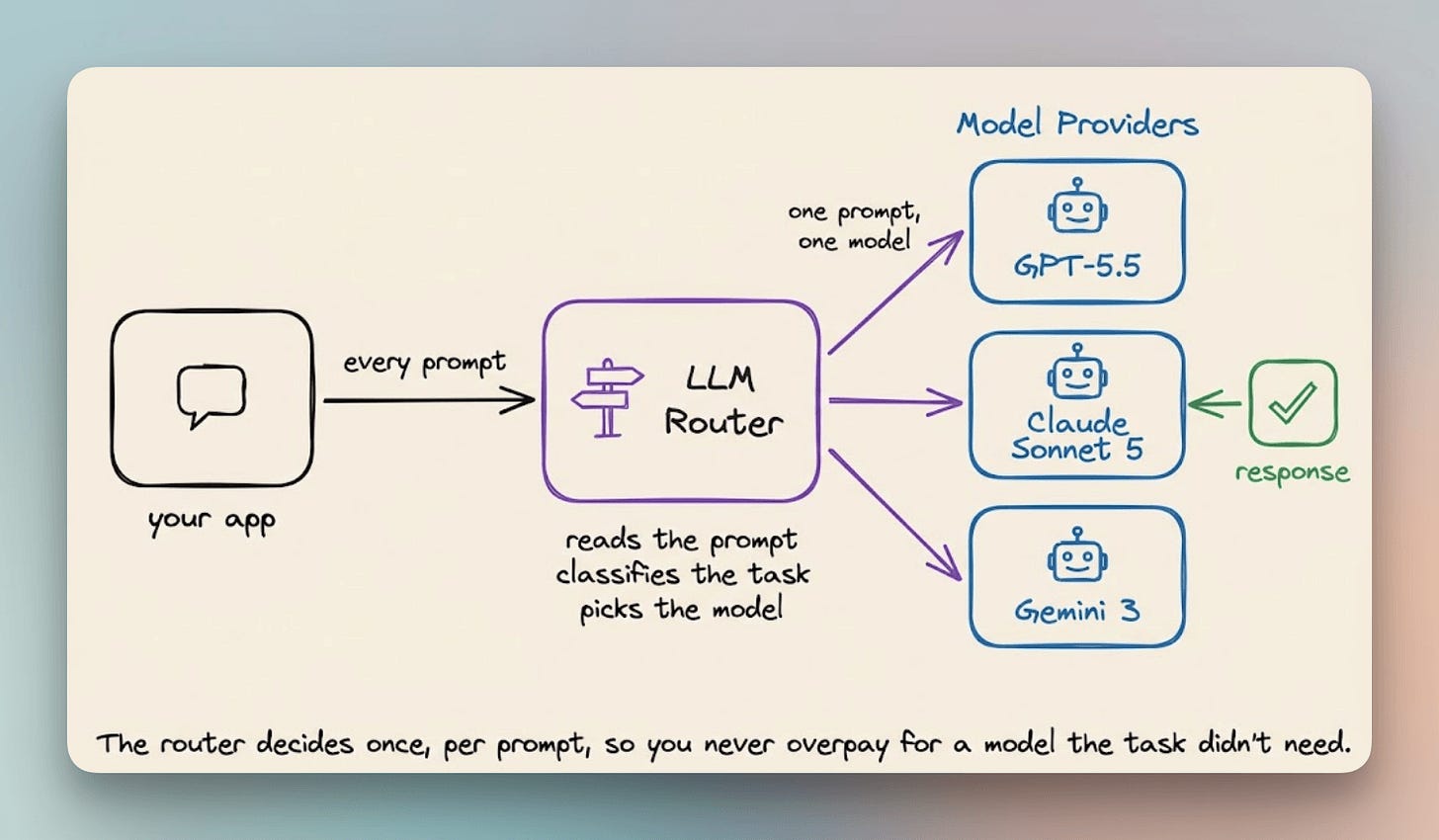
AI Token Bills Soar: Routing Tools Become Cost-Saving Lifeline
AI token costs are spiraling out of control as agentic workflows multiply usage, forcing enterprises to deploy smart routing tools just to keep their budgets alive.
Deep dive
Virtual Validation Turbocharges Software-Defined Car Revolution
Virtual validation is slashing development times and fueling a $1.6 trillion software-defined vehicle revolution, as automakers race to unshackle cars from hardware and future-proof their fleets.
Deep dive
B2B Marketers Abandon Last-Touch for Blended ROI Metrics
B2B marketers are ditching last-touch attribution in favor of blended ROI metrics that can actually survive the new era of 18-month, 417-touchpoint buying journeys and relentless CEO scrutiny.
Trend
Quantum Systems and Leidos Extend the Orchestration Layer
Defense tech is moving toward orchestration layers that sit above heterogeneous hardware and unify autonomy, logistics, and mission execution. Recent programs show one software stack coordinating multi-domain unmanned systems, while sustainment platforms are being modernized with AI automation and enterprise workflow control. The market is heading toward integrated mission software that reduces cross-domain integration burden and creates recurring revenue around updates, certification, and sustainment.
Trend
Mission Software and Manufacturing Are Converging on the Interface Layer
Mission software and manufacturing are converging on the interface layer, where defense buyers want capabilities that can bridge operations, cyber defense, sustainment, and production without triggering a new acquisition cycle. Recent OTA awards and additive manufacturing agreements show the market moving from prototypes to fieldable, software-defined systems that can be refreshed faster and integrated more easily. The next competitive edge will belong to vendors that control the connective layer between mission planning, hardware, and sustainment.
Trend
Greeneye Scales Aftermarket Selective Spraying Across the Plains
Greeneye’s Plains expansion shows selective spraying moving from field validation to commercial scale. By retrofitting existing sprayers and leaning on dealer and service partners, the company is proving that precision weed control can spread faster and with less capital friction than autonomy-led replacement models. The next test is whether its ROI, service throughput, and regional coverage can hold as acreage grows.
Trend
UFLPA and COINS Push Biotech Counterparty Risk Into Deal Pricing
UFLPA enforcement and the proposed COINS regime are turning biotech counterparty risk into a pricing variable, not just a compliance check. Deals tied to China-linked ownership, control, technology transfer, or exposed supply chains now face higher execution risk, tighter structures, and lower valuations. The market is shifting toward cleaner domestic or allied supply chains, arm’s-length licensing, and jurisdiction-segmented development and manufacturing.
Trend
Flagship’s Etcelera Merger Shows the Platform Race Is Now About Proprietary Biology
Biotech platform competition is now centered on proprietary biology, not generic AI tooling. Flagship’s Etcelera merger shows the next phase: combining unique datasets, predictive models, and automated experimentation into integrated systems that can generate internal programs, partnerships, and licensing revenue. That matters because defensible advantage is shifting to platforms that can repeatedly turn data exhaust into validated biology and clinical output.