InsightsLatest
Latest from Drip
Deep dives, recaps, weekly briefs, trends, and expert answers, newest first.
Deep dive
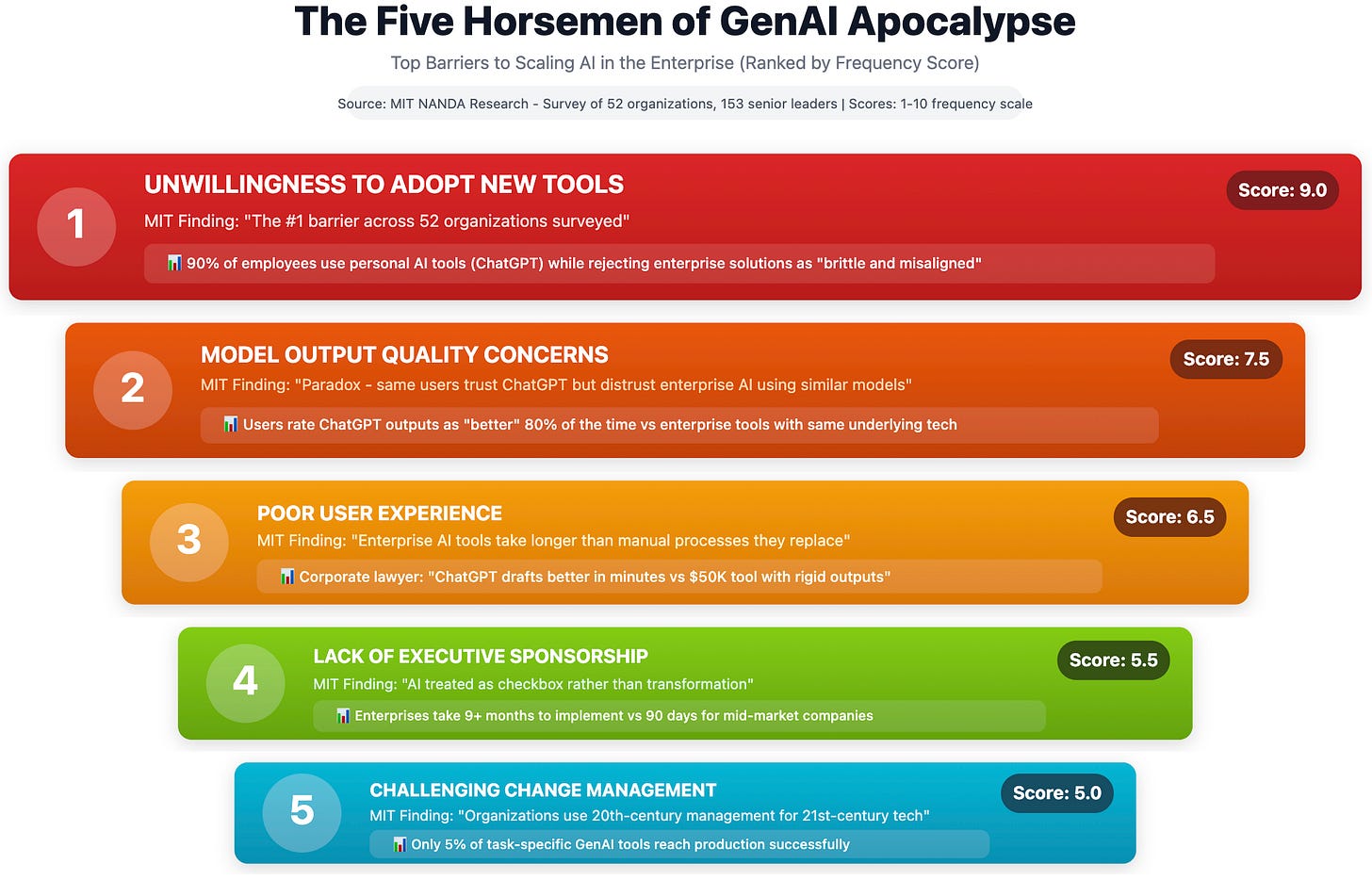
Why Most Enterprise AI Still Fails to Scale
Most enterprise AI projects flop because they automate the surface, while the real winners overhaul workflows, governance, and culture from the ground up.
Deep dive
AI Data Centers Spark Emissions Surge and Grid Chaos in Texas
A runaway boom in AI data centers is turbocharging Texas’s gas-fired power buildout, triggering a projected 20% surge in U.S. power sector emissions and pushing the state’s grid to the brink.

Deep dive
Texas Data Center Freeze Hits Grid, Revenue
Texas just hit pause on nearly 50 GW of new data centers, freezing a fifth of the U.S. market and putting billions in AI-fueled growth at risk.

Trend
Zero Trust Grows Up: Identity Overload, Sovereignty Showdowns, and the End of Checkbox Cloud Security
Zero Trust is maturing from a perimeter-replacement concept into an identity-centric operating model, but it’s colliding with identity overload as AI agents and machine accounts proliferate faster than legacy IAM can govern. That sprawl, alongside fragmented security tooling, is driving record losses and accelerating demand for unified identity governance and verification that can scale across humans, services, and models. At the same time, data sovereignty disputes are shifting from “where data lives” to “who controls and can access it,” exposing the limits of checkbox compliance and weak “sovereign cloud” wrappers. The result is a market-wide move toward protocol-driven, multi-provider control and new operational playbooks—federated learning and confidential computing included—to preserve compliance and resilience in global hybrid environments.
Trend
From Closet to Cash: How Vinted and Luxury Resale Are Rewriting the Fashion Rulebook
A rapid shift from “buy-new” to “buy-and-sell as a default” is turning used clothing into a mainstream, liquid asset class. Driven by household budget pressure, platform-level trust and authentication, and psychologically engaging resale experiences, consumers increasingly check resale before purchasing new—fueling large seller payouts and substantial savings. At the same time, luxury resale is scaling beyond niche channels as major retailers expand authenticated marketplaces across Europe. This matters because circular fashion is becoming a high-growth industry in its own right, projected to expand far faster than primary retail by 2030.
Trend
Unified Data and AI Rewrite Healthcare Playbook: From Pharma to Payers, Silos Fall and Outcomes Rise
Healthcare is undergoing a structural shift from fragmented, siloed data toward unified, interoperable data foundations that can be activated by AI across the care and commercial lifecycle. The change is driven by regulatory mandates (including interoperability requirements and anti–data blocking rules), growing demand for FHIR/API access, and the maturation of AI platforms that integrate clinical, claims, and financial signals to speed decisions. As organizations consolidate “single source” datasets, they reduce cycle times in drug development and marketing planning, improve payer risk management and care quality, and ultimately raise the odds of better patient outcomes.
Trend
Medicare Muscle and Market Moves: Health Insurers Split as Humana Rockets, Elevance Stalls
A widening divergence is emerging across U.S. health insurers as Medicare Advantage becomes the dominant growth engine while customer retention and regulatory execution increasingly determine outcomes. The underlying shift is a market re-rating toward plans that can expand enrollment and manage medical costs under tighter scrutiny, driven by demographic demand, Medicare Advantage penetration, and the operational discipline needed to sustain profitability. In this arc, Humana’s rapid Medicare Advantage momentum contrasts with rivals showing slower or shrinking customer bases, even when financial metrics remain strong. The result matters because it reshapes competitive positioning, investor expectations, and the sector’s ability to scale sustainably.
Trend
DocuSign's Earnings Streak Fails to Sway Skeptics as AI Ambitions Meet Wall Street Woes
A persistent shift is underway in the e-signature and contract lifecycle management market: investors are rewarding near-term execution less than they are demanding clear, monetizable AI-driven workflow expansion. Even as companies post consecutive earnings and revenue beats, cautious guidance, sector volatility, and valuation sensitivity are amplifying skepticism about whether AI features—such as embedded assistants that integrate into tools like Slack—will translate into sustained double-digit growth and meaningful upsell conversion beyond core eSignature usage. This matters because capital is increasingly flowing to vendors that can prove ROI and durable expansion, not just product innovation.
Trend
AI Agents Get Smarter and Cheaper: Persistent Memory, Modular Swarms, and Token Diets Tackle 2026’s $67B Hallucination Crisis
Enterprise AI agents are undergoing a structural shift from stateless, “fat” chat models toward stateful, modular systems that manage context, tools, and knowledge more like software infrastructure. Persistent, auditable memory layers and just-in-time context reduce recomputation and compliance risk, while master–slave swarms isolate tasks to curb hallucinations and improve throughput. On-demand tool loading and semantic routing “token-diet” requests, cutting per-query usage dramatically and lowering inference costs. This matters because it directly addresses the 2026 hallucination-and-cost crisis by making agent behavior more reliable, scalable, and governable.
Trend
EasyJet Takeover Turbulence: Castlelake’s Bid Hits Regulatory Headwinds as Shareholders Demand Premium
The ongoing easyJet takeover saga reflects a broader shift in European aviation toward private-equity-led consolidation, where financial sponsors seek to buy airlines at depressed valuations and then integrate assets across the travel stack. That push is being slowed and reshaped by EU ownership and antitrust constraints, forcing bidders to assemble complex cross-border consortiums and court strategic partners to satisfy regulatory requirements. Meanwhile, investors and incumbent stakeholders are demanding deal premiums that better reflect recovery prospects and the value of slots and fleet assets. The result matters because it determines how quickly control of Europe’s airline capacity can change hands—and who ultimately captures the upside.
Trend
Robotaxi Rivalry Heats Up: China’s Multi-App Showdown Outpaces Cautious U.S. Rollout
The robotaxi race is shifting from early, regulator-led pilots toward scaled, profit-oriented operations, with China’s multi-provider “multi-app” model accelerating adoption. By mid-2024, Waymo and Baidu’s Apollo Go each reached about 250,000 weekly paid rides, but China’s market structure—multiple rivals competing on price, service quality, and rapid iteration—has driven faster scaling and more aggressive international expansion. Key drivers include cost leadership, dense deployment economics, and partnerships that reduce launch friction, while Western growth remains constrained by slower permitting, safety scrutiny, and operational setbacks. This matters because it determines whether robotaxis become a near-term mobility layer or a late-decade rollout, shaping investment, regulation, and urban transport planning globally.
Trend
Army’s AI Command Push: Onebrief Slashes Planning Time as $2.9B NGC2 Goes All-In on Speed and Scale
The U.S. Army’s NGC2 program is driving a shift from slow, document-driven command processes to an AI-enabled, real-time decision ecosystem that unifies all 11 divisions. Its core drivers are the need to compress targeting and planning cycles, integrate heterogeneous sensors and shooters, and maintain data continuity through a resilient edge-to-cloud data mesh when networks degrade. By combining cloud/edge AI platforms and interactive planning tools, the program is cutting division-level planning from hours to under 40 minutes, accelerating operational agility. This matters because it changes how quickly forces can adapt in contested, time-critical environments while scaling across the force.
Trend
AI Shakes Up Software Stocks: Valuations Plunge Despite Surging Revenues, Leaving Investors Torn
The throughline is a sector-wide valuation reset in software as AI coding assistants and agentic tools erode long-standing “moats” built on proprietary development workflows and predictable, subscription-like cash flows. Even with continued 10%+ revenue growth and stable margins at many large vendors, investors are repricing risk because AI adoption is shifting monetization toward more usage- and experimentation-driven models that are harder to forecast. The resulting higher risk premiums and volatile demand signals have driven sharp share declines despite rising forward earnings estimates, leaving sentiment split between AI-fueled winners and firms facing slower growth or operational headwinds.
Trend
Japan Supercharges Defense: AI Arsenal, Drone Surge, and Sovereignty Safeguards Take Center Stage
Japan’s defense modernization is shifting from platform-centric procurement to an AI-and-drone-enabled “sovereign stack” built for long, technology-intensive conflicts. Driven by intensifying regional threats, the Ukraine-style drone surge, and the global AI arms race, Tokyo is raising spending toward 2% of GDP, targeting mass drone production, and funding a large public-private AI program to expand domestic chips, dual-use capabilities, and talent. New laws and institutions aim to reduce reliance on U.S. or Chinese systems while preserving interoperability, making AI command-and-control and ethical oversight central to how Japan fights.
Trend
AI Puts Ad Metrics on Trial: Marketers Demand Proof as Platforms Guard Their Data
AI is shifting advertising measurement from exposure-based attribution to outcome-focused, real-time modeling that links spend to business results. The change is driven by advances in AI and the growing availability of cross-channel data, but it collides with platform incentives as major ad networks and walled gardens tighten access to measurement inputs. As a result, marketers are replacing legacy attribution with incrementality testing and unified frameworks, demanding independent third-party validation to reduce conflicts of interest and improve transparency. This matters because it determines whether marketing ROI can be audited across channels rather than reported through platform-controlled metrics.
Trend
Tariffs, Turmoil, and Tumble: PVH Scrambles as Global Headwinds Rattle Investors
The arc centers on a broad apparel-industry shift from stable, wholesale- and region-diversified growth toward margin defense under escalating trade and geopolitical shocks. A 15% blended U.S. import tariff and related cost inflation are compressing EBIT while marketing and licensing expenses rise, and EMEA weakness is amplified by China’s regulatory crackdown and Middle East conflict. Even when quarterly results beat, investors increasingly discount guidance cuts and uncertainty, exposing how wholesale and department-store exposure can’t be fully offset by direct-to-consumer growth. The trend matters because it forces brands to rebalance sourcing, pricing, and channel mix to protect profitability in a more volatile global environment.
Trend
From One-Size-Fits-All to Custom-Fit: Enterprises Double Down on Specialized AI for Competitive Edge
Enterprises are moving from one-size-fits-all, frontier AI toward custom-fit, domain-specific models as the primary competitive strategy. The shift is driven by measurable gains in accuracy and cost efficiency, the availability of proprietary data and feedback loops, and growing concerns about vendor dependency, latency, and governance risk. Rather than replacing general models outright, organizations increasingly use hybrid “model fleets” that combine broad capabilities with specialized architectures for high-stakes tasks like customer support, fraud detection, and compliance. This matters because competitive advantage is shifting from raw model access to end-to-end ownership, integration, and auditability.
Deep dive
Unity or Illusion? America’s 250th Sparks Soul-Searching, Brand Balancing, and a Push for Authentic Patriotism
As America gears up for its 250th birthday, unity becomes the rallying cry—one brands, politicians, and citizens are scrambling to embrace authentically in a nation still deeply divided.

Deep dive
FDA Eyes Peptide Reform: Gray Market Gold Rush Meets Safety Squeeze
The FDA is set to shake up the booming, shadowy peptide market with a high-stakes review that could turn gray market gold into regulated medicine—or shut it down for good.

Deep dive
AI, Genes, and the 'Sunshine Crisis': Precision Prevention Gets a Vitamin D Wake-Up Call
Precision prevention is getting a major vitamin D reality check as AI-driven diagnostics and new research reveal a hidden immune crisis—and force a rethink of vaccination and chronic disease strategies.
